

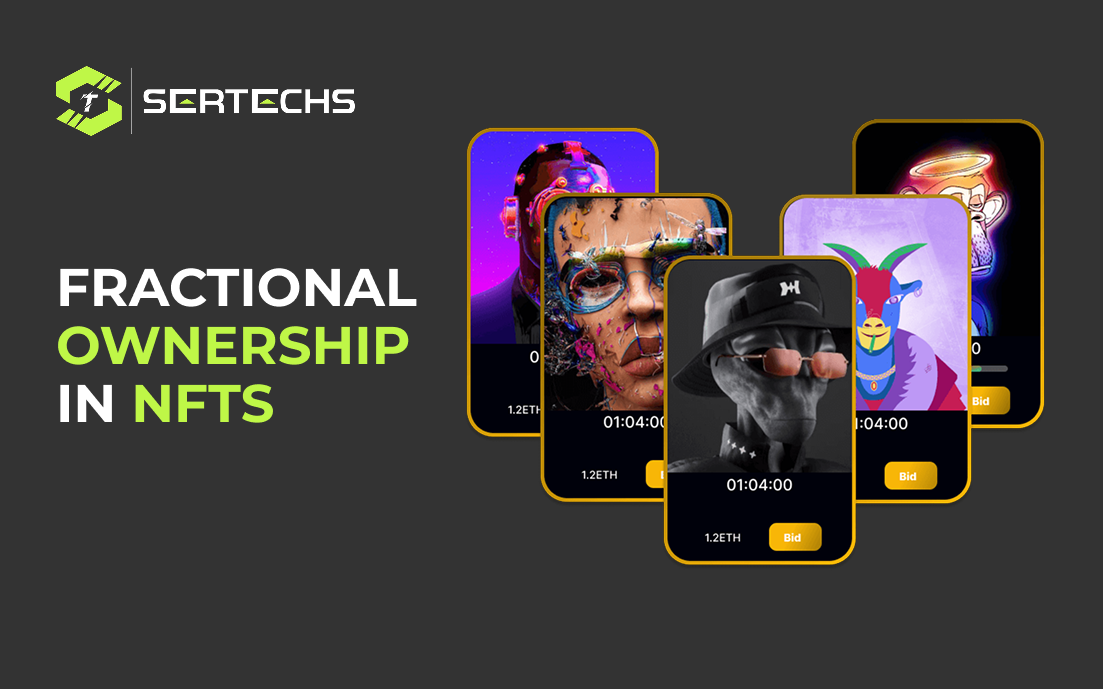
Fractional ownership in NFTs refers to the practice of dividing ownership of an NFT into smaller, tradable shares or fractions. This concept allows multiple individuals to collectively own and invest in high-value NFTs, such as digital art, collectibles, virtual real estate, or other digital assets. Fractional ownership is achieved by tokenizing the ownership rights and distributing these tokens to different investors.
Here’s how fractional ownership of NFTs typically works:
Tokenization: The NFT representing the digital asset is divided into smaller, fungible tokens that can be owned and traded individually. These tokens are often called “fractions” or “shares.”
Smart Contracts: Smart contracts, often based on blockchain technology (such as Ethereum), are used to manage the fractional ownership. The smart contract defines the rules for ownership, transfers, and distribution of proceeds.
Ownership Distribution: These fractions of the NFT are then sold or distributed to different investors. Each investor receives a certain number of tokens representing their share of ownership in the NFT.
Governance and Decision-Making: Some systems also implement governance tokens, allowing fractional owners to collectively make decisions regarding the NFT, such as whether to sell it, loan it, or use it in some way.
Trading and Liquidity: Fractional NFT ownership makes it easier for investors to buy and sell shares of high-value NFTs, thereby providing more liquidity in the market. Platforms or marketplaces that support fractional ownership often facilitate these trades.
Fractional ownership of NFTs has several advantages:
Accessibility: It allows smaller investors to participate in the ownership of valuable NFTs that they may not be able to afford outright.
Diversification: Investors can diversify their NFT portfolios by owning fractional shares in multiple assets.
Liquidity: Fractional ownership increases the liquidity of the NFT market, making it easier to trade and exit investments.
Collective Decision-Making: It allows a community of investors to make decisions about the NFT’s use, sale, or other actions collectively.
There are also some challenges and considerations:
Regulatory Compliance: Fractional ownership may be subject to legal and regulatory scrutiny, depending on the jurisdiction, especially when it involves securities laws.
Governance Disputes: Decisions made by a community of fractional owners can lead to disputes and disagreements.
Security: The smart contracts and platforms used for fractional ownership must be secure to prevent hacks and unauthorized transfers.
Fractional ownership in NFTs is an evolving concept, and it’s essential for investors and market participants to be aware of the associated risks and legal considerations while exploring this investment avenue.