
JavaScript
JavaScript is a versatile programming language primarily used for creating dynamic content on webpages. Developed by Netscape as “LiveScript” in the mid-1990s, it was later renamed JavaScript. Despite the similar name, JavaScript has no direct relation to the Java programming language; they are different languages with distinct syntax and purposes. Here are some key aspects of JS: Client-Side Scripting: JavaScript is primarily employed as a client-side scripting language, running in a user’s web browser. It allows web developers to create interactive and dynamic elements within web pages. High-Level, Interpreted Language: JS is a high-level language, meaning its syntax is closer to human language and is relatively easy to read and write. It’s also an interpreted language, executed line-by-line without needing a compilation step. Event-Driven and Asynchronous: It is event-driven, meaning it responds to events such as user actions (clicks, inputs, etc.) or system-generated events. It’s asynchronous, allowing for non-blocking execution, crucial for handling tasks like fetching data from servers without stopping other operations. Used in Web Development: JavaScript is a fundamental part of modern web development. It is used to manipulate and modify HTML and CSS, create animations, handle user interactions, build web applications (including single-page applications), and much more. Supports Various Paradigms: It supports multiple programming paradigms, including procedural, object-oriented, and functional programming styles. This flexibility allows developers to choose the approach that best fits their project. Extensive Ecosystem: JS has a vast ecosystem with numerous libraries and frameworks like React, Angular, Vue.js, and Node.js, which extend its capabilities for various purposes, including front-end and back-end development. Cross-platform Language: It isn’t limited to web browsers anymore. With the help of runtimes like Node.js, developers can use JavaScript for server-side scripting, enabling them to build full-stack applications entirely in JavaScript. JavaScript is a fundamental technology for web development, playing a crucial role in creating modern, interactive, and responsive web applications. Its continual evolution and widespread adoption have made it an essential skill for developers.
PHP Frameworks
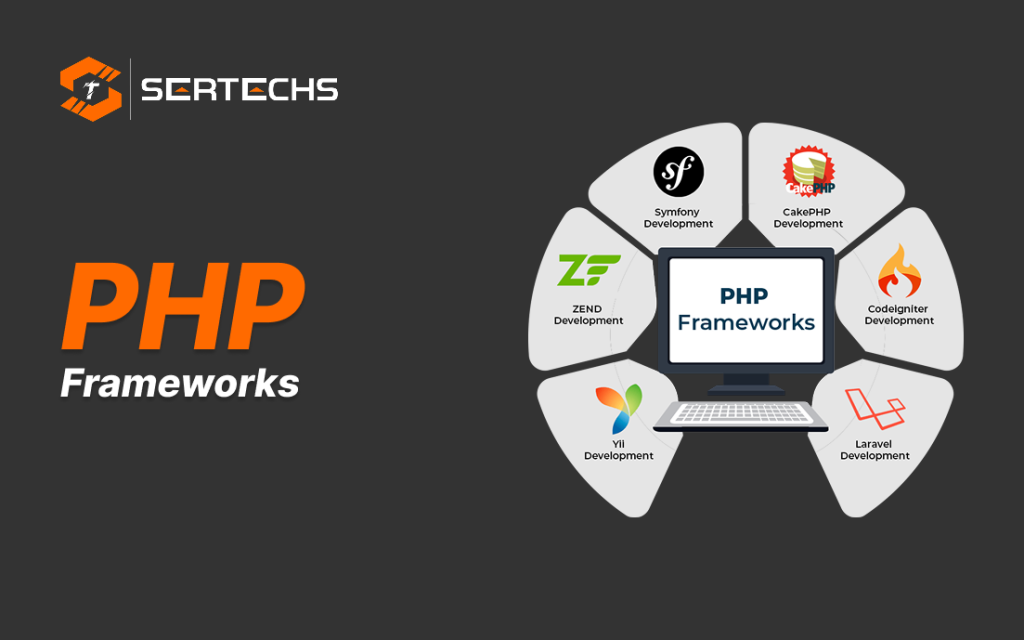
In PHP, a framework refers to a pre-built structure that provides a foundation for developing web applications. Frameworks in PHP offer a set of tools, libraries, and reusable components to facilitate the development process, allowing developers to build applications more efficiently by following predefined patterns and best practices. Some popular PHP frameworks include: Laravel: Known for its elegant syntax and expressive features, Laravel is one of the most widely used PHP frameworks. PHP frameworks are essential tools for web developers that provide a structured foundation for building web applications. It offers a robust set of tools for building web applications, including routing, authentication, database ORM (Object-Relational Mapping), and more. Symfony: This framework provides a set of reusable PHP components and libraries. It’s highly customizable and suitable for creating both small-scale and large-scale applications. CodeIgniter: Known for its simplicity and small footprint, CodeIgniter is lightweight and straightforward to use. It’s suitable for developers who prefer a simpler structure and need to build applications quickly. Yii: Yii is a high-performance PHP framework known for its speed and security features. It follows the DRY (Don’t Repeat Yourself) principle and offers features like scaffolding, caching, and authentication. CakePHP: CakePHP is a robust framework that follows the convention-over-configuration principle. It simplifies the development process by reducing the need for configuration, enabling developers to focus more on the application logic. Zend Framework (Laminas Project): Now known as the Laminas Project after rebranding, it’s a collection of professional PHP packages suitable for enterprise-level applications. It offers a high degree of flexibility and follows modern PHP development practices. These frameworks provide various features like routing, database abstraction, templating engines, security mechanisms, and more, helping developers to build secure, scalable, and maintainable web applications. The choice of framework often depends on project requirements, developer familiarity, scalability needs, and the specific features offered by each framework.
WordPress

WordPress is a popular content management system (CMS) used to create and manage websites and blogs. It’s an open-source platform known for its flexibility, user-friendliness, and extensive range of themes and plugins that allow users to customize and extend their websites. Key features include: Ease of Use: It offers a user-friendly interface, making it accessible for beginners while also providing advanced features for developers. Themes: It offers a wide range of themes (both free and premium) that determine the design and layout of a website. Users can choose themes to match their desired look and feel. Plugins: There are thousands of plugins available, allowing users to add various functionalities to their websites, such as SEO optimization, contact forms, e-commerce solutions, social media integration, and more. Content Management: WordPress makes it easy to create, edit, and organize content. It supports various content types, including posts, pages, media, and custom post types. SEO-Friendly: It provides tools and plugins to optimize websites for search engines, helping improve visibility and ranking in search results. Community Support: It has a large community of users, developers, and contributors. This community support means there are plenty of resources, forums, and tutorials available to help users with any issues or questions they may have. WordPress comes in two main versions: WordPress.com and WordPress.org. WordPress.com is a hosted platform where you can create a website for free or choose premium plans with additional features. It handles hosting, security, and backups for you. WordPress.org provides the open-source software that you can download and install on your own web server. With this version, you have more control over your site but also need to manage hosting, security, and backups yourself. WordPress is widely used across the internet for various types of websites, including blogs, portfolios, business websites, e-commerce stores, forums, and more. Its flexibility and extensive ecosystem make it a popular choice for individuals and businesses looking to establish an online presence.