
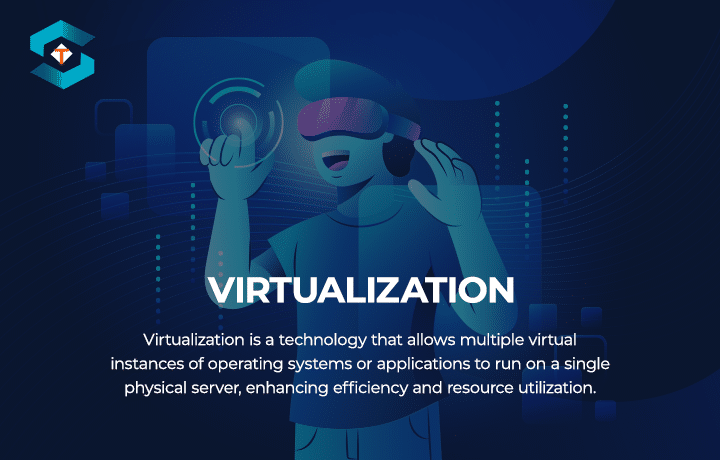
Virtualization is a technology that allows multiple operating systems and applications to run on a single physical server or hardware platform. It involves creating a virtual representation (virtual machine or VM) of the computing resources (such as CPU, memory, storage, and network) to efficiently utilize and manage the underlying hardware. Each virtual machine operates independently, as if it were running on a dedicated physical machine.
Key aspects and components of virtualization include:
Hypervisor:
The hypervisor is a crucial component in virtualization that creates and manages virtual machines. It sits between the hardware and the operating systems and allocates resources to each virtual machine.
Virtual Machine (VM):
A virtual machine is a software emulation of a physical computer, running an operating system and applications. Multiple VMs can run simultaneously on a single physical server.
Host Machine:
The physical hardware (server or computer) on which the hypervisor runs and manages the virtual machines.
Guest Operating Systems:
The operating systems and applications running within each virtual machine. These can be different from the host operating system and from each other.
Resource Allocation and Management:
Virtualization allows for flexible allocation and management of resources such as CPU, memory, storage, and network. Resources can be dynamically adjusted based on the workload or needs of each virtual machine.
Isolation and Encapsulation:
Each virtual machine is isolated from others, providing security and stability. VMs are encapsulated into files, making it easy to move, copy, or migrate them to other hardware or cloud environments.
Types of Virtualization:
Server Virtualization:
The most common type, where multiple virtual machines run on a single physical server.
Desktop Virtualization:
Running multiple virtual desktops on a centralized server, providing a virtualized desktop environment to end-users.
Network Virtualization:
Abstracting network resources to create a virtual network, allowing for better network management and optimization.
Storage Virtualization:
Pooling physical storage from multiple network storage devices into a single virtual storage unit for efficient management and utilization.
Virtualization has become a foundational technology in modern IT infrastructures, enabling efficient resource usage, cost savings, and improved flexibility in managing and deploying applications and services.