
How information technology works
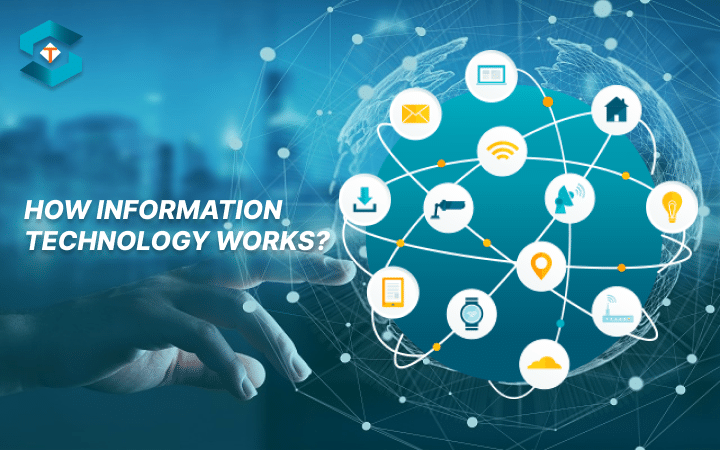
Information Technology (IT) is a vast and multifaceted field that encompasses a wide range of technologies and processes used to manage and manipulate data, communicate information. Understanding how information technology works involves grasping the principles and mechanisms behind digital data processing and communication systems. Here’s a simplified overview of how Information Technology works: Data Generation and Input: IT begins with the generation or collection of data. Data can be created by users, sensors, devices, or other sources. It can include text, numbers, images, videos, and more. Data Storage: Once data is generated, it needs to be stored for future use. Information technology employs various storage technologies, such as hard drives, databases, and cloud storage, and organize data. Data Processing: To make data useful, it often requires processing. This involves performing calculations, transformations, and analyses on the data. Computers and servers equipped with processors and memory are used for data processing tasks. Data Transmission and Networking: Technology enables the transmission of data from one location to another. Networking technologies like routers, switches, and cables are used to establish connections and transfer data between devices, both locally and over the internet. Software and Applications: Software applications or programs are used to perform specific tasks and operations on the data. Operating systems, applications, and middleware facilitate the functioning of hardware and provide a platform for software applications to run. Information Security: Protecting data from unauthorized access and threats is a critical aspect of Information technology. Security measures, such as firewalls, access controls, and antivirus software, are used to safeguard data and systems. Cloud Computing: Cloud computing allows the use of computing resources (e.g., storage, processing power) over the internet. Virtualization enables the creation of virtual instances of hardware or software, optimizing resource utilization. Data Retrieval and Output: Once data is processed or stored, it can be retrieved and presented to users in a meaningful way. This includes displaying text on a screen, generating charts. Problem Solving and Troubleshooting: IT professionals are responsible for identifying and resolving technical issues and challenges that arise in hardware, software, and network systems. Hardware Components: It relies on various hardware components such as computers, servers, routers, and storage devices. These components work together to process and transmit data. Data Analytics and Business Intelligence: Information technology enables organizations to gain insights from data through analytics and business intelligence tools, helping in decision-making. User Interface and Interaction: Users interact with IT systems through interfaces such as graphical user interfaces (GUIs), command-line interfaces (CLIs), or voice commands. These interfaces allow users to interact with software applications and access information. How Information technology works, It is a multidisciplinary field that involves hardware, software, and problem-solving to enable the efficient use of information and technology. The specific workings of Information technology can vary greatly depending on the context and the technology being employed.
Why IT Jobs Are in High Demand

IT (Information Technology) jobs are in high demand due to several factors. That reflect the evolving technological landscape and its increasing influence on various aspects of modern life and business. Here are key reasons why IT jobs are in high demand: Digital Transformation: Organizations across industries are embracing digital transformation to stay competitive and relevant. This transformation requires IT professionals to develop, implement, and manage digital technologies and processes. Growing Dependence on Technology: Businesses and individuals rely heavily on technology for communication, transactions, education, healthcare, and more. This dependence increases the demand for IT professionals who can ensure the smooth functioning and security of these technologies. Rapid Technological Advancements: The fast pace of technological advancements, such as artificial intelligence (AI), blockchain, 5G, and the Internet of Things (IoT), drives the need for skilled IT professionals to design, develop, and manage these technologies. Data Explosion and Big Data Analytics: The exponential growth of data generated daily requires professionals with expertise in managing and analyzing large volumes of data. Big data analytics is crucial for deriving valuable insights and making informed business decisions. Remote Work and Digital Collaboration: The need for seamless digital collaboration tools have increased the demand for IT professionals who can design, implement, and support remote work infrastructures and applications. Healthcare and Telemedicine: The integration of technology in healthcare, including electronic health records (EHR), telemedicine, and health monitoring devices, requires IT experts to develop and manage these solutions for improved patient care. Data Privacy and Compliance: The increasing focus on data privacy laws and regulations, such as GDPR and CCPA, demands IT professionals to ensure compliance and data protection within organizations. Education Technology (EdTech): The growth of online education and e-learning platforms requires IT professionals to develop educational technologies, learning management systems (LMS), and online courses. The continuous evolution of technology into various industries ensures a sustained high demand for skilled IT professionals with expertise in emerging technologies and the ability to adapt to evolving trends. As a result, IT remains a promising and sought-after career field.
Quantum-Secure Communications
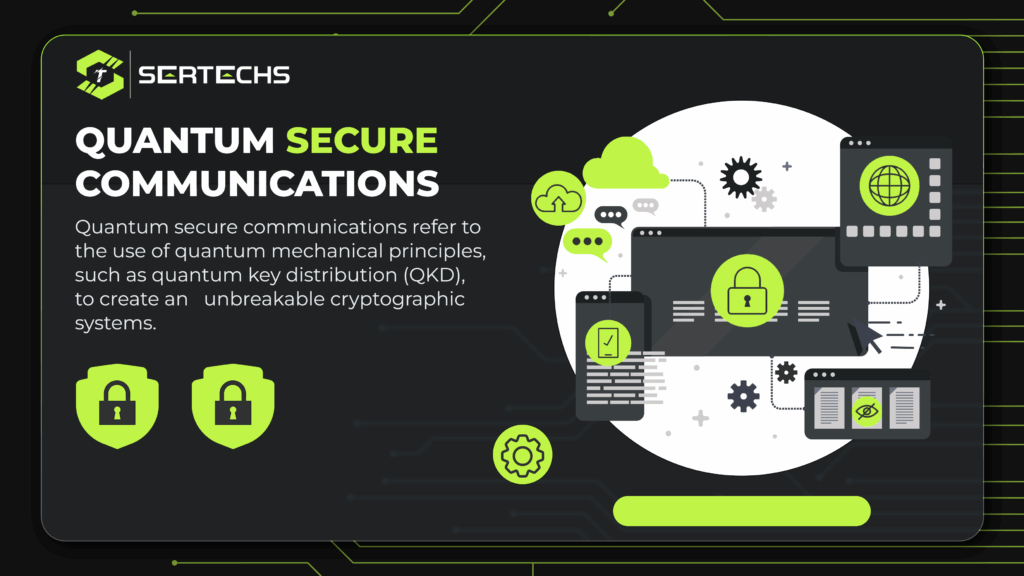
Quantum-Secure Communications, also known as Quantum-Safe or Quantum-Resistant Communications, refers to the use of cryptographic algorithms and communication protocols that remain secure even in the presence of powerful quantum computers. Quantum computers, once fully developed, could potentially break many of the current cryptographic algorithms that are widely used to secure communication and data. Quantum-Secure Communications aim to develop and deploy cryptographic algorithms that are resistant to attacks from quantum computers. Here are some approaches and solutions: Post-Quantum Cryptography (PQC): Post-Quantum Cryptography refers to cryptographic algorithms that are believed to be secure against quantum attacks. These algorithms are being developed to replace or supplement existing cryptographic methods. Examples include lattice-based cryptography, hash-based cryptography, code-based cryptography, and multivariate cryptography. Lattice-Based Cryptography: Lattice-based cryptography relies on the hardness of certain problems in lattice theory. Algorithms based on lattice problems are considered promising for post-quantum cryptography due to their perceived resistance to quantum attacks. Quantum Key Distribution (QKD): Quantum Key Distribution is a secure communication method that uses quantum properties to secure a communication channel. QKD allows the sharing of encryption keys with absolute security. Symmetric Key Algorithms with Longer Keys: Increasing the key sizes of symmetric encryption algorithms can enhance security against quantum attacks. Longer key sizes increase the computational requirements for an attacker to break the encryption. Code-Based Cryptography: Code-based cryptography is based on the hardness of decoding a linear code, which is believed to be secure against quantum attacks. It’s considered a post-quantum cryptographic solution. Hash-Based Signatures: Hash-based signatures use cryptographic hash functions and are believed to be resistant to quantum attacks. These signatures are being considered as an alternative to traditional digital signatures. Implementation of Quantum-Secure Protocols: Implementing communication protocols that are inherently secure against quantum attacks is essential. For instance, protocols such as the Quantum-Secure Direct Communication (QSDC) protocol aim to provide secure communication. The development and deployment of quantum-secure communications are critical to ensuring the security and privacy of sensitive information in a future where quantum computers might pose a threat to current cryptographic standards. Research and collaboration among cryptographers, mathematicians, physicists, and computer scientists are vital in achieving this goal.
Regulatory Technology
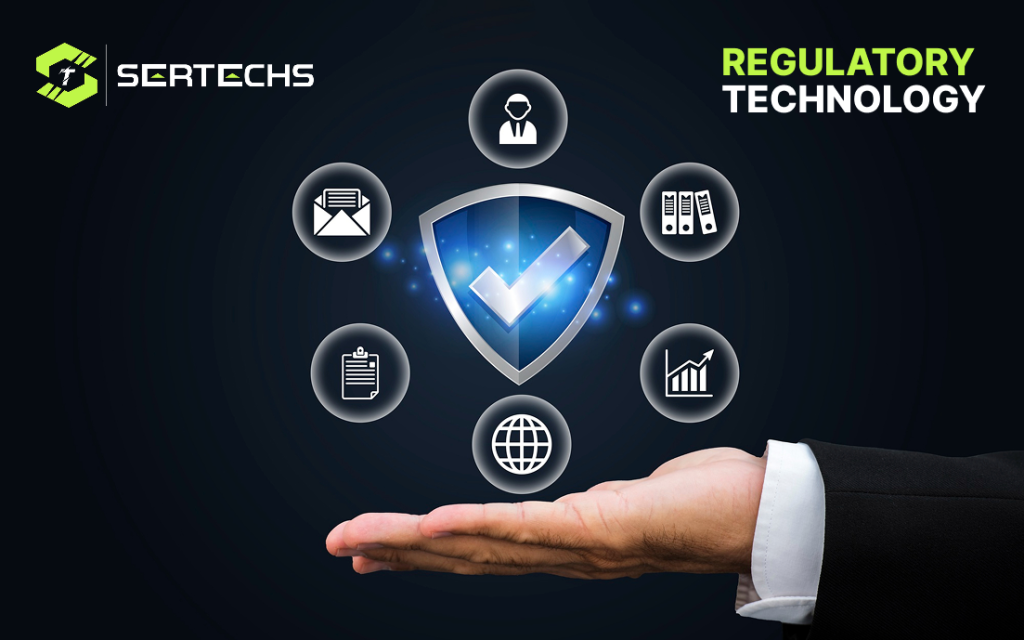
RegTech, short for Regulatory Technology , refers to the use of technology to help businesses and financial institutions comply with regulatory requirements more efficiently and cost-effectively. It leverages advancements in technologies like artificial intelligence (AI), big data, blockchain, and machine learning to address the growing burden of compliance in various industries, especially finance and banking. RegTech solutions leverage advanced technologies, data analytics, and automation to streamline compliance processes, improve reporting accuracy, and ensure adherence to regulatory requirements within various industries. Key aspects of Regulatory Technology include: Compliance and Regulatory Reporting: RegTech solutions automate and streamline compliance processes , making it easier for organizations to adhere to industry-specific regulations and reporting requirements. Risk Management: RegTech helps in assessing, managing, and mitigating risks associated with regulatory compliance. It offers tools for risk monitoring, real-time reporting, and predictive analytics. Data Management and Analytics: RegTech solutions process and analyze vast amounts of data to ensure compliance with regulatory standards. They help in identifying trends, anomalies, and potential compliance violations. Identity Verification and Authentication: RegTech provides advanced solutions for customer identity verification and authentication, ensuring compliance with Know Your Customer (KYC) and Anti-Money Laundering (AML) regulations. Reporting and Audit Trails: RegTech solutions facilitate the creation of detailed audit trails and comprehensive reports, which are crucial for regulatory audits and compliance assessments. Integration with Existing Systems: RegTech solutions are designed to seamlessly integrate with existing enterprise systems, making adoption and implementation smoother for organizations. Regulatory Sandbox Environments: Some regulatory authorities provide regulatory sandboxes, allowing companies to test and deploy innovative RegTech solutions in a controlled environment before full-scale implementation. RegTech plays a critical role in the financial sector , helping institutions comply with the constantly evolving regulatory landscape. It enables organizations to reduce compliance costs, enhance risk management practices, and improve the overall efficiency and effectiveness of compliance efforts.
Web Programming Languages
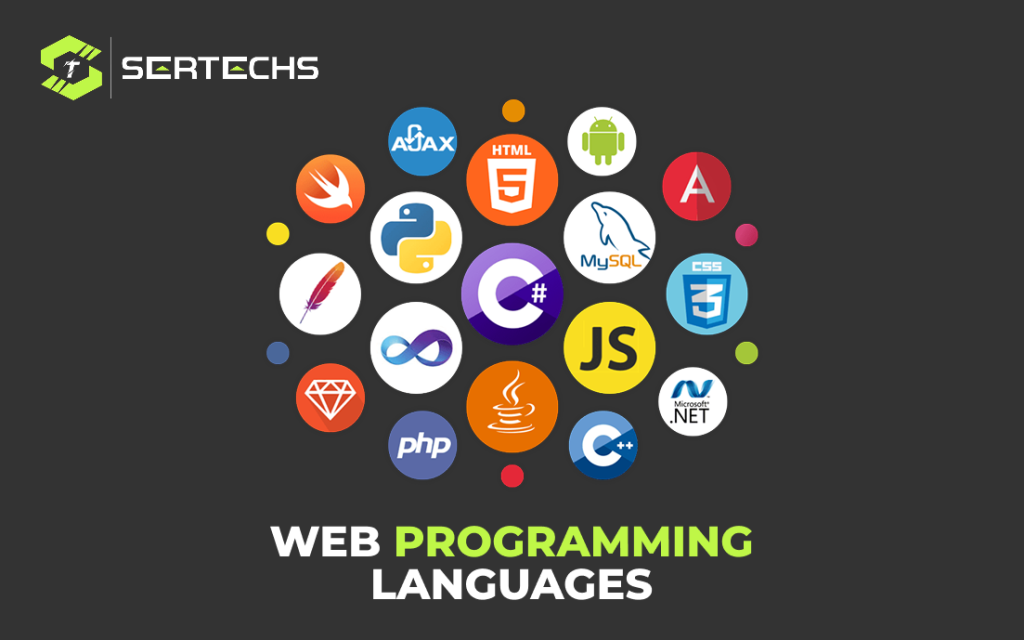
Web development involves using various programming languages to create and manage websites. Different languages are used for different purposes in different layers of web development. Some Web Programming languages: HTML (HyperText Markup Language): HTML is the standard markup language used to create the structure and content of web pages. It defines the elements and layout of a webpage, such as headings, paragraphs, images, links, and more. CSS (Cascading Style Sheets): CSS is used for styling and layout of HTML elements. It controls the appearance of a webpage, including colors, fonts, spacing, and positioning of elements. JavaScript: JavaScript is a versatile programming language used for enhancing interactivity and functionality on the client-side. It enables dynamic content, form validation, animations. Python: Python is a versatile and widely used programming language. In web development, it’s used with frameworks like Django and Flask for backend development. React.js: A popular JavaScript library for building user interfaces, maintained by Facebook. It’s widely used for building interactive web applications. PHP: PHP (Hypertext Preprocessor) is a server-side scripting language primarily used for backend development. It’s often used with frameworks like Laravel, Symfony, and CodeIgniter. TypeScript: TypeScript is a superset of JavaScript that adds optional static typing. It enhances the development experience, especially for larger and more complex applications. Sass (Syntactically Awesome Stylesheets) and LESS: CSS preprocessors that enhance CSS by adding variables, nesting, and functions, making stylesheets more maintainable and organized. REST API (Representational State Transfer Application Programming Interface) Languages: Not a specific language, but a set of architectural principles used to create APIs. Languages like PHP, Python, Java, and Node.js are commonly used to build RESTful APIs. Understanding and using these languages, frameworks, and technologies are essential for web developers to create functional, visually appealing and web applications. The choice of language often depends on the project requirements, scalability needs, and the developer’s familiarity with a particular language.
Enterprise Resource Planning
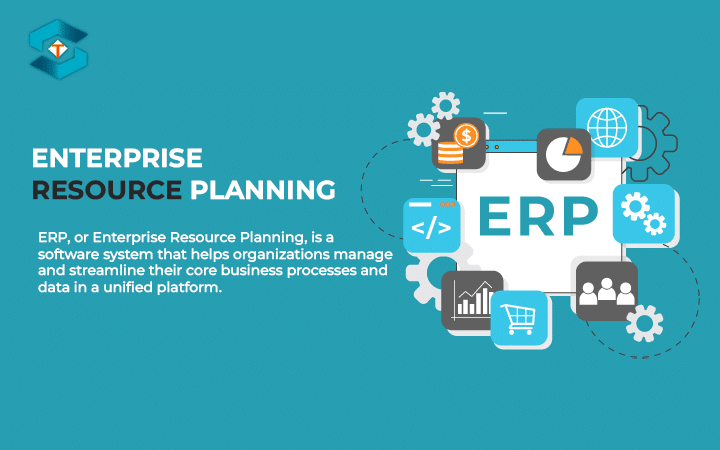
ERP, or Enterprise Resource Planning, is a type of business software used by organizations to manage and integrate various aspects of their operations. Such as planning, manufacturing, sales, marketing, finance, human resources, and more, into a centralized system. The primary goal of an ERP system is to improve efficiency, and enhance decision-making by providing a real-time view of the organization’s data and operations. Key features and components of Enterprise Resource Planning systems include: Centralized Database: An ERP system utilizes a centralized database that serves as a single source of truth for all data and transactions within the organization. Modules or Functional Areas: ERP systems consist of various modules or functional areas tailored to specific business operations. Common modules include finance, human resources, manufacturing, sales, marketing, and customer relationship management (CRM). Integration: ERP integrates different business processes and functions across the organization, ensuring seamless flow of information and coordination between various departments. Real-Time Data Access and Reporting: ERP systems provide real-time data access and reporting capabilities to make informed decisions based on up-to-date information. Customization and Configuration: ERP systems are often configurable to meet the specific needs and workflows of an organization. Customization allows for tailoring the system to align with unique business requirements. Security and Access Control: ERP systems employ security measures to protect sensitive data and restrict access based on roles and responsibilities, ensuring data privacy and compliance. Supply Chain Management (SCM): ERP often includes SCM modules to manage the flow of materials, information, and finances as they move from supplier to manufacturer to wholesaler to retailer to consumer. Customer Relationship Management (CRM): CRM modules within ERP systems assist in managing customer interactions, sales pipelines, marketing campaigns, and customer service. Implementing an ERP system involves careful planning, customization, and change management to ensure successful integration within an organization. ERP solutions can significantly enhance operational efficiency, reduce costs, and drive organizational growth.
Enhanced Communication
Enhanced Communication refers to the improved and advanced methods and technologies that facilitate effective and efficient exchange of information, ideas, and messages between individuals or entities. It encompasses various tools, techniques, and platforms designed to enhance the quality, speed, reach, and accessibility of communication. In various contexts, whether personal, professional, or technological, enhancing communication is crucial for better understanding, collaboration, and decision-making. Here are some aspects of enhanced communication: Real-Time Communication: Technologies such as instant messaging, video conferencing, and voice over IP (VoIP) enable real-time communication, allowing people to connect and interact instantly regardless of their locations. Video Conferencing and Virtual Meetings: Video conferencing platforms facilitate face-to-face communication over the internet, allowing individuals and teams to hold meetings and share information. Unified Communication Systems: Integrated platforms that bring together various communication channels like email, calls, messaging, and collaboration tools into a unified interface, streamlining communication and enhancing productivity. Mobile Communication: Mobile devices and applications enable communication on the go, providing the flexibility to send messages, make calls, and access information from anywhere, at any time. Social Media and Networking: Social media platforms facilitate communication and networking on a global scale, allowing individuals and organizations to connect and engage with a broader audience. Voice Assistants and AI Communication: Voice-activated assistants (e.g. Siri, Alexa, Google Assistant) and AI-powered chatbots enhance communication by providing voice-based or text-based interactions and assistance. Data Visualization for Communication: Techniques and tools to present data and complex information visually, aiding in conveying messages more effectively and improving audience understanding. IoT and Communication: Integration of Internet of Things (IoT) devices with communication technologies, enabling devices to communicate and share data for various applications. Enhanced communication plays a pivotal role in personal, professional, and societal interactions, improving collaboration, decision-making. It’s essential to adapt and leverage these advancements to facilitate clear, timely, and meaningful communication.
What is API?
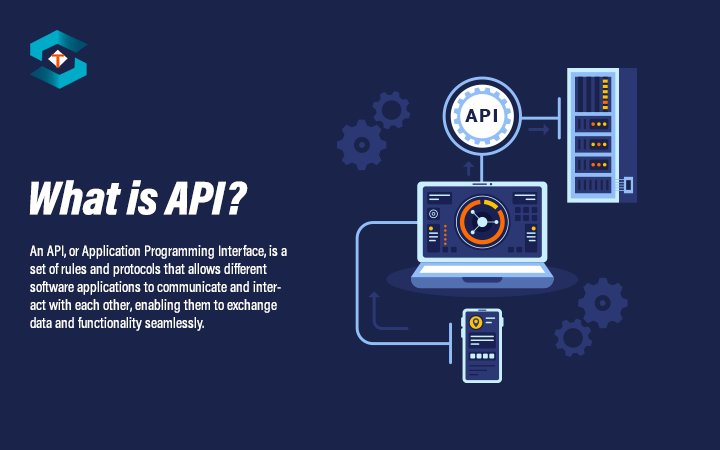
API stands for Application Programming Interface. It is a set of rules and protocols that allows different software applications to communicate with each other. APIs define the methods and data formats that developers can use to request and exchange information between software components, services, or systems. Here are some key points to understand about APIs: Interoperability: APIs enable different software programs, services, or systems to work together, even if they are developed by different organizations or run on different platforms. HTTP-based APIs: Many modern APIs are built using HTTP (Hypertext Transfer Protocol), making them accessible over the internet. These are often referred to as web APIs or RESTful APIs. Authentication and Authorization: APIs may require authentication to ensure that only authorized users or applications can access their functionality. This can be done using API keys, OAuth tokens, or other authentication methods. API Documentation: API providers often offer documentation that explains how to use the API, including the available endpoints, request formats, response formats, and any required authentication. Use Cases: APIs are used in a wide range of applications, including web and mobile app development, IoT (Internet of Things) integrations, cloud computing, data sharing between services, and more. Examples of APIs include: Social Media APIs: APIs provided by platforms like Facebook, Twitter, and Instagram, which allow developers to integrate social media features into their applications. Payment Gateway APIs: APIs provided by payment processing companies like PayPal or Stripe, allowing e-commerce websites to process payments securely. Google Maps API: This API enables developers to embed maps and location-based services into their applications. Database APIs: These allow applications to interact with databases, retrieve or store data, and perform database operations. APIs are a fundamental part of modern software development, enabling the creation of complex, interconnected systems and services that power many aspects of our digital world.
What is APL?

APL (A Programming Language) is a powerful and concise high-level programming language designed for mathematical and array processing. It was originally developed by Kenneth E. Iverson in the 1960s and has evolved over the years. APL is known for its unique symbols and operators that enable compact and expressive code to manipulate arrays and perform complex mathematical operations. Key characteristics and features of APL include: Array-Oriented Programming: It is primarily designed for working with multidimensional arrays and supports a wide range of array operations. Arrays can have any shape and dimensions, and operations can be applied to entire arrays or sub-arrays. Concise Syntax with Special Symbols: It uses a concise syntax with a rich set of special symbols for operators and functions. These symbols represent mathematical and logical operations, making the code compact and expressive. Functional Programming Paradigm: A Programming Language is heavily influenced by functional programming concepts. It supports higher-order functions, anonymous functions, and functional composition, allowing for elegant and concise code. Interactive Development Environment: It often provides an interactive development environment where developers can test and execute code snippets in real-time, enabling quick experimentation and prototyping. Dyadic and Monadic Functions: Functions in APL can be either dyadic (taking two operands) or monadic (taking one operand). Dyadic functions operate on two arrays, while monadic functions operate on a single array. Vectorization: this encourages vectorized operations, where functions are automatically applied to arrays element-wise, eliminating the need for explicit loops. Matrix Operations and Linear Algebra: APL is particularly strong in matrix operations, linear algebra, and numerical computing. It provides built-in functions for common operations such as matrix multiplication, inversion, eigenvalues, and more. Dialects and Implementations: There are several dialects and implementations of APL, each with its own set of features and variations in syntax and functions. Common dialects include APL2, Dyalog APL, and GNU APL. Applications: APL is used in various domains, including finance, scientific computing, data analysis, and algorithm development. Its ability to handle complex mathematical operations efficiently makes it suitable for a wide range of applications. Despite its expressive power and efficiency in mathematical computation, APL’s unique syntax and symbols can be a barrier for newcomers. However, once mastered, APL can lead to highly efficient and elegant solutions for complex problems.
Virtualization
Virtualization is a technology that allows multiple operating systems and applications to run on a single physical server or hardware platform. It involves creating a virtual representation (virtual machine or VM) of the computing resources (such as CPU, memory, storage, and network) to efficiently utilize and manage the underlying hardware. Each virtual machine operates independently, as if it were running on a dedicated physical machine. Key aspects and components of virtualization include: Hypervisor: The hypervisor is a crucial component in virtualization that creates and manages virtual machines. It sits between the hardware and the operating systems and allocates resources to each virtual machine. Virtual Machine (VM): A virtual machine is a software emulation of a physical computer, running an operating system and applications. Multiple VMs can run simultaneously on a single physical server. Host Machine: The physical hardware (server or computer) on which the hypervisor runs and manages the virtual machines. Guest Operating Systems: The operating systems and applications running within each virtual machine. These can be different from the host operating system and from each other. Resource Allocation and Management: Virtualization allows for flexible allocation and management of resources such as CPU, memory, storage, and network. Resources can be dynamically adjusted based on the workload or needs of each virtual machine. Isolation and Encapsulation: Each virtual machine is isolated from others, providing security and stability. VMs are encapsulated into files, making it easy to move, copy, or migrate them to other hardware or cloud environments. Types of Virtualization: Server Virtualization: The most common type, where multiple virtual machines run on a single physical server. Desktop Virtualization: Running multiple virtual desktops on a centralized server, providing a virtualized desktop environment to end-users. Network Virtualization: Abstracting network resources to create a virtual network, allowing for better network management and optimization. Storage Virtualization: Pooling physical storage from multiple network storage devices into a single virtual storage unit for efficient management and utilization. Virtualization has become a foundational technology in modern IT infrastructures, enabling efficient resource usage, cost savings, and improved flexibility in managing and deploying applications and services.