
Federated Learning
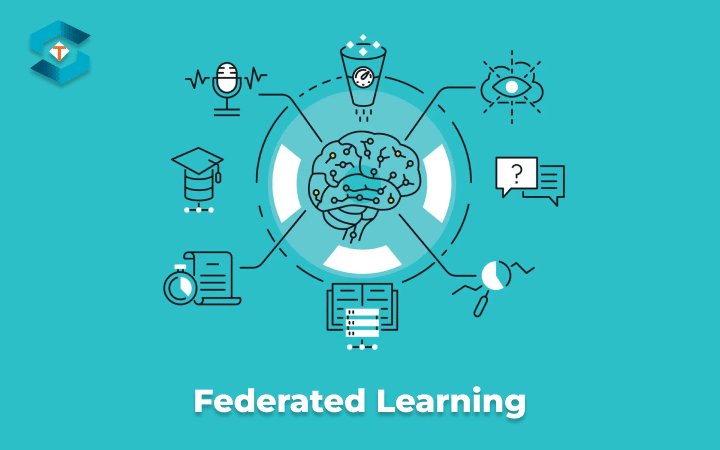
Federated Learning is a machine learning approach that allows a model to be trained across multiple decentralized devices or servers. That hold local data samples, without exchanging them. It enables machine learning models to learn from distributed, sensitive data without moving the data to a centralized server. Instead, the model is sent to the data, where computations take place locally. Only the model updates or aggregates of those updates are transmitted back to a central server or coordinator. Here are the key components and concepts of Federated Learning: Centralized Model Initialization: A global model is initially trained using a small, representative dataset. This model will serve as the starting point for the federated learning process. Local Training: The global model is then sent to participating devices or servers (local nodes) with their respective local datasets. Each node performs training using its local data while keeping the model parameters fixed except for a few customizable layers. This local training process is often several iterations of gradient-based optimization. Model Updates Transmission: After local training, each node sends only the updates of the model parameters back to the central server or coordinator, without sharing the actual data. Aggregation of Model Updates: The central server aggregates the model updates received from various nodes to create a new global model. This aggregation is typically performed by averaging or another aggregation technique. Iterative Process: The updated global model is then sent back to the nodes, and the process iterates. Over multiple rounds, the global model progressively improves by learning from the collective knowledge present in the local datasets. Federated Learning offers several advantages: Privacy-Preserving: Data remains localized, preserving privacy and security. Sensitive data does not need to be transmitted or shared. Efficiency: Federated Learning reduces the need for data to be sent over networks, minimizing bandwidth usage and speeding up the learning process. Decentralization: It allows for training models on devices or servers where data resides, avoiding the need for a centralized data store. Customization: Models can be fine-tuned or customized for specific local conditions, user preferences, or hardware capabilities. However, Federated Learning also presents challenges: Communication Overhead: The process of transmitting model updates back and forth can introduce communication overhead. Heterogeneity: Different nodes may have diverse data distributions and qualities, which can complicate the learning process. Security Risks: The transmission of model updates could potentially be intercepted, posing a security risk. Federated Learning is used in various applications, including mobile devices (improving predictive text, speech recognition), healthcare (analyzing medical records), finance (fraud detection), and more, where data privacy and decentralization are paramount concerns.
Motion UI and interactions
Motion UI and interactions refer to the use of animation, transitions, and other dynamic elements to enhance the user experience in digital interfaces, such as websites and mobile apps. These design elements are crucial for creating engaging, intuitive, and user-friendly experiences. Here’s an overview of motion UI and interactions: Animation: Animation can be used to bring elements on a screen to life. This can include subtle animations like fading in content, sliding menus, or more complex animations like parallax scrolling and interactive visual effects. Animation can provide visual cues, guide the user’s attention, and make interactions more visually appealing. Transitions: Smooth transitions between different states or screens can make navigation and interaction more intuitive. For example, when transitioning from one page to another in a mobile app, a sliding or fading animation can provide feedback to the user about what’s happening. Micro-interactions: Micro-interactions are small, subtle animations or visual responses to user actions. They can be as simple as a button changing color when hovered over, a subtle vibration when a button is pressed, or a confirmation message popping up after a successful action. Micro-interactions enhance the user’s understanding of what’s happening and can make an interface feel more responsive. Feedback: Motion can be used to provide feedback to users. For example, when a user submits a form, a motion or animation can indicate that the form is being processed, which reduces user anxiety. Feedback through motion helps users understand the cause and effect of their actions. Navigation: Motion can aid in navigation. Animated menus or navigation elements can help users understand the hierarchy of a website or app. Additionally, gesture-based interactions are common in mobile applications, where users can swipe, pinch, or tap to navigate. Storytelling: Motion can be used to tell a story or convey information. This is often seen in data visualizations, infographics, or educational apps where motion is used to reveal information in a sequence, making it easier to understand complex concepts. Engagement: Motion can add an element of fun and engagement to an interface. Games, for example, rely heavily on motion to make interactions exciting and enjoyable. Loading Screens: Motion can be used to entertain or inform users while they wait for content to load. Progress bars, spinners, or animated icons can make the waiting experience more tolerable. Accessibility: It’s important to consider how motion may affect users with disabilities. Some users may be sensitive to motion or have conditions that make motion uncomfortable or disorienting. Designers should strive for inclusivity by providing options to disable or reduce motion in such cases. Performance: While motion can greatly enhance the user experience, it should be used judiciously. Excessive or poorly optimized animations can slow down an interface and frustrate users. It’s important to balance the benefits of motion with its impact on performance. In summary, motion UI and interactions are essential components of modern digital design. When used thoughtfully and purposefully, motion can improve user engagement, guide navigation, provide feedback, and make digital experiences and intuitive. However, it’s important to strike a balance between adding motion for user engagement and ensuring that the interface remains performant and accessible to all users.
Blockchain Technology in Marketing
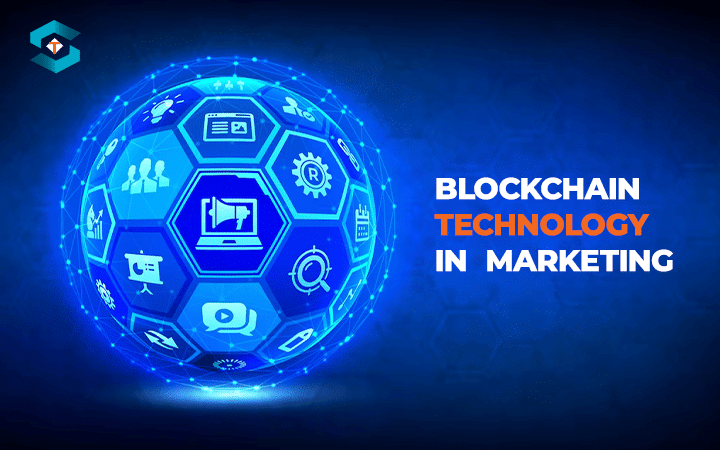
Blockchain technology in marketing has been gaining traction in various industries, including marketing. Its potential to enhance transparency, security, and efficiency has led marketers to explore its applications. Here are several ways blockchain is being utilized in marketing: Transparency and Authenticity: Blockchain can be used to verify the authenticity of products or services. By creating a tamper-proof and publicly accessible ledger, consumers can trace the origin and journey of a product, ensuring it’s genuine and ethically sourced. Smart Contracts: Smart contracts, self-executing contracts with the terms directly written into code, can automate various processes in marketing, such as agreements, payments, and royalties. This reduces the need for intermediaries and streamlines transactions. Data Privacy and Security: Blockchain can provide a secure and decentralized way to handle and store sensitive customer data. This helps in maintaining data privacy, preventing unauthorized access, and ensuring the accuracy of data. Customer Loyalty Programs: Blockchain can be used to create and manage loyalty programs, allowing businesses to tokenize loyalty points. This makes the process more transparent, reduces fraud, and enables customers to easily track and redeem their rewards. Ad Fraud Prevention: Blockchain can combat ad fraud by recording every advertising transaction on a public ledger. This transparency helps advertisers verify the legitimacy of ad impressions and clicks, reducing fraudulent activities. Media Buying and Selling: Blockchain can simplify the process of buying and selling advertising space and media. It can create a decentralized marketplace where advertisers and publishers can transact directly, ensuring fair and transparent transactions. Copyright and Intellectual Property Protection: Blockchain can be utilized to timestamp and authenticate creative works, ensuring the originality and ownership of content. This is particularly useful in protecting copyrights and intellectual property in the marketing and advertising industry. Supply Chain Management: For businesses dealing with physical products, blockchain can provide end-to-end transparency in the supply chain. This can help in verifying the authenticity of products and ensuring compliance with ethical and environmental standards. Cross-Channel Attribution: Blockchain can assist in tracking and attributing marketing activities across various channels. It helps in analyzing the effectiveness of different marketing efforts and optimizing campaigns based on accurate data. Decentralized Identity Management: Blockchain can facilitate a decentralized identity system where consumers have control over their personal data. Marketers can request access to this data with consumer consent, promoting trust and data integrity. While blockchain technology has promising potential in marketing, it’s essential to consider challenges like scalability, integration with existing systems, and regulatory frameworks. As the technology continues to evolve, its adoption and integration into marketing practices are expected to increase.
Web APIs and Integration

Web APIs (Application Programming Interfaces) play a crucial role in enabling communication and integration between different software systems, allowing them to exchange data and functionality. This integration is fundamental for modern web applications, enabling them to connect with various services, platforms, and data sources. Web APIs: An Application Programming Interfaces is a set of rules and tools that allow different software applications to communicate with each other over the internet. It defines the methods and data formats that applications can use to interact with each other. HTTP and RESTful APIs: Web APIs are typically accessed over HTTP (HyperText Transfer Protocol). RESTful APIs adhere to REST principles, which include using standard HTTP methods and following a resource-based URL structure. Data Formats: It use various data formats to represent data, including JSON and XML. JSON has become the de facto standard due to its lightweight, easy-to-read, and easy-to-parse nature. Integration of Web APIs: Consuming APIs: HTTP Requests: Client applications use HTTP requests to interact with the API. These requests are sent to a specific URL, and they may include parameters, headers, and a request body containing data. Authentication: APIs often require authentication to ensure security and access control. Common authentication methods include API keys, OAuth tokens, and JWT (JSON Web Tokens). Handling Responses: API responses typically contain the requested data in the specified data format (e.g., JSON). The client application parses this data and uses it accordingly. Integration Scenarios: Third-Party Integrations: Web applications often integrate with third-party APIs to access services like payment gateways, social media platforms, mapping services, etc. For example, integrating a payment gateway API to process transactions. Microservices Architecture: In a microservices architecture, different parts of an application are developed as independent services with their APIs. These services can communicate with each other through their respective APIs, promoting modularity and scalability. Internal APIs: Large applications can have internal APIs that facilitate communication between different components or modules of the application. This promotes code reusability and maintainability. Error Handling and Rate Limiting: Error Handling: It should provide clear error responses to guide developers in handling issues gracefully. Error codes and messages help identify and troubleshoot problems. Rate Limiting: To manage server load and prevent abuse, APIs often implement rate limiting, which restricts the number of requests a client can make within a specific timeframe. Best Practices for Web API Integration: Read API Documentation: Thoroughly understand the API documentation to know how to make requests, the available endpoints, required parameters, and authentication methods. Error Handling: Implement robust error handling to gracefully handle potential issues and provide a good user experience even when API calls fail. Authentication and Security: Ensure secure authentication methods, proper authorization, and adhere to security best practices to protect sensitive data. Testing and Monitoring: Rigorously test API integrations, handle edge cases, and continuously monitor API usage for performance, reliability, and adherence to rate limits. Web APIs and integration are fundamental to the modern web ecosystem, enabling developers to create feature-rich applications by leveraging the capabilities of various external services.
Single Page Application

A Single Page Application (SPA) is a web application that loads a single HTML page and dynamically updates its content as the user interacts with the application. Unlike traditional multi-page web applications, where each action typically involves loading a new page from the server. SPAs provide a smoother and more interactive user experience by loading data and updating the interface within the same page. Key features of SPA include: Single Page Loading: Initially, only one HTML file is loaded from the server, typically containing the structure and layout of the application. The content is then dynamically loaded and updated as the user interacts with the application. Asynchronous Communication: SPAs use asynchronous requests (often AJAX) to fetch data from the server and update the content without requiring a full page reload. This helps in faster and more responsive interactions. Dynamic Updates: Changes in the application state, triggered by user actions or data updates, are reflected in real-time on the page without the need for a full page refresh. Routing: SPAs often use a client-side router to manage navigation within the application. The URL changes, but the page does not reload, providing a seamless user experience similar to traditional multi-page applications. Rich User Experience: SPAs allow for complex, interactive, and highly responsive user interfaces. They can include features like animations, transitions, and real-time updates, making the user experience more engaging. Caching and Optimizations: SPAs can utilize caching and other optimization techniques to minimize the amount of data sent between the server and the client, improving performance and reducing server load. SPAs typically have a minimal HTML structure that includes the essential layout and structure of the application. This HTML file serves as the foundation for the entire application. Popular JavaScript frameworks and libraries like Angular, React, Vue.js, and Ember.js are commonly used to build SPAs. SPAs providing tools and patterns to manage the complexity of single page application development.
E-commerce Marketing

E-commerce marketing involves promoting and selling products or services online through various marketing strategies and tactics. The goal is to attract potential customers, drive traffic to an online store, encourage purchases, and build a loyal customer base. Here are key aspects of e-commerce marketing: Website Optimization: Ensure your e-commerce website is user-friendly, mobile-responsive, and easy to navigate. Optimize website speed, improve load times, and provide a seamless browsing experience. Search Engine Optimization (SEO): Implement SEO strategies to improve your website’s visibility on search engine results pages (SERPs). Conduct keyword research and optimize product descriptions, meta tags, and URLs. Content Marketing: Create high-quality, informative, and engaging content related to your products or industry. Use blogs, videos, infographics, and other content types to attract and educate your audience. Social Media Marketing: Utilize popular social media platforms to engage with your target audience and showcase your products. Run targeted ad campaigns and post regular updates to increase brand awareness and drive traffic to your e-commerce site. Email Marketing: Build an email list and engage with customers through newsletters, promotions, discounts, and product updates. Personalize email campaigns to cater to specific customer preferences and behaviors. Pay-Per-Click (PPC) Advertising: Run paid advertising campaigns on platforms like Google Ads, Facebook Ads, and others to drive immediate traffic and sales. Set a budget, target specific demographics, and optimize ad performance for the best ROI. Influencer Marketing: Collaborate with influencers in your industry to promote your products to their audience. Identify relevant influencers and create partnerships that align with your brand image. Customer Reviews and Testimonials: Encourage satisfied customers to leave reviews and testimonials on your website and third-party review platforms. Showcase positive feedback to build trust and credibility with potential customers. Loyalty Programs and Retargeting: Implement loyalty programs to incentivize repeat purchases and customer retention. Utilize retargeting ads to re-engage visitors who have shown interest in your products but haven’t made a purchase. Data Analytics and Optimization: Utilize data analytics tools to track user behavior, conversions, and campaign performance. Use the insights gained to optimize marketing strategies and improve overall e-commerce performance. Partnerships and Collaborations: Collaborate with complementary brands for co-marketing efforts, cross-promotions, or joint campaigns to expand your reach. Customer Service and Support: Provide exceptional customer service to address queries, concerns, and issues promptly, enhancing the overall customer experience. Effective e-commerce marketing involves a combination of these strategies, tailored to your target audience and the nature of your products or services. Continuously monitor and adjust your marketing efforts based on performance metrics to achieve the best results.
Social Media Marketing Increase Sales

Social media marketing increase sales involves leveraging platforms like Facebook, Instagram, Twitter, and more to connect with potential customers, showcase products or services, and drive purchasing decisions. Through engaging content, targeted advertising, promotions, and customer interaction, businesses aim to boost brand visibility, attract prospects, and ultimately convert them into paying customers, thus driving sales and revenue growth. Social media marketing can significantly contribute to increasing sales when executed strategically. Here are key strategies to social media marketing increase sales: Understand Your Audience: Identify your target audience and their preferences to tailor your content and offers accordingly. Engaging Content Creation: Develop compelling and visually appealing content that grabs attention, tells a story, and showcases your products or services. Leverage Multiple Platforms: Utilize various social media platforms where your target audience is active to broaden your reach and engagement potential. Run Targeted Advertising Campaigns: Use paid advertising features on social media to reach a specific audience based on demographics, interests, behavior, and location. Offer Discounts and Promotions: Use social media to promote exclusive discounts, limited-time offers, or promo codes to incentivize purchases. Customer Reviews and Testimonials: Showcase positive customer reviews, testimonials, or user-generated content to build trust and credibility, encouraging potential customers to make a purchase. Interactive Contests and Giveaways: Organize contests, sweepstakes, or giveaways to engage your audience and encourage participation, ultimately driving traffic and sales. Influencer Partnerships: Collaborate with relevant influencers to promote your products or services to their followers, leveraging their influence and credibility. Optimize for Mobile: social media marketing increase sales ensure your social media content and website are optimized for mobile devices since a significant portion of social media users access platforms via smartphones. Customer Service and Engagement: Respond promptly to inquiries, comments, and messages to enhance customer satisfaction and encourage repeat purchases. Data Analysis and Iteration: Analyze the performance of your social media campaigns using insights and analytics to make data-driven decisions for continuous improvement and optimization. Customer Retargeting: Use retargeting ads to re-engage individuals who have shown interest in your products or visited your website, encouraging them to complete their purchase. By effectively using social media marketing strategies tailored to your brand and audience, you can enhance brand visibility, engagement, and ultimately drive sales and revenue growth.
Influencer Marketing

Influencer marketing is a strategic collaboration between brands and individuals, known as influencers, who possess a substantial online following and credibility within a specific industry or niche. Brands partner with influencers to promote products, services, or campaigns to their audience, leveraging the influencer’s trust and influence to drive engagement, brand awareness, and potential conversions. This form of marketing is characterized by authentic, relatable content creation that resonates with the influencer’s followers, fostering a more personal connection between the brand and its target audience. Here are various aspects: Identifying the Right Influencers: Criteria for selecting influencers (reach, relevance, engagement, etc.) Different types of influencers (micro, macro, mega, nano) and their impact Influencer Outreach and Engagement: Crafting effective outreach messages to approach influencers Building relationships and maintaining engagement with influencers Creating Influencer Campaigns: Designing a comprehensive influencer marketing campaign strategy Setting campaign goals, objectives, and key performance indicators (KPIs) Legal and Ethical Considerations: Legal aspects, contracts, and compliance in influencer marketing FTC guidelines and disclosure requirements for sponsored content Content Collaboration and Creation: Co-creating content with influencers to align with brand messaging Leveraging various content formats (e.g., videos, sponsored posts, stories) Measuring Influencer ROI: Analyzing the effectiveness and impact of influencer campaigns ROI metrics, tracking tools, and data analytics for influencer marketing Long-term Influencer Relationships: Strategies for fostering ongoing relationships with influencers Maximizing the value of long-term influencer partnerships Platforms and Tools: Overview of platforms for influencer discovery, collaboration, and management Tools for monitoring influencer performance and campaign success Different Industries: Tailoring influencer marketing strategies for various industries (e.g., fashion, beauty, technology) User-Generated Content (UGC) through Influencers: Encouraging influencers to generate user-centric content for the brand Repurposing UGC across marketing channels for enhanced engagement Influencer Diversity and Inclusion: Embracing diversity and inclusion in influencer marketing campaigns Strategies for working with influencers from diverse backgrounds and communities Influencer Crisis Management: Strategies for handling influencer-related crises and negative publicity Damage control and reputation management in influencer partnerships Incorporating influencer marketing into your digital strategy can significantly boost brand awareness, credibility, and engagement. It’s important to stay updated on trends and best practices to effectively leverage this marketing approach.
Neuromarketing

Neuromarketing is a field that combines principles of neuroscience with marketing to understand and influence consumer behavior. There are various tools and techniques used in neuromarketing to gain insights into consumer responses, preferences, and decision-making processes. Here are some commonly used neuromarketing tools and techniques: Functional Magnetic Resonance Imaging (fMRI): fMRI measures brain activity by detecting changes in blood flow. It helps marketers understand how specific stimuli or advertisements activate different regions of the brain, providing insights into consumer preferences and responses. Electroencephalography (EEG): EEG measures electrical activity in the brain, offering real-time insights into brain responses. It’s used to evaluate the brain’s reaction to various stimuli like advertisements, packaging, or product designs. Eye Tracking: Eye tracking technology monitors and records where a person looks while viewing a stimulus, such as an advertisement or webpage. It helps in analyzing visual attention and identifying the most engaging elements. Galvanic Skin Response (GSR): GSR measures changes in skin conductance due to emotional arousal or stress. It can provide insights into consumer emotional responses and engagement with marketing stimuli. Heart Rate Monitoring: Monitoring heart rate helps measure physiological arousal and emotional engagement in response to marketing stimuli. It can reveal the emotional impact of advertisements or product presentations. Facial Expression Analysis: Facial expression analysis uses computer vision to detect and analyze facial expressions, providing insights into emotional responses to stimuli like advertisements or product displays. Implicit Association Test (IAT): IAT measures implicit attitudes and beliefs that individuals may not be consciously aware of. It helps in understanding subconscious perceptions and attitudes towards brands or products. Virtual Reality (VR): Virtual reality can be used to create immersive experiences related to products or brands. It allows marketers to study consumer behavior within a controlled virtual environment and gather insights on preferences and reactions. Biometric Sensors: Biometric sensors measure physiological responses like heart rate, skin conductance, and muscle activity. These sensors help in understanding emotional arousal and engagement with marketing stimuli. Neurofeedback and Biofeedback: Neurofeedback involves training individuals to modify their brainwave patterns through real-time feedback. Biofeedback measures physiological responses and can help individuals learn to regulate their responses. These tools and techniques enable marketers to gain a deeper understanding of consumer behavior, enabling the development of more effective marketing strategies and campaigns. However, it’s important to use these tools ethically and responsibly, ensuring privacy and consent of participants.
Information technology management

Information technology management (IT management) involves planning, organizing, and overseeing the implementation and maintenance of an organization’s technology infrastructure and resources to achieve its goals and objectives. It encompasses various aspects, including technology strategy, project management, resource allocation, security, and compliance. key components and concepts of Information technology management: IT Strategy and Planning: Developing a strategic roadmap aligning technology with organizational goals. Assessing current IT capabilities and identifying areas for improvement. Project Management: Planning, executing, and controlling IT projects to deliver desired outcomes on time and within budget. Utilizing methodologies like Agile, Waterfall, or Hybrid for project execution. Resource Management: Efficiently managing IT resources, including human resources, budgets, and infrastructure. Optimizing resource allocation to ensure optimal performance and cost-effectiveness. IT Infrastructure and Operations: Managing and maintaining hardware, software, networks, and other technological components. Ensuring high availability, reliability, and performance of IT services. Cybersecurity and Compliance: Implementing measures to safeguard data, systems, and networks from cyber threats. Adhering to legal and regulatory requirements related to data protection and privacy. Service Management: Implementing IT service management (ITSM) frameworks like ITIL to enhance service quality and customer satisfaction. Focusing on incident management, problem resolution, change management, and service level agreements (SLAs). Vendor and Supplier Management: Managing relationships with technology vendors and suppliers to ensure effective procurement and contract management. Evaluating and selecting vendors based on performance, cost, and alignment with organizational needs. Business Continuity and Disaster Recovery: Planning for contingencies to ensure business operations can continue in the event of a disaster or disruptive event. Establishing backup and recovery strategies to minimize data loss and downtime. Innovation and Emerging Technologies: Monitoring and evaluating emerging technologies to identify opportunities for innovation and competitive advantage. Incorporating new technologies, such as artificial intelligence, cloud computing, and IoT, into the organization’s strategy. Change Management: Managing organizational change associated with new IT implementations or modifications to existing systems. Communicating changes effectively and ensuring employee readiness and adoption. Performance Measurement and KPIs: Defining key performance indicators (KPIs) to measure the effectiveness and efficiency of IT initiatives. Analyzing data to make informed decisions and continuously improve IT processes. Effective IT management involves aligning technology with business objectives, ensuring security and compliance, optimizing resource utilization, fostering innovation, and adapting to changes in the technology landscape. It’s a crucial function for organizations seeking to leverage technology for competitive advantage and operational efficiency.