
Financial Technology

Financial Technology, often abbreviated as FinTech, refers to the use of technology to provide innovative financial services and solutions. These technologies have disrupted and transformed traditional financial industries and have become integral to the modern financial landscape. FinTech encompasses a wide range of services and applications, including but not limited to: Digital Payments: FinTech has revolutionized how people make payments. It includes services like mobile wallets (e.g., Apple Pay, Google Pay), peer-to-peer payment apps (e.g., Venmo), and contactless payments. Online Banking: Many traditional banks now offer online banking services, and there are also digital-only banks (neobanks) that operate exclusively online, providing a range of banking services. Lending: FinTech companies offer alternative lending solutions such as peer-to-peer lending (P2P), online loans, and marketplace lending, making it easier for individuals and businesses to access credit. Robo-Advisors: These are automated investment platforms that use algorithms and data analysis to provide personalized investment advice and portfolio management. Blockchain and Cryptocurrency: Technologies like blockchain underpin cryptocurrencies like Bitcoin and have applications in areas beyond digital currency, such as smart contracts and supply chain management. Insurance Technology (InsurTech): InsurTech companies use technology to streamline and improve the insurance industry, offering more customized policies, simplified claims processes, and improved risk assessment. RegTech: Regulatory Technology focuses on helping financial institutions comply with regulations more efficiently. It includes tools for risk management, compliance reporting, and anti-money laundering (AML) solutions. Crowdfunding: Platforms like Kickstarter and Indiegogo allow businesses and individuals to raise capital by seeking small contributions from a large number of people. Personal Finance and Budgeting Apps: Apps like Mint and YNAB help individuals manage their finances, track expenses, and create budgets. Data Analytics: FinTech companies often use big data and analytics to make informed decisions about lending, risk assessment, and investment. Open Banking: It involves the sharing of financial information with third-party providers through APIs, allowing for more comprehensive financial services and improved customer experiences. Digital Identity Verification: Digital identity solutions help verify individuals identities online, which is crucial for preventing fraud and ensuring security in online financial transactions. The goals of FinTech include improving financial accessibility, increasing efficiency, reducing costs, and enhancing the overall customer experience. However, the industry also faces challenges related to regulation, data security, and the potential for financial exclusion.
Humanoid Robots

Humanoid robots are robots designed to resemble and mimic the physical characteristics and movements of humans. These robots are typically equipped with a human-like body structure, including two arms, two legs, and a head. Humanoid robots are developed for various purposes, including research, entertainment, education, and assistance in tasks that require human-like dexterity and mobility. Here are some key aspects and applications of humanoid robots: Research and Development: Humanoid robots are used in research to study human locomotion, perception, and cognition. They help researchers better understand human anatomy and behavior, enabling advancements in fields like biomechanics, neuroscience, and psychology. Education and Training: It can serve as educational tools for teaching robotics and programming. They are often used in schools and universities to help students learn about robotics concepts and develop their programming skills. Entertainment: They are used in the entertainment industry, particularly in theme parks, museums, and exhibitions. They can interact with visitors, perform dances, and provide a novel and engaging experience for entertainment purposes. Healthcare and Rehabilitation: Some robots are designed to assist in healthcare and rehabilitation. They can help patients with mobility and therapeutic exercises. For example, the robotic exoskeleton HAL (Hybrid Assistive Limb) is used to assist individuals with mobility impairments. Elderly Care: Humanoid robots are being explored as potential caregivers for the elderly. These robots can provide companionship, monitor vital signs, and assist with daily tasks to support the aging population. Search and Rescue: In disaster-stricken areas, humanoid robots can be deployed for search and rescue missions. Their ability to navigate complex environments and perform tasks such as opening doors and moving debris can be crucial in saving lives. Manufacturing and Industry: They are used in industrial settings to perform tasks that require fine motor skills and dexterity. They can be employed for tasks like quality control, product assembly, and machine operation. Space Exploration: NASA and other space agencies have developed humanoid robots, such as Robonaut, to assist astronauts in space missions. These robots can perform maintenance and repair tasks in the challenging environment of space. Social Interaction and Communication: Its like Pepper and Sophia are designed to interact with people in a socially engaging manner. They can understand and respond to human speech, make eye contact, and express emotions through facial expressions. Future Applications: As technology advances, the potential applications for humanoid robots continue to expand. These robots are being developed with more sophisticated sensors, artificial intelligence, and advanced mechanical designs to enhance their capabilities and broaden their use cases. Challenges in developing humanoid robots include the complexity of replicating human movement and dexterity, power supply limitations, and the need for advanced AI for natural interaction with humans. Despite these challenges, ongoing research and development in the field of robotics are pushing the boundaries of what humanoid robots can achieve.
Scope of AI
The scope of AI is vast and continually expanding, making it a dynamic and exciting field with a broad range of applications and opportunities. Here are some key aspects of the scope of AI: Industry Applications: AI is being applied across various industries, including healthcare, finance, manufacturing, retail, agriculture, and transportation. It’s used for predictive analytics, process optimization, automation, and decision support. Healthcare: AI is used for medical diagnosis, drug discovery, personalized medicine, patient monitoring, and administrative tasks. It can help improve patient outcomes, reduce healthcare costs, and streamline healthcare operations. Autonomous Systems: Self-driving cars, drones, and robotics are some of the autonomous systems powered by AI. They have the potential to revolutionize transportation, logistics, and various industries. Natural Language Processing (NLP): NLP technologies enable machines to understand, generate, and interact with human language. Applications include chatbots, language translation, sentiment analysis, and content generation. Computer Vision: AI is used for image and video analysis, enabling applications like facial recognition, object detection, autonomous surveillance, and augmented reality. Recommendation Systems: AI-driven recommendation engines are common in e-commerce, content streaming, and social media platforms. They help businesses personalize user experiences and boost engagement. Financial Services: AI is used for algorithmic trading, fraud detection, credit risk assessment, and customer service in the financial sector. It can enhance decision-making and risk management. Cybersecurity: AI is employed to detect and mitigate cybersecurity threats, including identifying anomalies and potential breaches in real-time. Education: AI can provide personalized learning experiences, automate administrative tasks, and assist in grading and assessment. Environmental and Sustainability Applications: AI is used for climate modeling, energy optimization, and monitoring wildlife and ecosystems, contributing to environmental conservation. Entertainment and Gaming: AI enhances gaming experiences with intelligent non-player characters, realistic physics simulations, and procedural content generation. Humanoid Robots: Advances in robotics and AI are leading to more human-like robots with applications in healthcare, customer service, and companionship. Space Exploration: AI plays a crucial role in autonomous spacecraft navigation, data analysis, and robotics for planetary exploration. AI Ethics and Regulation: The growing use of AI has led to increased focus on AI ethics, transparency, and regulations to ensure responsible AI development and deployment. Research and Development: AI researchers are continually pushing the boundaries of the field, developing new algorithms, and addressing complex challenges. The scope of AI is broad, and it offers significant career opportunities for professionals in various domains, including AI research, software development, data science, and AI ethics. As AI technologies continue to advance, they are likely to become more integrated into our daily lives, revolutionizing how we work, live, and interact with technology. However, addressing ethical and societal considerations will also be a crucial part of AI’s future scope.
Digital Marketing Skills

Digital marketing is a dynamic field that requires a diverse set of skills to succeed. Here is a list of essential digital marketing skills: Content Marketing: Content is the backbone of digital marketing. You should be skilled in creating high-quality, engaging, and relevant content, including blog posts, videos, infographics, and more. Search Engine Optimization (SEO): Understanding SEO is crucial to ensure your content ranks well in search engine results. You need to know how to optimize keywords, meta tags, and content structure. Social Media Marketing: Proficiency in managing and growing a company’s presence on social media platforms like Facebook, Twitter, Instagram, and LinkedIn is essential. Email Marketing: Creating and managing email marketing campaigns, including building subscriber lists, designing newsletters, and analyzing performance metrics. Pay-Per-Click (PPC) Advertising: Mastery of platforms like Google Ads and Facebook Ads, including keyword research, ad copywriting, and bid management. Analytics and Data Analysis: Being able to interpret data from various tools like Google Analytics and social media insights to make informed decisions and optimize marketing strategies. Conversion Rate Optimization (CRO): Understanding user behavior and making improvements to websites or landing pages to increase conversion rates. Marketing Automation: Utilizing tools like HubSpot, Marketo, or Mailchimp to automate marketing processes and nurture leads. Graphic Design: Basic graphic design skills for creating visuals and images for use in content and social media. Video Production and Editing: As video content becomes increasingly important, knowledge of video production and editing tools is valuable. A/B Testing: Testing different versions of content or web pages to determine which performs better and makes data-driven decisions. Content Management Systems (CMS): Proficiency in platforms like WordPress to manage and update websites. Social Media Advertising: Running paid advertising campaigns on social media platforms, targeting specific audiences and analyzing results. Mobile Marketing: Understanding the unique aspects of marketing to mobile users, including mobile SEO and in-app advertising. Influencer Marketing: Building relationships with influencers and managing influencer marketing campaigns. Public Relations: Managing the online reputation of a brand, handling crises, and building positive media relations. Adaptability and Continuous Learning: The digital marketing landscape is ever-evolving. You must stay updated with the latest trends and technologies. Remember that digital marketing is a broad field, and not all roles require expertise in every area. Depending on your specific career goals, you may need to focus on certain skills more than others. Additionally, certifications and courses in digital marketing can be valuable for developing and showcasing your skills.
Pay Per Click Advertising

Pay-Per-Click (PPC) advertising is an online advertising model where advertisers pay a fee each time their ad is clicked. It’s a way to buy visits to a website rather than earning them organically through search engine optimization (SEO). PPC is a crucial component of digital marketing and is used to drive targeted traffic to websites, increase brand visibility, and generate leads or sales. How PPC advertising works and some popular PPC platforms: How PPC Works: Ad Placement: Advertisers bid on specific keywords or phrases relevant to their target audience. When users search for those keywords, the ads are displayed. Ad Auction: When a user initiates a search, the search engine (e.g., Google, Bing) conducts an auction to determine the ad placements. This auction considers bid amounts, ad relevance, and other factors. Ad Ranking: Ads are ranked based on a combination of bid amount and the ad’s Quality Score, which assesses ad relevance, click-through rates, and landing page quality. Ad Display: If an advertiser’s bid and ad quality are competitive, their ad is displayed in a prominent position on the search results page or on websites within a display network. Cost per Click (CPC): Advertisers are charged a certain amount only when a user clicks on their ad. The cost per click varies based on the competitiveness of the keywords and the auction. Popular PPC Platforms: Google Ads (formerly Google AdWords): Google’s advertising platform, offering both search ads and display ads across Google’s search network, partner sites, and YouTube. Allows precise targeting based on keywords, location, demographics, devices, and more. Bing Ads (Microsoft Advertising): Microsoft’s advertising platform, serving ads on Bing search engine and its partner networks. Similar to Google Ads, offering keyword-based targeting and various ad formats. Facebook Ads: Allows advertisers to create highly targeted ads based on demographics, interests, behavior, and connections on Facebook and Instagram. Supports various ad types, including image, video, carousel, and more. LinkedIn Ads: Ideal for B2B advertising, targeting professionals based on job title, industry, company size, and more. Offers sponsored content, sponsored InMail, display ads, and more. Twitter Ads: Enables advertisers to promote tweets, accounts, or trends to reach a specific audience on Twitter. Targeting options include keywords, interests, demographics, and events. Amazon Advertising: Allows advertisers to promote products on Amazon and reach customers while they’re shopping. Supports sponsored products, sponsored brands, and sponsored display ads. YouTube Ads: Advertisements displayed on YouTube, including video ads, display ads, overlay ads, and sponsored cards. Targeting options based on demographics, interests, and viewing behavior. Effective Pay-Per-Click advertising involves careful keyword selection, compelling ad copy, relevant landing pages, continuous monitoring, and optimization based on performance metrics like click-through rate (CTR), conversion rate, and return on investment (ROI). Advertisers aim to maximize ROI and achieve their advertising objectives through PPC campaigns.
Dark Web and Cybercrime

The Dark Web is a part of the internet that is not indexed by traditional search engines like Google. It is intentionally hidden and requires specific software, such as Tor (The Onion Router), to access. While the Dark Web itself is not inherently illegal, it is often associated with various forms of cybercrime due to its anonymity and lack of oversight. Here are some key points about the Dark Web and its relationship with cybercrime: Anonymity: The Dark Web provides a high level of anonymity to its users. This anonymity is achieved by routing internet traffic through a network of volunteer-run servers, making it difficult to trace the identity and location of users. This feature is attractive to cybercriminals, as it makes it harder for law enforcement to identify and apprehend them. Illegal Marketplaces: One of the most well-known aspects of the Dark Web is its illegal marketplaces. These platforms facilitate the sale of a wide range of illegal goods and services, including drugs, firearms, counterfeit documents, stolen data, and hacking tools. Cybercrime Forums: The Dark Web hosts various forums and communities where cybercriminals share knowledge, tools, and techniques. These forums are used to discuss and plan cyberattacks, share vulnerabilities, and collaborate on illegal activities. Hacking Services: Some individuals and groups on the Dark Web offer hacking services for hire. These services can range from launching DDoS (Distributed Denial of Service) attacks to hacking into email accounts, social media profiles, or corporate networks. Stolen Data and Personal Information: Data breaches are a common occurrence on the Dark Web. Cybercriminals often sell stolen data, such as login credentials, credit card information, and personal records, to the highest bidder. Ransomware: Ransomware operators sometimes use the Dark Web to communicate with victims and facilitate ransom payments. They also sell or auction stolen data on these hidden platforms. Cryptocurrency: Cryptocurrencies, such as Bitcoin, are commonly used for transactions on the Dark Web because of their pseudonymous nature. This makes it challenging for authorities to trace and identify those involved in illegal activities. Law Enforcement Efforts: Law enforcement agencies around the world are actively working to combat cybercrime on the Dark Web. They employ various tactics, including undercover operations, blockchain analysis, and the takedown of illegal marketplaces. It’s important to note that not everything on the Dark Web is illegal, and there are legitimate use cases for the Tor network, such as providing a secure and private way for users to access the internet. However, due to the anonymity it offers, it has become a breeding ground for various forms of cybercrime. Engaging in illegal activities on the Dark Web can lead to criminal charges and severe legal consequences.
Software Development Tools
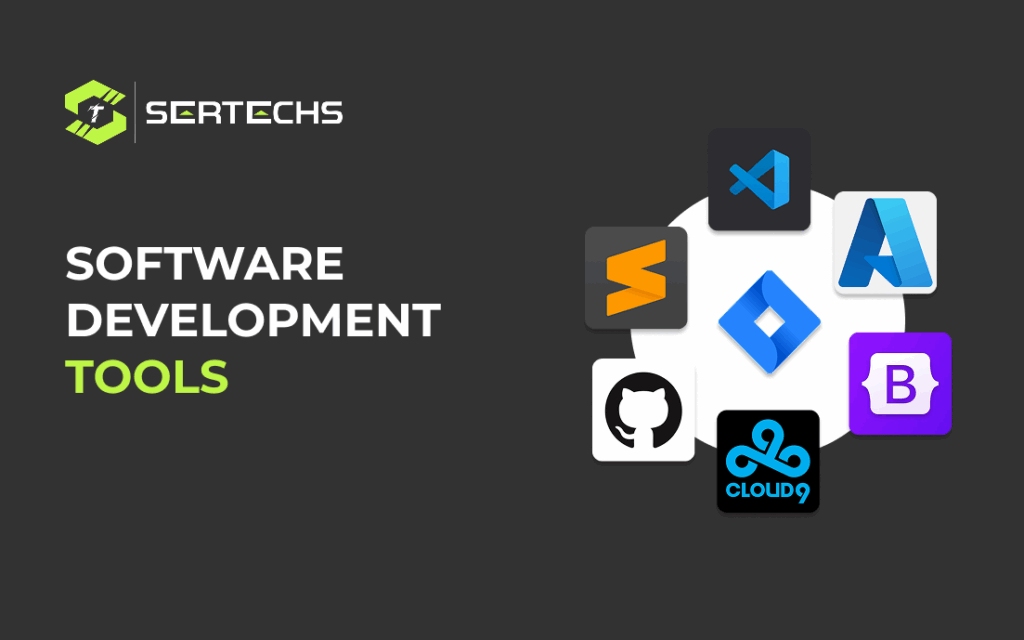
Software development involves a wide range of tools that aid in the creation, testing, and deployment of applications. These tools can vary based on the specific programming language, project requirements, and the development process being followed (e.g., Agile, Scrum, Waterfall). Here’s an overview of some commonly used software development tools: Integrated Development Environments (IDEs): Visual Studio: A popular IDE by Microsoft supporting multiple languages like C#, C++, Java, Python, and more. Eclipse: An open-source IDE primarily used for Java development but supports various other languages with plugins. IntelliJ IDEA: A widely used Java IDE with strong support for other languages and frameworks as well. Text Editors: Sublime Text: A lightweight and highly customizable text editor often used for web development and scripting. Visual Studio Code (VSCode): A free, open-source code editor developed by Microsoft with support for various languages and extensions. Atom: Another popular open-source text editor with a strong developer community and customizable interface. Version Control Systems (VCS): Git: The most widely used distributed version control system for tracking changes in code during software development. SVN (Apache Subversion): A centralized version control system often used for source code management. Project Management and Collaboration Tools: Jira: A popular agile project management tool used for bug tracking, issue tracking, and project management. Trello: A visual project management tool that uses cards and boards to organize tasks and collaborate with teams. Asana: A task and project management tool that helps teams organize, track, and manage work. Build Automation Tools: Jenkins: An open-source automation server used for building, testing, and deploying code automatically. Maven: A build automation tool used primarily for Java projects to manage dependencies and build processes. Continuous Integration/Continuous Deployment (CI/CD) Tools: Travis CI: A CI/CD service that integrates with GitHub repositories for automated testing and deployment. CircleCI: A cloud-based CI/CD platform that automates the software development process. Testing Tools: Selenium: A widely used tool for automating web browsers for testing web applications. JUnit: A popular testing framework for Java applications. Postman: A tool for testing APIs by sending HTTP requests and analyzing responses. These are just a few examples, and the software development tool landscape is continuously evolving with new tools and technologies. Developers often choose tools based on the specific requirements of their projects and their familiarity with the tools.
Software Development and Web Development

Software development and web development are related but distinct fields within the broader realm of software engineering. Both involve creating applications or systems that function to meet specific requirements, but they differ in terms of focus, technologies, and applications. Software Development: Software development is a broad term that encompasses the entire process of creating software applications. This can include applications that run on various platforms, including desktop, mobile devices, embedded systems, and more. Scope: Software development covers a wide range of applications, from enterprise-level software, mobile apps, desktop applications, video games, embedded systems, and more. It can involve various programming languages and frameworks depending on the specific application. Languages and Technologies: Software development can involve a diverse set of programming languages such as C++, Java, Python, C#, Swift, etc. It often encompasses a variety of technologies and frameworks to build applications for different platforms and purposes. Skill Set: Software developers need a strong foundation in algorithms , data structures, software architecture, databases, and general programming concepts. They should be proficient in the chosen programming languages and have a good understanding of software development methodologies like Agile, Waterfall, etc. Web Development: Web development specifically focuses on building applications that run on web browsers. These applications can range from simple static websites to complex web applications that involve dynamic content, interactivity, and real-time updates. Scope: Web development involves creating websites, web applications, e-commerce platforms, content management systems, social networking sites, and more. It’s a critical component of the modern digital landscape. Languages and Technologies: Web development commonly involves languages like HTML, CSS, and JavaScript for front-end development. For back-end development, languages such as PHP, Python, Ruby, Java, Node.js, etc., are often used. Frameworks like React, Angular, Vue.js, Django, Flask, Express, etc., are popular for building web applications. Skill Set: Web developers need to be proficient in HTML, CSS, and JavaScript for front-end development. They should also have expertise in back-end languages and frameworks, as well as databases. Understanding of web protocols, security, and responsive design is crucial. Key Differences: Scope: Software development is broader and encompasses applications beyond the web, while web development is specifically focused on applications accessible via web browsers. Technologies: Web development heavily relies on web-specific technologies like HTML, CSS, and JavaScript, along with associated frameworks, while software development may involve a more diverse set of technologies depending on the platform and application. Applications: Software development includes a broader range of applications, including desktop applications, mobile apps, embedded systems, and more, whereas web development focuses on online applications accessible via web browsers. In summary, while both software development and web development involve creating applications, they differ in scope, technologies used. Software development is a broader field that covers various types of applications, while web development is a specific subset focused on applications accessible via the web.
Software Development Fundamentals
Software development fundamentals encompass the essential principles, concepts, and practices that are foundational to building high-quality software efficiently and effectively. Mastering these fundamentals is crucial for anyone pursuing a career in software development. Here are some key software development fundamentals: Understanding of Algorithms and Data Structures: Algorithms are step-by-step procedures or formulas for performing tasks or solving problems. Data structures are ways to organize and store data to perform operations efficiently. Understanding algorithms and data structures is fundamental for efficient coding and problem-solving. Programming Languages: Learn one or more programming languages in-depth, including syntax, data types, control structures, functions, and object-oriented programming principles. Understand the strengths and weaknesses of different languages and choose the appropriate language for a given task. Version Control Systems (e.g., Git): Understand version control concepts, branching strategies, and collaboration workflows. Learn to use version control tools like Git to manage code versions, collaborate with a team, and track changes in a project. Software Development Life Cycle (SDLC): Understand the stages of SDLC, including requirements gathering, design, development, testing, deployment, and maintenance. Learn about different SDLC methodologies like Waterfall, Agile, Scrum, and Kanban. Software Testing: Understand testing concepts, types of testing (e.g., unit, integration, system, acceptance), and testing strategies. Learn to write effective test cases and perform testing to ensure software quality. Object-Oriented Programming (OOP): Understand the principles of OOP, such as encapsulation, inheritance, polymorphism, and abstraction. Learn to design and implement software using OOP concepts to enhance code reusability and maintainability. Database Concepts and SQL: Understand fundamental database concepts like tables, relationships, normalization, and indexing. Learn to write and optimize SQL queries for database operations and manipulation. Web Development Fundamentals: Understand web technologies like HTML, CSS, JavaScript, HTTP, and RESTful APIs. Learn how to create web applications, structure web pages, and interact with back-end servers. Agile and Scrum Methodologies: Understand Agile principles and values, iterative development, and customer feedback. Learn about Scrum roles, ceremonies (e.g., daily stand-ups, sprint planning), and artifacts (e.g., product backlog, sprint backlog). Problem-Solving and Debugging: Develop problem-solving skills to break down complex problems into smaller, manageable tasks. Learn effective debugging techniques to identify and fix software bugs. Security Principles: Understand basic security concepts, such as authentication, authorization, encryption, and secure coding practices. Learn to write secure code and protect against common security vulnerabilities. Documentation and Code Comments: Learn the importance of documenting code for future reference, maintenance, and collaboration. Develop the habit of writing clear and concise code comments to explain code functionality. Continuous Integration and Deployment (CI/CD): Understand the principles of CI/CD, automating build and deployment processes, and ensuring code quality through automated testing. These fundamentals provide a strong foundation for software developers and enable them to adapt to new technologies and methodologies as the field of software development continues to evolve.
Software Development Frameworks
Software development frameworks are pre-built structures or platforms that provide a foundation for developing applications or software. They often include libraries, tools, guidelines, and best practices to streamline the development process, improve efficiency, and enhance code quality. Here are some popular software development frameworks across various programming languages and domains: Web Development Frameworks: ReactJS: A JavaScript library for building user interfaces, maintained by Facebook. Angular: A TypeScript-based framework for building dynamic web applications, maintained by Google. Vue.js: A progressive JavaScript framework for building user interfaces, emphasizing simplicity and flexibility. Django: A Python web framework known for its efficiency, scalability, and security. Ruby on Rails: A Ruby-based framework for building web applications quickly with a convention-over-configuration approach. Mobile Development Frameworks: React Native: A framework for building mobile applications using ReactJS, allowing for cross-platform development (iOS and Android). Flutter: An open-source UI software development toolkit by Google for building natively compiled applications for mobile, web, and desktop from a single codebase. Xamarin: A Microsoft-owned framework for building native iOS, Android, and Windows apps using C# and .NET. Backend Development Frameworks: Express.js: A lightweight and flexible Node.js framework for building web applications and APIs. Spring: A Java-based framework for building robust, scalable, and maintainable enterprise applications. Flask: A lightweight Python framework for building web applications and APIs with minimal setup and easy-to-use features. Game Development Frameworks: Unity: A widely-used game development framework that supports multiple platforms and programming languages, including C# and UnityScript. Unreal Engine: A powerful game development framework that supports high-fidelity graphics and is widely used for creating AAA games. Desktop Application Frameworks: Electron: A framework for building cross-platform desktop applications using web technologies like HTML, CSS, and JavaScript. JavaFX: A Java-based framework for creating desktop applications with rich user interfaces. Machine Learning and Data Science Frameworks: TensorFlow: An open-source machine learning framework developed by Google for building and training various machine learning models. PyTorch: An open-source machine learning framework developed by Facebook’s AI Research lab, widely used for deep learning applications. These frameworks offer different features and advantages, allowing developers to choose the one that best fits their project requirements and expertise.