
Augmented Reality and Virtual Reality

Augmented Reality and Virtual Reality are two immersive technologies that alter our perception of the physical and digital worlds. AR blends digital content with the real world. It overlays computer-generated images, sounds, or information onto the user’s view of the physical environment, enhancing their perception of reality. VR creates a completely immersive digital environment that isolates users from the physical world. It often involves wearing a VR headset that covers the user’s field of view with a computer-generated 3D environment. Augmented Reality (AR): Augmented Reality (AR) is a technology that enhances a person’s perception of the real world by overlaying computer-generated information, such as images, videos, sounds, or 3D models, onto their view of the physical environment. AR blends the digital and physical worlds, allowing users to interact with both simultaneously. Devices: AR experiences can be accessed through smartphones, tablets, smart glasses, and heads-up displays (HUDs). Popular examples include the Pokémon GO game and Snapchat filters. Applications: Navigation and wayfinding (AR navigation apps) Training and education (medical simulations) Marketing and advertising (interactive product catalogs) Gaming (AR gaming like Pokémon GO) Industrial and maintenance tasks (overlaying instructions on machinery) Virtual Reality (VR): Virtual Reality (VR) is a technology that immerses users in a computer-generated, three-dimensional environment, which can be entirely different from the real world. VR creates a sense of presence, making users feel like they are physically present in the virtual environment. Devices: VR requires specialized hardware, such as VR headsets (Oculus Rift, HTC Vive) and motion controllers. These devices track the user’s movements and enable them to interact with the virtual environment. Applications: Gaming (immersive VR games) Training and simulation (flight simulators) Healthcare (therapy and pain management) Architecture and design (virtual walkthroughs) Education (virtual field trips) Both AR and VR continue to evolve and find new applications in various industries. Mixed Reality (MR) is a term used to describe experiences that blend elements of both AR and VR, offering users the ability to interact with digital objects in a real-world context.
What is Machine Learning Frameworks

Machine Learning Frameworks are software libraries that provide a set of pre-built functions and algorithms to simplify the development of machine learning models. These frameworks are designed to help researchers and developers implement, train, evaluate, and deploy machine learning algorithms efficiently. Here are some key aspects and functions: Algorithms: MLF include a variety of machine learning algorithms, such as linear regression, decision trees, support vector machines, neural networks, and more. These algorithms are implemented and optimized for use in the framework. Data Handling: Frameworks provide tools for loading, preprocessing, and transforming data, making it suitable for training and testing machine learning models. This often includes data normalization, feature extraction, and data splitting for training and validation. Model Building: Developers can define and build machine learning models using high-level APIs and functions provided by the framework. This includes specifying the architecture of neural networks or the configuration of other machine learning algorithms. Training: MLF offer training algorithms and optimization techniques to adjust model parameters and improve model accuracy. These frameworks manage the training process, including backpropagation for neural networks. Evaluation: Users can evaluate the performance of their machine learning models through metrics such as accuracy, precision, recall, F1 score, and more. Frameworks often provide tools for model evaluation and validation. Deployment: Some frameworks offer deployment options, allowing users to export trained models for use in production environments. This is particularly important for integrating machine learning into real-world applications. Community and Support: Popular machine learning frameworks usually have large communities of developers, which means access to documentation, tutorials, and user support. This community support can be invaluable when working on complex machine learning projects. Here are some common uses of machine learning frameworks: Model Development: MLFs allow developers to design and build machine learning models using various algorithms, neural network architectures, and optimization techniques. Model Training: Frameworks provide tools and APIs for training machine learning models on large datasets. They handle the backpropagation and optimization processes required to update model parameters. Hyperparameter Tuning: MLFs often offer tools for hyperparameter optimization, helping developers find the best set of hyperparameters to improve model performance. GPU Acceleration: They often support GPU acceleration, which significantly speeds up training times for deep learning models. Research and Experimentation: Researchers often use MLF to experiment with novel algorithms and techniques, enabling the development of cutting-edge AI models. Natural Language Processing (NLP) and Computer Vision: Specialized frameworks like spaCy, NLTK, Hugging Face Transformers, and OpenCV cater to specific domains like NLP and computer vision. In summary, MLF are versatile tools that support various stages of machine learning projects, from data preprocessing to model deployment. They enable developers and data scientists to build and deploy machine learning models efficiently.
What is Blockchain?

Blockchain is a distributed ledger technology that was originally developed to support cryptocurrencies like Bitcoin. However, its applications have expanded far beyond cryptocurrencies to a wide range of industries and use cases. At its core, a blockchain is a digital, decentralized, and immutable ledger that records transactions across a network of computers. Here are some key characteristics and components of blockchain: Decentralization: Unlike traditional centralized systems, where a single entity controls the ledger, a blockchain is decentralized. It consists of a network of computers (nodes) that all have a copy of the same ledger. This decentralization reduces the risk of a single point of failure and enhances security. Immutable Ledger: Once data is recorded on the blockchain, it is extremely difficult to change or delete. This immutability is achieved through cryptographic hashing and consensus mechanisms. It ensures the integrity of the data on the blockchain. Transparency: Blockchains are often transparent, meaning that anyone on the network can view the entire transaction history. While the transactions themselves are pseudonymous, the transaction data is visible to all participants. Security: Blockchain transactions are secured through cryptographic techniques. To add a new block of transactions to the chain, nodes on the network must reach a consensus, typically through a process like proof of work or proof of stake. This consensus mechanism makes it extremely difficult for malicious actors to manipulate the blockchain. Smart Contracts: Some blockchains, like Ethereum, allow the creation of smart contracts. These are self-executing contracts with the terms of the agreement directly written into code. Smart contracts can automatically execute actions when predefined conditions are met, without the need for intermediaries. Use Cases: Beyond cryptocurrencies, blockchain technology has found applications in various industries, including finance, supply chain management, healthcare, voting systems, and more. Public vs Private Blockchains: There are public blockchains (open to anyone) and private blockchains. Public blockchains are often used for cryptocurrencies, while private blockchains are used in enterprise settings where control and privacy are paramount. Tokens and Cryptocurrencies: Many blockchains have their own native tokens or cryptocurrencies. These tokens can be used for various purposes within the blockchain’s ecosystem, such as paying transaction fees or as a means of value exchange.
Relation of Robotics & Automation

Robotics and automation refer to the use of machines and computer systems to perform tasks with minimal human intervention. Relation of Robotics & Automation involves the design and creation of physical robots, while automation typically involves the use of software and technologies to control and streamline various processes, such as manufacturing, logistics, and data analysis. Both robotics and automation aim to improve efficiency, accuracy, and productivity in a wide range of industries. Robotics and automation have a wide range of applications across various industries, including: Manufacturing: Automation is extensively used in manufacturing to assemble products, perform quality control checks, and handle repetitive tasks. Industrial robots are employed for welding, painting, and material handling, improving efficiency and safety. Healthcare: Robotic surgery systems assist surgeons with precision and minimally invasive procedures, while robotic exoskeletons aid in rehabilitation. Robots are also used for drug discovery and laboratory automation. Agriculture: Agricultural robots perform tasks such as planting, harvesting, and monitoring crops. Drones equipped with cameras and sensors help with crop management and surveillance. Automotive: Robotic arms are used in car manufacturing for welding, painting, and assembly. Autonomous vehicles represent the future of transportation. Space Exploration: Robots and rovers are used for planetary exploration, performing tasks like collecting samples and conducting experiments in harsh environments. Entertainment: Robotics and automation are used in animatronics for theme parks and in the creation of special effects for movies and television. Defense and Security: Unmanned aerial vehicles (UAVs) and ground-based robots are used for surveillance, reconnaissance, and bomb disposal to protect military personnel and civilians. Food Industry: Automation is used in food processing and packaging, from sorting and washing produce to filling and sealing containers. Relation of Robotics & Automation are just a few examples, and the applications of robotics and automation continue to expand as technology advances. These technologies are often adopted to increase efficiency, reduce costs, improve safety, and perform tasks that are dangerous, repetitive, or require high precision.
What is Edge Computing?
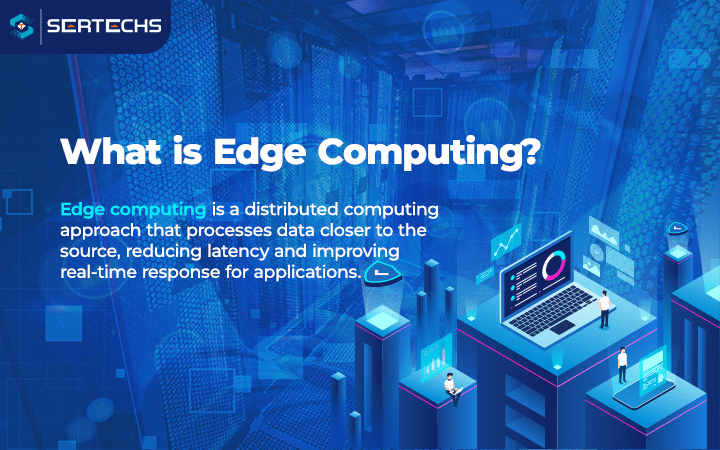
Edge computing refers to a decentralized computing paradigm where data processing and computation are performed closer to the data source or “edge” of a network, rather than relying solely on centralized cloud servers or data centers. The goal of edge computing is to reduce latency, improve real-time processing, and enhance the overall efficiency of data processing and analytics. Key characteristics and components include: Proximity to Data Source: Edge computing devices are typically placed in close proximity to where data is generated, such as IoT (Internet of Things) sensors, mobile devices, or machinery. Low Latency: By processing data locally, it reduces the time it takes for data to travel back and forth to a centralized server, leading to lower latency and faster response times for applications that require real-time or near-real-time processing. Bandwidth Optimization: It can help optimize network bandwidth usage by filtering and processing data locally before transmitting only relevant or summarized information to the central cloud. This reduces the strain on network infrastructure. Autonomy: It can operate autonomously, even when disconnected from the central cloud. They can make decisions and take actions locally, which is critical for applications that need to function in remote or disconnected environments. Data Security and Privacy: Some data, especially sensitive or private information, may be processed and stored locally on edge devices to enhance security and privacy, reducing the risk of data breaches. Scalability: It can scale horizontally by adding more edge devices as needed, making it suitable for distributed and dynamic environments. Use Cases: It is applied in various industries, including manufacturing, healthcare, autonomous vehicles, smart cities, agriculture, and more. Examples include predictive maintenance in industrial settings, real-time health monitoring, and autonomous vehicles making split-second decisions. Edge computing complements cloud computing rather than replacing it. While cloud computing provides centralized storage, data analytics, and management, edge computing brings computation closer to the data source, allowing for faster and more efficient processing of data at the edge of the network.
What is AWS?
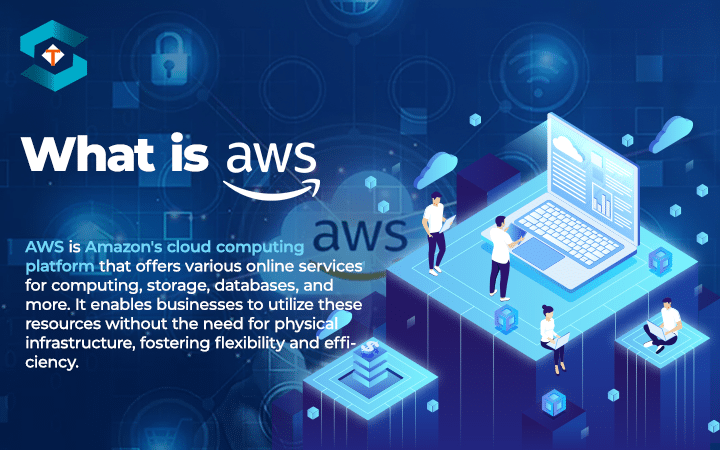
AWS stands for Amazon Web Services, which is a comprehensive and widely used cloud computing platform provided by Amazon. It offers a vast array of cloud services, including computing power, storage, databases, networking, analytics, machine learning, security, and more. It allows businesses, individuals, and organizations to access and use these services on a pay-as-you-go basis, eliminating the need for upfront investments in physical hardware and infrastructure. AWS provides a variety of services and features, some of which include: Compute Services: It offers services like Amazon EC2 (Elastic Compute Cloud) for scalable virtual servers, AWS Lambda for serverless computing, and AWS Elastic Beanstalk for simplified application deployment. Storage Services: It provides various storage options, including Amazon S3 (Simple Storage Service) for scalable object storage, Amazon EBS (Elastic Block Store) for block storage, and Amazon Glacier for long-term archival storage. Database Services: It offers managed database services like Amazon RDS (Relational Database Service) for relational databases, Amazon DynamoDB for NoSQL databases, and Amazon Redshift for data warehousing. Networking Services: AWS provides services like Amazon VPC (Virtual Private Cloud) for isolated networking environments, Amazon CloudFront for content delivery, and Amazon Route 53 for domain name system (DNS) management. Analytics and Big Data: It offers services like Amazon EMR (Elastic MapReduce) for big data processing, Amazon Athena for querying data in S3, and Amazon Redshift for data warehousing and analytics. Machine Learning and AI: It provides tools for machine learning and artificial intelligence, such as Amazon SageMaker for building, training, and deploying machine learning models, and Amazon Rekognition for image and video analysis. Security and Identity Services: It includes services for identity and access management (IAM), encryption, and security monitoring to help secure resources and data. Management and Deployment Tools: AWS provides tools like AWS CloudFormation for infrastructure as code, AWS Elastic Beanstalk for application deployment, and AWS OpsWorks for application management. IoT (Internet of Things): It offers services for building and managing IoT applications, such as Amazon IoT Core for device communication and management. Serverless Computing: AWS Lambda allows you to run code without provisioning or managing servers, enabling you to build applications with smaller, more modular components. Some of the key services provided by AWS include: EC2 (Elastic Compute Cloud) S3 (Simple Storage Service) RDS (Relational Database Service) SNS (Simple Notification Service) and SQS (Simple Queue Service) VPC (Virtual Private Cloud) DynamoDB
What is AI?

Artificial Intelligence (AI) is a field of computer science that focuses on creating systems and machines capable of performing tasks that typically require human intelligence. These tasks include problem-solving, learning, decision-making, language understanding, and perception. AI aims to simulate human intelligence in machines, allowing them to analyze data, recognize patterns, and make informed decisions. It is composed of several subfields, each addressing different aspects of intelligent behavior: Machine Learning (ML): ML is a subset of AI that involves the development of algorithms and models that enable computers to learn from and make predictions or decisions based on data. It encompasses various techniques, including supervised learning, unsupervised learning, and reinforcement learning. Neural Networks Neural networks are computational models inspired by the structure and functioning of the human brain. Deep Learning, a subset of ML, utilizes neural networks with many layers (deep neural networks) to process and understand complex data. Natural Language Processing (NLP) NLP focuses on enabling computers to understand, interpret, and generate human language. It powers applications like language translation, sentiment analysis, chatbots, and voice assistants. Robotics Robotics combines AI with mechanical engineering to create robots capable of interacting with the physical world. These robots can perform tasks ranging from manufacturing to autonomous navigation. Expert Systems These are AI systems designed to mimic the decision-making abilities of a human expert in a specific domain. They use rule-based systems to make informed decisions based on provided information. Cognitive Computing This field focuses on creating systems that can simulate human thought processes. IBM’s Watson, for instance, is a cognitive computing system that can understand natural language and provide insights based on vast amounts of data. It has found applications across various industries Healthcare AI aids in disease diagnosis, drug discovery, and personalized treatment plans. Finance It is used for algorithmic trading, fraud detection, and credit risk assessment. Retail It powers recommendation systems, inventory management, and customer service chatbots. Automotive Self-driving cars utilize for navigation and avoiding obstacles. Entertainment Streaming services use AI for content recommendations, and AI-generated art is becoming more prevalent. However, AI also presents ethical and societal challenges, including bias in algorithms, job displacement, privacy concerns, and the potential misuse of AI for malicious purposes. As the field continues to evolve, these challenges are being addressed through research, and responsible AI development practices.
Why ChatGPT is better than Stack Overflow?
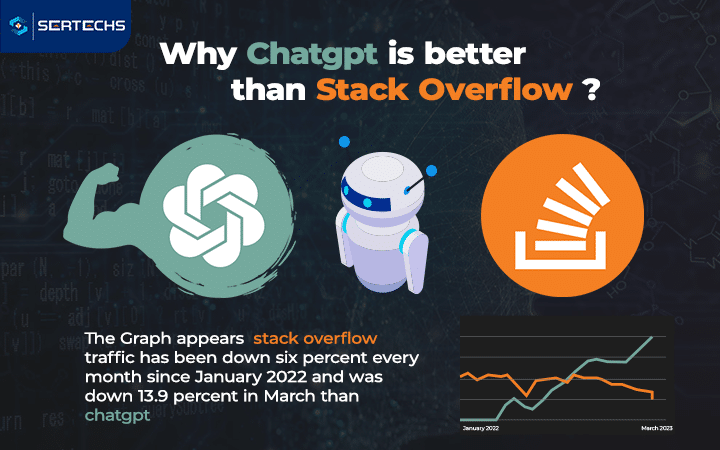
Stack Overflow, once the go-to platform for developers seeking answers, has faced a decline in traffic and trust. The emergence of ChatGPT, with its fast and accurate responses has exacerbated the shortcomings of Stack Overflow. ChatGPT: ChatGPT is an AI-powered language model developed by OpenAI. It’s designed to engage in natural language conversations, making it a versatile tool for a wide range of tasks, including coding assistance and problem-solving. Strengths of ChatGPT: ChatGPT’s ability to engage in free-form conversations makes it ideal for open-ended queries. You can explain your problem in natural language, and the model will attempt to provide relevant responses. While Stack Overflow primarily focuses on coding questions, ChatGPT can assist with a broader array of topics, including explanations of concepts, brainstorming ideas, and generating code snippets. ChatGPT is available around the clock, providing instant assistance whenever you need it. You don’t have to wait for community members to respond. Sometimes, a different perspective can spark creative solutions. ChatGPT’s input is not constrained by existing answers, potentially leading to unique insights. Advantages: Reduce Time and Effort for Tasks Easy to Use Speed and Efficiency Cost Effective Personalization Analytics Stack Overflow: Stack Overflow is a question-and-answer platform designed explicitly for programmers. It has established itself as the go-to destination for developers seeking solutions to coding problems, clarifications on programming concepts, and debugging assistance. Strengths of Stack Overflow: Stack Overflow boasts a massive community of developers from various backgrounds. This diverse pool of knowledge ensures that even the most complex questions can find answers. The platform’s structured format allows for clear and concise question-and-answer threads. This structure makes it easy to search for existing answers and avoids the ambiguity sometimes found in unstructured conversations. Stack Overflow’s extensive archives contain a wealth of previously asked and answered questions. Chances are, someone has encountered a similar problem before. Stack Overflow, once the go-to platform for developers seeking answers, has faced a decline in traffic and trust. Disadvantages: Lack of Emotional Intelligence Limited context and Knowledge Challenging to Use Security Risks Inexperience Technical Glitches
Benefits of WordPress
WordPress has been started around since 2003 and was the most popular blogging software on the market. Over the few years, WordPress has become the content management platform for non-blogging websites. WordPress is the most used website-building platform in the world. Joomla and Drupal need a particular level of technical know-how and familiarity with HTML CSS and the programming language PHP. Easy to Use: WordPress can be installed and set up in a few minutes, with a little experience with cPanel. WordPress is easy to use for beginners. There are many benefits of WordPress. WordPress helped our users with respect to the competitors like Drupal or Joomla which is why it become the favorite choice of web developers everywhere, there is no need for a genius in PHP, HTML, CSS. Fully Customizable: WordPress themes are easy to customize because a lot of options in the panel authorize you to change colors, make new backgrounds, upload your logo, create wonderful sliders, and honestly customize it to your demand without writing any miner code. Flexibility: WordPress is used to run complicated sites for big multinational companies, manage large and small businesses, and create personal blogs. WordPress sites can contain full-service eCommerce stores, showcase a portfolio, or host a social network, and podcasts. Plugins Functionality: WordPress involves all the elements needed to create a basic website, but many users want more creative functions related to a website. The WordPress plugin directory includes hundreds of plugins small pieces of code designed to perform specific tasks. That allow users to add features such as shopping carts, contact forms, calendars, Facebook fan boxes, and many more. Mobile Responsive: WordPress sites are easy to make mobile responsive. It’s very impactful for the user as well as for SEO. Mobile responsiveness is also a positive factor for Google rankings. Websites need to look good on any device. WordPress offers different kinds of responsive theme designs. Users can also make a static site responsive with plugins and adjustments to theme files. Built-In Blogs: WordPress is a content management system software. It has multiple features that make publishing content very easy. The most feature is a “built-in” blog that can be accessed from any device well as at any time. Users who want to add a blog to our website don’t have to create one separately. Since WordPress was created as a blogging platform, blogging capabilities are built-in and are easy to integrate, if useful. Security: The WordPress community contains thousands of operators and volunteers providing free advice and support on different forums. The community of WordPress members is responsible for making changes to the source files and keeping WordPress secure and up-to-date. WordPress Support: When contrast to other platforms, this is hopefully the great benefits of WordPress. This is suitable for you. If you need help with your website, you ask a question WordPress support, you will get your possible answer from the community.
How can a Digital Marketing Agency Help Your Small Business?

A digital marketing agency is a firm that deals exclusively in marketing to customers through digital channels. This includes creating and launching campaigns for corporate clients through social media, pay-per-click advertising, videos, and websites among others. It plays an important role in the success of small businesses. It helps you to advertise your product and deal with customers. Marketing is a fabulous platform for us to enhance your business. Here are some strategies of digital marketing agencies to boost your small business are: Creative and Digital marketing agency The creative agency focuses more on brand design, content creation, and every that revolves around creating a brand image . In the simplest terms, you can view a creative agency as the team that creates all the content and visual elements of your brand. Content is the kingdom if your visual is good then it attracts customers toward your product. Think of all the design that goes into marketing a product, service, or company. It includes items such as logos, color schemes, banners, copywriting, email newsletters, infographics, packaging design, videos, and TV ads. So my point of view digital marketing is the big canvas or umbrella where u can create an AD on google and also do marketing on social media account to sell your product or services basically if any company want to sell product or services they create an AD on the internet so this kind of marketing is called digital marketing. Some platforms in Digital marketing. So before starting here with more detail of digital marketing, I will discuss some platforms of digital marketing, So here are the following: GOOGLE SEO SMM EMAIL Marketing Banner AD Sponsored AD ALEXA MSN Yahoo Bing Video AD Google So Google is a very big platform where you can do digital marketing, creating google AD for every businessman, corporate sector, and company that is limited or private selling their product or services. Digital marketing services Digital marketing can be broadly broken into 8 main categories including Search engine optimization, pay-per-click, social media marketing, content marketing, Email marketing, Mobile marketing, Marketing Analytics, and Affiliate marketing. In search engine optimization there are two main types off-page SEO and other is on-page SEO. Pay-per-click advertising provides an instant impact and generates leads and sales for your business by putting your brand in front of your potential customers. Social media marketing takes place under digital marketing, This is the best and very cheap or easy for everyone, for social media marketing you have to must know about your targeted customers, because if you don’t know about your targeted customer then you are doing a very big mistake for your client business, some social media platform are: Facebook Instagram Linkedin Pinterest Quora Youtube Twitter Email marketing is one of the best ways of digital marketing because if your website has an email letter and once you get an email from the customer by doing many ways then you will send email again and again and tell about your product and service, there is a big chance that somewhere client will contact you for your product and services, you can send a bulk email from many tolls, so if you are not using email marketing in digital marketing then you are missing many customers. Digital marketing benefits Digital marketing is an advertising and content distribution via a variety of digital channels. It includes online channels, such as search engines, social media, email, applications, websites, and any new digital channels that might arise with the possibility of advertisement. The top advantages of digital marketing are Global Reach, Local Reach, lower cost, Ease to learn, Effective Targeting, multiple strategies, Multiple content types, Increase Engagement, Analytical, and optimization. Digital marketing specialist Someone who is responsible for developing and managing digital marketing strategies and campaigns is called a specialist. In order to attract a digital marketing specialist that best matches your needs, it is very important to write a clear and precise Digital marketing specialist job description. As a specialist, it is your first priority to manage everything about marketing. You will use organization search campaigns, paid advertising, email marketing, social media, and other channels to increase awareness about your product, brand, and services. Internet marketing services The Internet plays an important role in our lives because of the internet our world become a global village. In the era of the modern world, the use of the internet connects the whole world together. The Internet is not only used for personal or professional purposes but also use for marketing reasons. Businesses have immense potential in the use of internet promotional purposes. Internet marketing is relatively inexpensive compared with the ratio of cost to the reach of the target audience. It offers a great sense of accountability for advertisers. It refers to online marketing which is related to email and wirelessly marketing methods. Internet marketing evolves in a fast phase manner. It is more sophisticated than traditional marketing because of the technology we use today. This technology thirty years ago never exist. Online advertising has been around ever since the 1990s when the internet began to become global. Web advertising, digital advertising, online marketing, and Internet marketing with the same meaning as online advertising. Internet marketing as meaning online advertising.