
Self-sovereign identity

Self-sovereign identity (SSI) is a concept that refers to individuals having ownership and control over their own digital identities without the need for central authorities or intermediaries. In the digital world, traditional identity systems often rely on centralized entities to manage and verify identities. SSI seeks to change this paradigm by putting the individual at the center of their identity. Key principles of Self-sovereign identity include: User Control: Individuals have full control over their digital identities, including personal information, credentials, and access rights. They can choose what information to share and with whom, maintaining privacy and consent. Decentralization: SSI systems are decentralized, using distributed ledger technology or other cryptographic methods to securely store and manage identity-related data. This eliminates the need for a single central authority to manage identities. Interoperability: SSI aims for compatibility and interoperability across different systems and platforms. They allowing individuals to use their identities universally without being tied to specific service providers. Security and Privacy: Emphasis is placed on ensuring that identity-related data is secure, encrypted, and tamper-proof. Users have the right to selectively disclose information while maintaining privacy and security. Verifiability and Portability: SSI allows the creation of verifiable credentials that can be easily shared and verified across various applications and reducing the need for redundant identity verification processes. Implementing SSI involves the use of digital wallets or identity hubs where individuals securely store and manage their credentials and personal information. These credentials can include things like government-issued IDs, educational qualifications or any other relevant data that requires verification in different contexts. The SSI model aims to address issues related to identity theft, data breaches, and lack of privacy inherent in centralized identity systems. It promotes user empowerment, privacy protection, and greater control over personal data. SSI faces challenges related to regulatory frameworks and establishing trust among different stakeholders in the identity ecosystem.
Web3
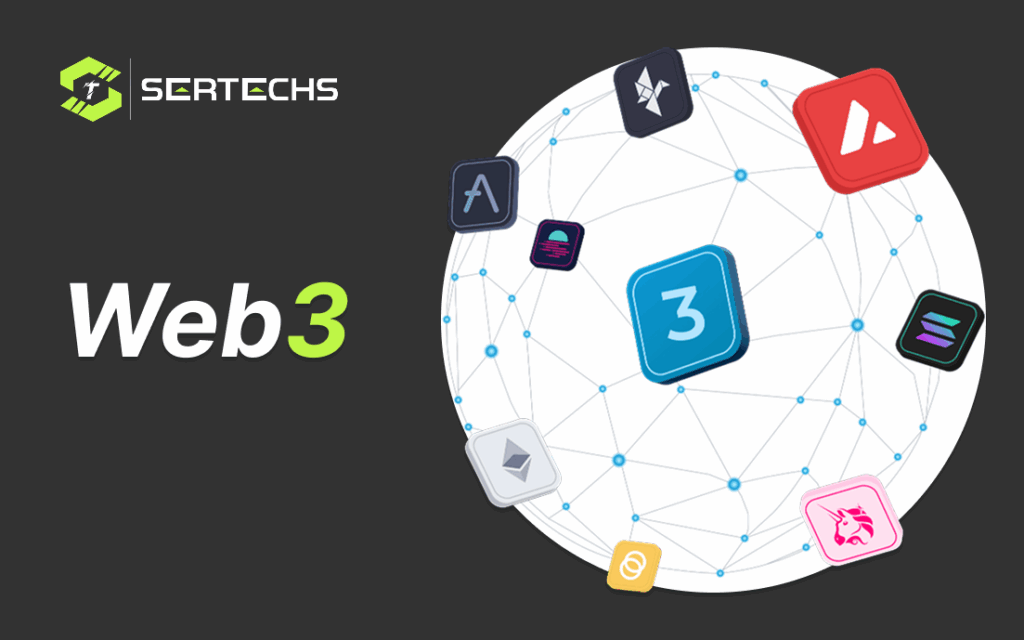
Web3 refers to a vision of the internet that involves decentralization, blockchain technology, and the concept of enabling a more user-centric internet . It represents a shift from the current centralized web (Web 2.0) to a more decentralized web infrastructure, where users have more control over their data, identity, and digital assets. Blockchain Technology: Decentralized Ledger: Blockchain is a distributed and decentralized ledger that records transactions across a network of computers in a secure and transparent manner. Each block in the chain contains a cryptographic hash of the previous block, creating a secure link between them. Consensus Mechanisms: Various consensus mechanisms (Proof of Work, Proof of Stake, etc.) are used in blockchain networks to achieve agreement on the state of the ledger without the need for a central authority. Smart Contracts: Self-executing contracts written in code that automatically enforce and execute the terms of an agreement when predefined conditions are met. Decentralized Applications (dApps): Built on Blockchain: Applications that operate on blockchain networks, utilizing their decentralized nature and smart contract functionality. Examples: Decentralized finance (DeFi) platforms, decentralized social media networks, decentralized exchanges (DEX), gaming platforms, and more. Cryptocurrencies and Tokens: Digital Assets: Cryptocurrencies like Bitcoin and Ethereum serve as digital currencies within the Web3 ecosystem. Tokens: Represent various assets, ownership rights, or utility within specific applications or ecosystems. They can be fungible (like ERC-20 tokens) or non-fungible (NFTs). Decentralized Finance (DeFi): Financial Services: DeFi refers to a set of financial services and applications built on blockchain that aim to provide alternatives to traditional finance, such as lending, borrowing, staking, yield farming, and decentralized exchanges. Open and Permissionless: Anyone with internet access can participate in DeFi services without the need for intermediaries like banks. Interoperability: Cross-chain Communication: Efforts to enable different blockchain networks to communicate and transact with each other seamlessly, fostering greater connectivity and collaboration between diverse protocols and systems. User Control and Privacy: Self-sovereign Identity: Users have more control over their digital identities, allowing them to manage and share their information securely without relying on centralized authorities. Enhanced Privacy: Encryption and zero-knowledge proofs contribute to heightened privacy and confidentiality of user data. Cryptography and Security: Immutable Records: The use of cryptographic hashing ensures the immutability and integrity of data stored on the blockchain. Secure Transactions: Advanced cryptography secures transactions and ensures authenticity, integrity, and confidentiality. Web3 aims to revolutionize various industries by leveraging decentralized technologies, empowering users, enhancing security and privacy, and fostering innovation in a trustless environment. It is an evolving concept with ongoing developments and advancements in decentralized technologies. The goal of Web3 is to create a more transparent, open, and equitable internet where users have more autonomy over their digital lives and interactions. It encompasses a wide range of technologies and concepts that aim to reshape various industries, including finance, gaming, supply chain, identity verification, and more, by leveraging the capabilities of blockchain and decentralization.
Prototyping and Wireframing

Prototyping and wireframing are crucial steps in the process of designing digital products, such as websites, mobile applications, or software. They help visualize and iterate on ideas, allowing designers, developers, and stakeholders to understand and refine the product before actual development begins. Here’s an overview of both: Wireframing: Purpose: Wireframing is a low-fidelity visual representation of a digital product’s layout, structure, and functionality. It’s a skeletal outline that focuses on the placement of elements without detailing design aesthetics. Key Features: Basic Structure: It outlines the basic layout, including placement of content, navigation, and key interface elements. Functionality: It defines the interaction between different elements, like buttons, links, and forms, but doesn’t specify the design details or styles. Ease of Iteration: Wireframes are easy to create and modify, allowing quick adjustments to the structure and flow of the product. Tools for Wireframing: Software tools like Adobe XD, Sketch, Figma, Balsamiq, and Axure RP are commonly used for creating wireframes. Prototyping: Purpose: Prototyping involves creating a more interactive and higher-fidelity representation of the digital product. It allows for testing user interactions, functionalities, and workflows. Key Features: Interactive Elements: Prototypes simulate user interactions, allowing stakeholders to navigate through the product, test functionalities, and experience user flows. User Testing: Prototypes are often used for usability testing to gather feedback and insights from potential users or stakeholders. Higher Fidelity: Prototypes include more detailed design elements and sometimes even near-final visual representations. Types of Prototypes: Low-Fidelity Prototypes: Basic representations with limited interactions, often used for early-stage concept testing. High-Fidelity Prototypes: Closer to the final product, including detailed design elements and interactions, suitable for user testing and validation. Tools for Prototyping: Tools like Adobe XD, Figma, InVision, Marvel, and Proto.io are popular for creating interactive prototypes. Relationship Between Wireframing and Prototyping: Wireframes typically serve as the initial step, providing a structural outline. Prototyping builds upon wireframes by adding interactivity and functionality to create a more realistic representation of the final product. Both wireframing and prototyping are essential in the design process as they facilitate communication, iteration, and validation of design ideas, resulting in a more user-friendly and efficient digital product.
Headless CMS
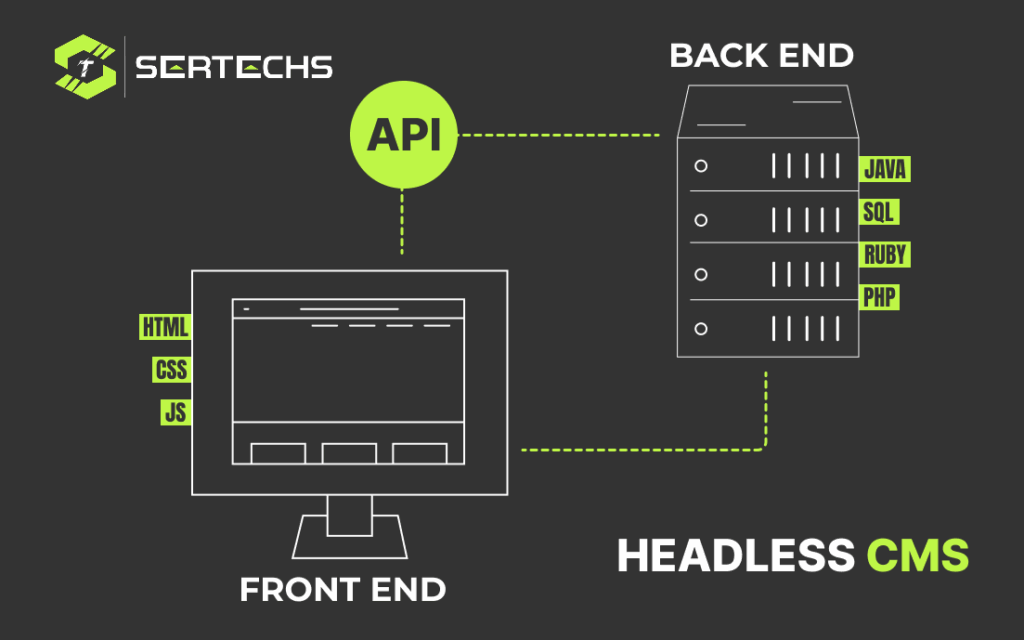
A Headless CMS (Content Management System) is a backend-only content management system where the content repository is separated from the presentation layer (front end). In a traditional CMS, like WordPress or Drupal, the content management and content presentation are tightly coupled. However, in a headless CMS architecture, content is stored and managed centrally, but it’s delivered to various front-end platforms (websites, mobile apps, IoT devices, etc.) through APIs (Application Programming Interfaces). Key features of a headless CMS include: Content Repository: It stores and manages content (text, images, videos, etc.) in a structured manner, often using a RESTful API or GraphQL, allowing for easy access and manipulation of content. API Access: Content is accessed via APIs, enabling developers to retrieve, create, update, and delete content programmatically from any device or platform. Flexibility and Omnichannel Delivery: Developers have the flexibility to display content across various channels (websites, apps, wearables, etc.) and technologies, allowing for a consistent user experience. Technology Agnostic: As the front end is decoupled from the backend, developers have the freedom to use any technology stack for building the user interface, making it easier to adapt to new technologies or frameworks. Scalability and Performance: Headless CMS architectures often offer improved scalability and performance as content delivery is optimized by not being tied to the presentation layer. Popular headless CMS platforms include: Contentful: A widely used headless CMS that offers a flexible content infrastructure and APIs for delivering content across different platforms. Strapi: An open-source headless CMS that allows for self-hosting and offers a customizable content management experience. Prismic: Another headless CMS that provides an easy-to-use interface for content creation and distribution. Developers and organizations often choose headless CMS solutions when they require flexibility in content delivery across multiple channels, want to future-proof their technology stack, or need to integrate content into various applications without constraints imposed by a traditional coupled CMS.
Spatial Computing

Spatial computing refers to the use of digital technology to understand and interact with the physical world in real-time. It involves the integration of digital information or content with the user’s environment, typically through augmented reality (AR), virtual reality (VR), mixed reality (MR), and various sensor technologies. Here are key components and concepts related to spatial computing: Augmented Reality (AR): AR overlays digital information, such as images, videos, or 3D models, onto the real world. It enhances the real-world environment by adding computer-generated elements. It enhances experiences by providing contextual information, such as displaying directions in real-time, enabling immersive gaming experiences, or assisting in maintenance tasks by showing instructions overlaid onto machinery. Virtual Reality (VR): VR creates a completely immersive digital environment that simulates reality. Users are entirely immersed in this computer-generated world, often using specialized headsets or devices. This technology is often used for gaming, simulations, training programs, and therapeutic applications, allowing users to interact with and experience computer-generated environments. Mixed Reality (MR): MR merges real-world and digital content, allowing interaction with both simultaneously. It combines elements of AR and VR to interact with digital objects while remaining aware of the physical surroundings. This technology has applications in fields such as design, education, and remote collaboration. Spatial Mapping: Spatial mapping involves creating digital maps or models of physical environments using sensors, cameras, or other devices. This data is used to integrate digital content into the real world accurately. This involves creating 3D representations of environments, recognizing surfaces, objects, and spatial relationships, enabling accurate placement of digital content within the real world. Spatial Understanding: This refers to the technology’s capability to comprehend and interpret the physical environment. It involves recognizing surfaces, objects, and spatial relationships to enable digital interactions within the environment. Spatial Computing Devices: These devices include AR glasses, VR headsets, smartphones with AR capabilities, and sensors that collect data to enable spatial mapping and understanding. These devices incorporate sensors, displays, and processing capabilities to deliver immersive experiences and interact with the environment in real-time. Future Potential: As spatial computing technologies advance, they’re expected to become more integrated into daily life. This could include AR glasses replacing smartphones for everyday tasks, revolutionizing how we work, communicate, learn, and entertain ourselves. Applications: Spatial computing finds applications in various fields like gaming, education, healthcare, architecture, design, navigation, and industrial training, among others. For instance, it can be used for creating interactive educational content, enhancing remote collaboration, or improving navigation through AR-based directions. Advancements in spatial computing technologies continue to evolve, offering new possibilities for how we interact with digital content and the physical world. As these technologies become more sophisticated and accessible, their applications are likely to expand across industries, impacting how we work, learn, and interact with our surroundings.
Capacity Development

Capacity development refers to the process of enhancing an individual’s, organization’s, or community’s ability to perform effectively and sustainably. It involves the acquisition or strengthening of knowledge, skills, attitudes, systems, and resources necessary for achieving specific goals or objectives. This concept is often applied in various fields, including: Organizational Capacity Development: Focused on improving the capabilities of an organization, such as its management, human resources, financial systems, and infrastructure. Individual Capacity Development: Concentrates on enhancing the skills, knowledge, and capabilities of individuals through training, education, mentoring, and coaching. Community Capacity Development: Aims to empower communities by building their ability to identify and address their own needs and challenges, often involving participatory approaches and community-led initiatives. National Capacity Development: Refers to the strengthening of a country’s institutions, policies, and systems to foster sustainable development, often through technical assistance, policy reforms, and institutional strengthening. Assessment: Identifying strengths, weaknesses, needs, and gaps in knowledge, skills, resources, and systems. Planning: Developing strategies and action plans to address the identified gaps and build necessary capacities. Implementation: Executing the plans through training, education, skill-building activities, institutional reforms, and resource allocation. Monitoring and Evaluation: Assessing progress, measuring the effectiveness of capacity-building efforts, and making adjustments as needed. This development is crucial for sustainable development, as it enables individuals, organizations, and communities to adapt to changing circumstances, innovate, and effectively address challenges and opportunities. These efforts might include training programs, skill-building workshops, mentoring, coaching, access to resources, infrastructure development, policy reforms, and more. The goal is to empower individuals or groups to become more self-reliant, resilient, and capable of addressing challenges and seizing opportunities. It can involve enhancing leadership skills, fostering innovation, improving communication, and ensuring access to necessary tools and technology. Various stakeholders, including governments, NGOs, international organizations, and private sectors, play roles in facilitating and supporting capacity development initiatives across different levels, aiming for long-term, sustainable growth and development.
Cyber Physical Systems

Cyber Physical Systems (CPS) refer to integrated systems that combine physical processes with networked computational elements. These systems merge the digital and physical worlds, enabling interactions between the two. Key components of Cyber Physical Systems include: Physical Elements: CPS involve physical entities like sensors, actuators, machines, and devices that interact with the real world. These components collect data from the environment or perform actions in response to commands. Computational Elements: CPS incorporate computing systems such as embedded systems, processors, and software that process data, make decisions, and control physical processes. Connectivity: CPS rely on communication networks (wired or wireless) to facilitate the exchange of data between physical components and computational units. Control Systems: Cyber Physical systems manage and regulate the behavior of CPS components, orchestrating their interactions and ensuring the system operates efficiently and safely. Applications: CPS find applications in various fields, including smart cities, healthcare, transportation, manufacturing, agriculture, and more. For instance, in smart cities, CPS can optimize traffic flow, manage energy usage, or enhance public safety through interconnected systems. CPS have numerous benefits, such as improving efficiency, automating processes, enhancing decision-making, and enabling remote monitoring and control. However, they also pose challenges related to security, privacy, reliability, and interoperability due to the integration of diverse components and technologies. Here’s a more detailed description: Interconnection of Physical and Cyber Elements: CPS integrate physical components, such as sensors, actuators, and devices, with computational elements like processors, software, and communication networks. These systems bridge the gap between the physical world and digital computing systems, allowing them to interact and influence each other. Real-time Data Acquisition and Processing: CPS collect data from the physical environment through sensors that monitor parameters like temperature, pressure, motion, and more. This real-time data is processed by computational units to derive insights, make decisions, and control physical processes. Feedback Loops and Control Systems: CPS often involve closed-loop control systems where data collected from the physical world is used to make decisions that affect physical processes. For example, in an automated manufacturing plant, sensors detect product defects, and computational systems adjust machinery to rectify the issue. Adaptability and Autonomy: CPS can exhibit adaptability and autonomy, adjusting their behavior in response to changing environmental conditions or specific requirements. They can make intelligent decisions without direct human intervention based on predefined algorithms or machine learning models. Research and Development: Ongoing research in CPS focuses on enhancing system reliability, developing efficient algorithms for data processing and decision-making, creating secure communication protocols, and establishing standards for interoperability and safety. CPS represent a rapidly evolving field that holds significant promise in revolutionizing industries, enhancing automation, and transforming the way we interact with the physical world through advanced computational capabilities.
AI Assistant
An AI assistant is a software-based program that leverages artificial intelligence techniques, machine learning, natural language processing, and sometimes additional technologies to provide support, perform tasks, and assist users with various activities. AI assistants come in different forms and serve diverse purposes: Personal Assistants: Al assistant, like Siri, Google Assistant, and Amazon Alexa, are designed to help individuals with tasks such as setting reminders, checking the weather, answering questions, managing calendars, and controlling smart home devices. Business and Productivity Assistants: AI-powered tools like chatbots or virtual assistants in customer service or office environments help streamline workflows, answer queries, assist with data analysis, and automate repetitive tasks. Specialized AI Assistants: Some AI assistants are tailored for specific industries or purposes. For example, in healthcare, there are AI assistants aiding in diagnosis or helping manage patient records. In finance, AI assistants can help with investment decisions or financial planning. Language Translation and Interpretation: AI assistants like language translation apps or devices use AI to translate text or speech between different languages in real-time. Content Creation and Writing Assistants: There are AI-based tools that help with content generation, writing assistance, and editing by suggesting improvements, checking grammar, or generating text based on provided prompts. AI assistants generally work by processing user input, understanding the context or intent behind the query, accessing relevant information or databases, and providing appropriate responses or actions. The capabilities of AI assistant continue to evolve rapidly, with advancements in AI technology enhancing their ability to understand natural language. However, challenges related to privacy, data security, bias remain important areas of focus as these assistants become more integrated into our daily lives. Some popular AI assistants include: Apple Siri: Siri is Apple’s virtual assistant integrated into iOS devices. It can perform tasks, answer questions, and interact with various apps using voice commands. Amazon Alexa: Alexa is the AI assistant developed by Amazon, primarily used in their Echo devices. It can perform tasks, control smart home devices, provide information, and even facilitate online shopping through voice commands. Google Assistant: Google Assistant is available on Android devices and Google Home devices. It uses Google’s vast search capabilities to provide information, schedule events, set reminders, and control smart home devices. Microsoft Cortana: Cortana is Microsoft’s AI assistant available on Windows devices. It helps with tasks, provides reminders, and integrates with Microsoft services like Office 365.
AI and Taxation

Artificial Intelligence (AI) is beginning to have an impact on taxation systems and processes in various ways. Here are some ways AI is being applied in the realm of taxation: Tax Compliance and Reporting: AI-powered systems can assist in tax compliance by automating data collection, analysis, and reporting. These systems can extract relevant information from large volumes of financial data, identify potential discrepancies, and ensure that businesses comply with tax regulations. Risk Assessment and Fraud Detection: AI algorithms can analyze vast amounts of data to identify patterns and anomalies that could indicate potential tax evasion or fraud. By using machine learning techniques, tax authorities can more effectively detect irregularities in tax filings and transactions. Chatbots and Customer Service: Tax agencies are employing AI-powered chatbots to provide assistance and answer taxpayer queries. These bots can handle routine inquiries, provide guidance on tax-related issues, and assist individuals in understanding their tax obligations. Predictive Analysis: AI can be used for predictive modeling to forecast tax revenues, estimate future tax liabilities, and optimize tax collection strategies. This technology allows governments to make more informed decisions about resource allocation and policy planning. Tax Planning and Optimization: AI tools can help individuals and businesses optimize their tax planning strategies by analyzing various scenarios and recommending approaches that minimize tax liabilities within the bounds of the law. Natural Language Processing (NLP): NLP capabilities in AI enable tax professionals to sift through and analyze vast amounts of tax code, regulations, and legal documents quickly. This can assist in understanding complex tax laws and regulations, ensuring compliance, and identifying potential opportunities for optimization. However, the integration of AI in taxation also raises several challenges and considerations: Ethical and Bias Concerns: AI systems might inherit biases from the data they are trained on, potentially leading to unfair treatment or discrimination in taxation. Ensuring fairness and transparency in AI algorithms is crucial. Data Privacy and Security: Handling sensitive financial data in AI systems requires robust security measures to prevent data breaches and maintain confidentiality. Regulatory and Legal Frameworks: Developing appropriate regulations and guidelines for the use of AI in taxation is essential to ensure accountability, compliance, and ethical use. As AI continues to advance, its application in taxation will likely grow, reshaping how tax systems operate, improving efficiency, and enhancing compliance while also necessitating careful attention to ethical, legal, and privacy considerations.
Digital Trust

Digital trust refers to the confidence and reliance that individuals, organizations, and societies have in the use, sharing, and storage of digital information and the technology that facilitates these processes. It is a critical component of the digital economy and is essential for the success of various online activities, such as e-commerce, online communication, and digital transactions. Key elements of digital trust include: Security: Trust is closely tied to the security of digital systems and data. Individuals and organizations need assurance that their digital interactions are secure, and their information is protected from unauthorized access, cyber threats, and data breaches. Privacy: Users want to be confident that their personal information is handled responsibly and in accordance with privacy laws. Transparency about data collection, processing, and storage practices helps build trust. Reliability: Digital systems and services must be reliable and available when needed. Frequent downtime, glitches, or errors can erode trust in digital platforms. Transparency: Open and transparent communication about how digital systems operate, how data is used, and how algorithms function is crucial for building trust. Users want to understand the processes behind the technologies they use. Compliance: Adherence to relevant laws and regulations, such as data protection laws, is essential for building trust. Organizations that demonstrate a commitment to legal compliance are more likely to be trusted by users. User Experience: A positive and user-friendly experience contributes to trust. Intuitive interfaces, clear instructions, and responsive customer support all play a role in creating a positive user experience. Ethics: Trust is also influenced by the ethical considerations of how technology is developed and used. Users are more likely to trust organizations that demonstrate ethical behavior, such as fair business practices and responsible use of technology. Data Governance: Establishing clear policies and practices for data governance, including data ownership, access controls, and data sharing, helps build trust among users. Crisis Management: How organizations respond to and manage digital crises, such as data breaches or cyber attacks, can significantly impact digital trust. Transparent and effective crisis management can help rebuild trust after an incident. Building and maintaining digital trust is an ongoing process that requires a combination of technical measures, ethical considerations, and effective communication. As digital technologies continue to evolve, the importance of digital trust will only increase.