
What is Edge Computing?
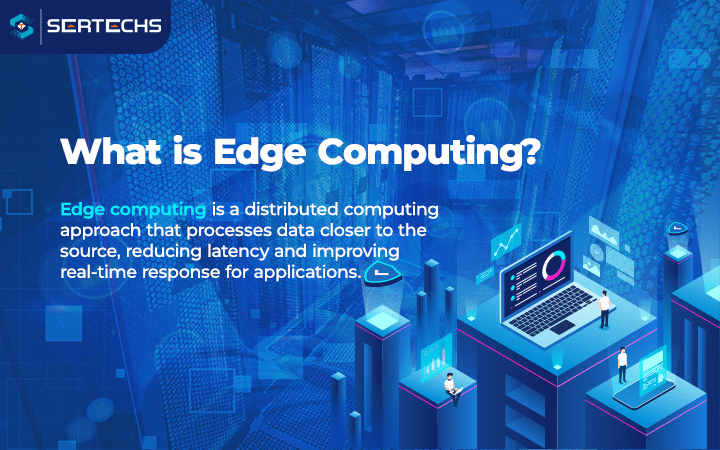
Edge computing refers to a decentralized computing paradigm where data processing and computation are performed closer to the data source or “edge” of a network, rather than relying solely on centralized cloud servers or data centers. The goal of edge computing is to reduce latency, improve real-time processing, and enhance the overall efficiency of data processing and analytics. Key characteristics and components include: Proximity to Data Source: Edge computing devices are typically placed in close proximity to where data is generated, such as IoT (Internet of Things) sensors, mobile devices, or machinery. Low Latency: By processing data locally, it reduces the time it takes for data to travel back and forth to a centralized server, leading to lower latency and faster response times for applications that require real-time or near-real-time processing. Bandwidth Optimization: It can help optimize network bandwidth usage by filtering and processing data locally before transmitting only relevant or summarized information to the central cloud. This reduces the strain on network infrastructure. Autonomy: It can operate autonomously, even when disconnected from the central cloud. They can make decisions and take actions locally, which is critical for applications that need to function in remote or disconnected environments. Data Security and Privacy: Some data, especially sensitive or private information, may be processed and stored locally on edge devices to enhance security and privacy, reducing the risk of data breaches. Scalability: It can scale horizontally by adding more edge devices as needed, making it suitable for distributed and dynamic environments. Use Cases: It is applied in various industries, including manufacturing, healthcare, autonomous vehicles, smart cities, agriculture, and more. Examples include predictive maintenance in industrial settings, real-time health monitoring, and autonomous vehicles making split-second decisions. Edge computing complements cloud computing rather than replacing it. While cloud computing provides centralized storage, data analytics, and management, edge computing brings computation closer to the data source, allowing for faster and more efficient processing of data at the edge of the network.
What is Mobileye?
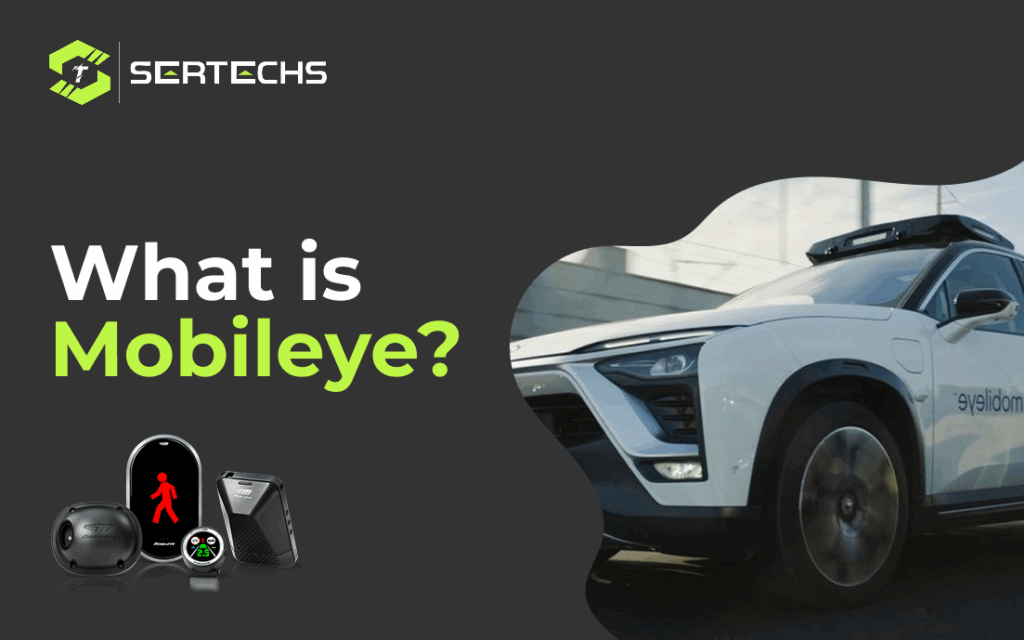
Mobileye is an Israeli technology company that specializes in developing advanced driver assistance systems (ADAS) and autonomous driving technologies. The company was founded in 1999 by Amnon Shashua and Ziv Aviram. Mobileye’s technologies primarily focus on making vehicles safer and more efficient on the road by utilizing computer vision, and sensor fusion and many more. Mobileye’s technology works by utilizing a combination of hardware & software to enable advanced driver assistance systems (ADAS) and autonomous driving capabilities. Here’s an overview of how Mobileye’s system works: Sensors: Vehicles equipped with Mobileye technology are equipped with various sensors, primarily cameras but also potentially lidar and radar, that capture data about the vehicle’s surroundings. These sensors provide visual information that is crucial for understanding the environment. Processing: The Mobileye EyeQ SoC is a specialized computer processor that processes the incoming visual data. The processing involves various computer vision and machine learning algorithms that can identify and classify objects, determine distances. Environment Perception: Mobileye’s algorithms analyze the processed data to understand the vehicle’s surroundings. This includes identifying the current lane, tracking other vehicles, detecting pedestrians, recognizing traffic signs and signals, and assessing potential collision risks. Mapping and Localization (Autonomous Mode): In autonomous driving mode, Mobileye’s technology uses its perception capabilities to build a detailed map of the environment. This map includes lane markings, traffic signs, landmarks, and more. The vehicle’s precise location is determined based on this map, a process known as localization. Decision-Making (Autonomous Mode): The autonomous driving system, powered by Mobileye’s algorithms, interprets the sensor data, and other contextual information to make driving . This involves navigating the vehicle, predicting the movements of other road users, and avoiding obstacles and hazards. Control (Autonomous Mode): Based on the decisions made, the autonomous system controls the vehicle’s acceleration, braking, and steering to navigate the road safely and efficiently.
What is AI?

Artificial Intelligence (AI) is a field of computer science that focuses on creating systems and machines capable of performing tasks that typically require human intelligence. These tasks include problem-solving, learning, decision-making, language understanding, and perception. AI aims to simulate human intelligence in machines, allowing them to analyze data, recognize patterns, and make informed decisions. It is composed of several subfields, each addressing different aspects of intelligent behavior: Machine Learning (ML): ML is a subset of AI that involves the development of algorithms and models that enable computers to learn from and make predictions or decisions based on data. It encompasses various techniques, including supervised learning, unsupervised learning, and reinforcement learning. Neural Networks Neural networks are computational models inspired by the structure and functioning of the human brain. Deep Learning, a subset of ML, utilizes neural networks with many layers (deep neural networks) to process and understand complex data. Natural Language Processing (NLP) NLP focuses on enabling computers to understand, interpret, and generate human language. It powers applications like language translation, sentiment analysis, chatbots, and voice assistants. Robotics Robotics combines AI with mechanical engineering to create robots capable of interacting with the physical world. These robots can perform tasks ranging from manufacturing to autonomous navigation. Expert Systems These are AI systems designed to mimic the decision-making abilities of a human expert in a specific domain. They use rule-based systems to make informed decisions based on provided information. Cognitive Computing This field focuses on creating systems that can simulate human thought processes. IBM’s Watson, for instance, is a cognitive computing system that can understand natural language and provide insights based on vast amounts of data. It has found applications across various industries Healthcare AI aids in disease diagnosis, drug discovery, and personalized treatment plans. Finance It is used for algorithmic trading, fraud detection, and credit risk assessment. Retail It powers recommendation systems, inventory management, and customer service chatbots. Automotive Self-driving cars utilize for navigation and avoiding obstacles. Entertainment Streaming services use AI for content recommendations, and AI-generated art is becoming more prevalent. However, AI also presents ethical and societal challenges, including bias in algorithms, job displacement, privacy concerns, and the potential misuse of AI for malicious purposes. As the field continues to evolve, these challenges are being addressed through research, and responsible AI development practices.