
Keyword Research

Keyword research is a crucial aspect of search engine optimization (SEO) and content marketing. It involves identifying and analyzing the specific words and phrases that people use when searching for information, products, or services on search engines like Google. The goal of keyword research is to understand what your target audience is searching for and to use that information to optimize your website or create content that is more likely to rank well in search engine results. Here are the key steps involved in keyword research: Identify Your Niche or Topic: Determine the main topic or niche that your website or content is focused on. This should be a broad category that’s relevant to your business or interests. Generate Seed Keywords: Come up with a list of initial keywords that are related to your niche. These are often single words or short phrases that represent the core of your content or business. Use Keyword Research Tools: There are several keyword research tools available, both free and paid, that can help you expand your list of keywords, estimate search volumes, and analyze keyword difficulty. Some popular tools include Google Keyword Planner, Ahrefs, SEMrush, Moz Keyword Explorer, and Ubersuggest. Expand Your Keyword List: Use the keyword research tools to find related keywords, long-tail keywords (more specific and longer phrases), and synonyms. This will give you a broader range of keyword ideas to work with. Analyze Keyword Metrics: Evaluate the search volume (how many people search for a particular keyword), keyword difficulty (how competitive it is to rank for a keyword), and the relevance of keywords to your content or business. Prioritize Keywords: Based on the analysis, prioritize the keywords that are most relevant and have a reasonable balance between search volume and keyword difficulty. High-volume, highly competitive keywords may be challenging for smaller websites to rank for, so it’s often a good idea to focus on a mix of keywords, including some with lower competition. Create Content or Optimize Existing Content: Once you’ve selected your target keywords, you can create new content or optimize existing content to include these keywords. Ensure that your content provides valuable information and is well-structured for both users and search engines. Monitor and Adjust: Regularly monitor your keyword performance and rankings. If you’re not achieving the desired results, you may need to make adjustments to your content or SEO strategy. Keyword research is an ongoing process because search trends change, and new keywords emerge over time. It’s essential to stay up-to-date with the latest keyword trends and adjust your strategy accordingly to maintain and improve your website’s search engine visibility.
E-commerce SEO

E-commerce SEO, or Search Engine Optimization, is the practice of optimizing an online store or e-commerce website to improve its visibility in search engine results pages (SERPs). The goal of e-commerce SEO is to drive organic (non-paid) traffic to your online store, increase your website’s rankings, and ultimately boost sales and revenue. Here are some key aspects of e-commerce SEO: Keyword Research: Start by researching and identifying relevant keywords that potential customers might use to search for products or services you offer. Use tools like Google Keyword Planner, SEMrush, or Ahrefs to find valuable keywords. On-Page Optimization: Optimize your product pages and other website content by including target keywords in titles, headings, meta descriptions, and throughout the content. Ensure your content is high-quality, informative, and engaging. Technical SEO: Improve the technical aspects of your e-commerce site, such as page load speed, mobile-friendliness, and site structure. Make sure your website is easy to navigate, and fix any issues that might negatively impact user experience or search engine rankings. Product Descriptions: Write unique and compelling product descriptions for your products. Avoid using manufacturer-provided content or duplicate descriptions, as this can lead to duplicate content issues and lower search engine rankings. Image Optimization: Optimize product images by using descriptive file names and alt text. High-quality images can also enhance the user experience. User Experience (UX): Focus on providing a great user experience. This includes easy navigation, clear call-to-action buttons, and a seamless checkout process. Mobile Optimization: As mobile usage continues to rise, ensure that your e-commerce website is mobile-friendly. Google’s mobile-first indexing means that your mobile site is a priority for search rankings. Schema Markup: Implement schema markup to provide search engines with additional information about your products, such as price, availability, and reviews. This can enhance your listings in search results. Content Marketing: Develop a blog or content marketing strategy to create valuable content related to your products or industry. This can help drive organic traffic and build your brand’s authority. Link Building: Acquire high-quality backlinks from reputable websites in your niche. Backlinks can help improve your website’s authority and search engine rankings. Local SEO (if applicable): If you have physical stores or offer local services, optimize your website for local search by creating and verifying Google My Business listings and ensuring consistent NAP (Name, Address, Phone) information. Analytics and Monitoring: Use tools like Google Analytics and Google Search Console to monitor your website’s performance, track keyword rankings, and make data-driven decisions for ongoing SEO improvements. E-commerce SEO is an ongoing process that requires constant monitoring and adjustments to keep up with changing search engine algorithms and user behavior. It’s essential to stay updated on SEO best practices and adapt your strategy to remain competitive in the e-commerce space.
Private Blog Networks

Private Blog Networks (PBNs) are a controversial and often frowned-upon practice in the field of search engine optimization (SEO). A PBN is essentially a network of websites or blogs that are created for the primary purpose of manipulating search engine rankings, particularly Google’s search results. Here’s how a typical PBN works: Domain Acquisition: PBN owners acquire multiple expired or aged domains with existing authority and backlinks. These domains may have once hosted legitimate websites or blogs. Content Generation: They populate these acquired domains with content, typically articles or blog posts, which may or may not be of low quality. Interlinking: PBNs interlink these websites to create a network. The purpose of interlinking is to pass “link juice” (the SEO value associated with links) among the network’s sites. Linking to Money Sites: Private Blog Networks owners strategically insert links to their money sites within the content on the PBN sites. Artificial Link Building: By doing this, they try to artificially boost the authority and ranking of their money sites. This goes against Google’s guidelines, as Google wants to rank websites based on the quality and relevance of their content and natural, earned backlinks. The problem with PBNs is that they are considered a “black hat” SEO technique, meaning they violate search engine guidelines. When search engines like Google discover a PBN, they often take action to devalue or penalize the websites involved. Penalties can result in a significant drop in search engine rankings, and in some cases, sites may be deindexed and effectively removed from search results. Using PBNs is a risky strategy because it can provide short-term gains but often leads to long-term consequences. Instead, it’s generally recommended to focus on ethical and sustainable SEO practices. Such as producing high-quality content, earning natural backlinks, and following search engine guidelines to improve your website’s visibility in the long run. SEO should be about providing value to your audience and optimizing your website for the best user experience.
On Page & Off Page SEO
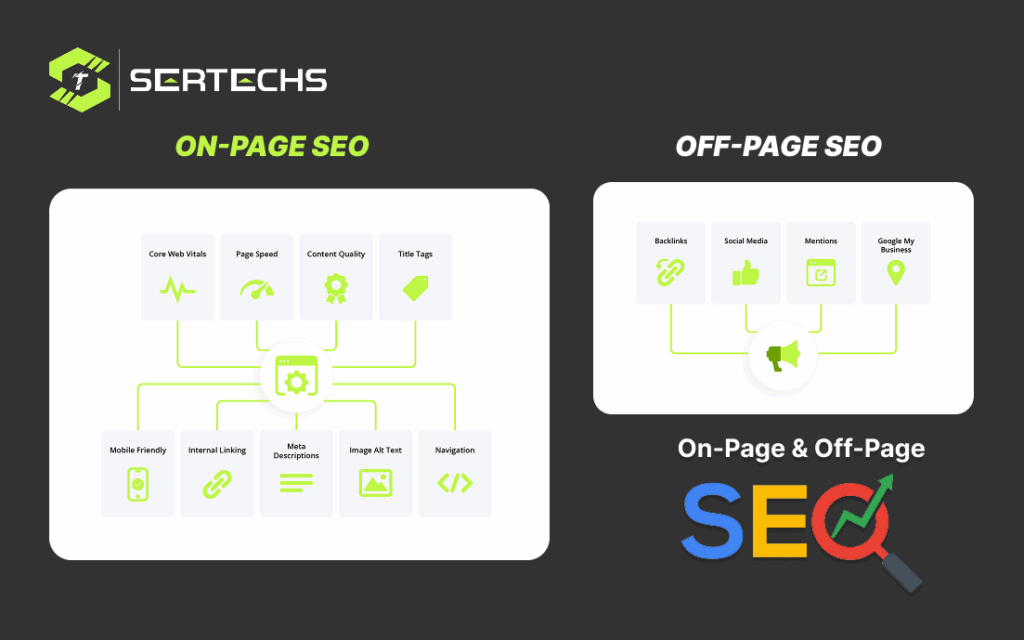
SEO, which stands for Search Engine Optimization, is a set of strategies and techniques used to improve the visibility and ranking of a website or web page in search engine results pages (SERPs). SEO can be broadly categorized into two main types: on page & off page SEO. These two categories work together to enhance a website’s search engine performance. On-Page SEO: On-page SEO refers to the optimizations made directly on your website or web page. These optimizations are within your control and involve various elements that affect how search engines understand and rank your content. Key aspects of include: Keyword Optimization: Researching and using relevant keywords within your content, titles, headings, and meta tags. Content Quality: Creating high-quality, valuable, and engaging content that satisfies user intent. Title Tags and Meta Descriptions: Crafting compelling and descriptive titles and meta descriptions for search engine users. Header Tags: Properly structuring your content using header tags (H1, H2, H3, etc.). Image Optimization: Optimizing images with descriptive alt text and appropriate file names. URL Structure: Creating clean and user-friendly URLs that incorporate relevant keywords. Page Load Speed: Ensuring your website loads quickly for a better user experience and SEO performance. Mobile Friendliness: Making your website responsive and mobile-friendly. Internal Linking: Linking to other relevant pages within your website to improve navigation and user experience. Off-Page SEO: It involves activities and strategies that take place outside your website but have an impact on its search engine ranking. These strategies are often related to building authority, trust, and recognition for your website. Key aspects include: Backlink Building: Acquiring high-quality, relevant backlinks from other websites to your own. Quality backlinks are a significant ranking factor. Social Media Engagement: Actively participating in and promoting your content on social media platforms to increase brand visibility and traffic. Online Reputation Management: Monitoring and managing your online reputation and reviews to build trust with users and search engines. Guest Blogging: Writing content for other websites in your niche and including links back to your site. Influencer Outreach: Collaborating with influencers in your industry to promote your content or products. Local SEO: Optimizing your website for local search by creating and maintaining a Google My Business profile and getting listed in local directories. Content Promotion: Actively promoting your content through email marketing, outreach, and other methods to increase its visibility. Both are essential for achieving higher search engine rankings and driving organic traffic to your website. They work in conjunction with each other to improve your website’s overall online presence and authority. SEO is an ongoing process, and it’s important to stay updated with the latest best practices and algorithm changes to maintain and improve your search rankings.
White Hat vs Black Hat SEO

White Hat SEO is an ethical and legitimate approach to search engine optimization. Black Hat SEO refers to unethical and manipulative techniques used to improve a website’s search engine rankings. White Hat vs Black Hat SEO represent two fundamentally different approaches to search engine optimization (SEO). Here’s a comparison of White Hat vs Black Hat SEO: White Hat SEO: Ethical Approach: White Hat SEO involves following search engine guidelines and ethical practices. It prioritizes the user experience and creating high-quality content. Quality Content: Emphasizes the creation of valuable, relevant, and high-quality content that serves the needs of the target audience. Long-Term Strategy: White Hat SEO is a long-term strategy aimed at building a website’s authority and reputation over time. Sustainability: Websites that follow White Hat SEO practices are less likely to face search engine penalties, and their rankings tend to be stable and sustainable. Transparency: It is transparent and honest in its approach to optimizing websites. Compliance: Adheres to search engine guidelines and best practices, avoiding practices that may lead to penalties. User Experience: Focuses on providing a positive user experience by optimizing website design, navigation, and performance. Black Hat SEO: Unethical Approach: Black Hat SEO involves unethical and manipulative techniques that violate search engine guidelines. Keyword Stuffing: Often relies on keyword stuffing, cloaking, and other techniques to manipulate search engine rankings. Short-Term Gains: Typically aims for quick but short-lived improvements in search rankings. It may involve exploiting algorithm weaknesses. Risky: Black Hat SEO practices can lead to search engine penalties, which can severely harm a website’s rankings and reputation. Lack of Transparency: Often lacks transparency and can be secretive about the techniques used. Manipulation: Focuses on manipulating search engines rather than providing a valuable user experience. Low-Quality Content: Sometimes involves the creation of low-quality or spammy content that doesn’t benefit users. In summary, White Hat SEO is the recommended and ethical approach to SEO. It focuses on creating valuable content, optimizing websites for the best user experience, and adhering to search engine guidelines to build a sustainable online presence. Black Hat SEO, on the other hand, employs unethical and risky tactics that may lead to short-term gains but often result in penalties and reputation damage. It’s important for website owners and businesses to choose the White Hat approach for long-term success and to avoid the negative consequences associated with Black Hat tactics.
Progressive Web Apps
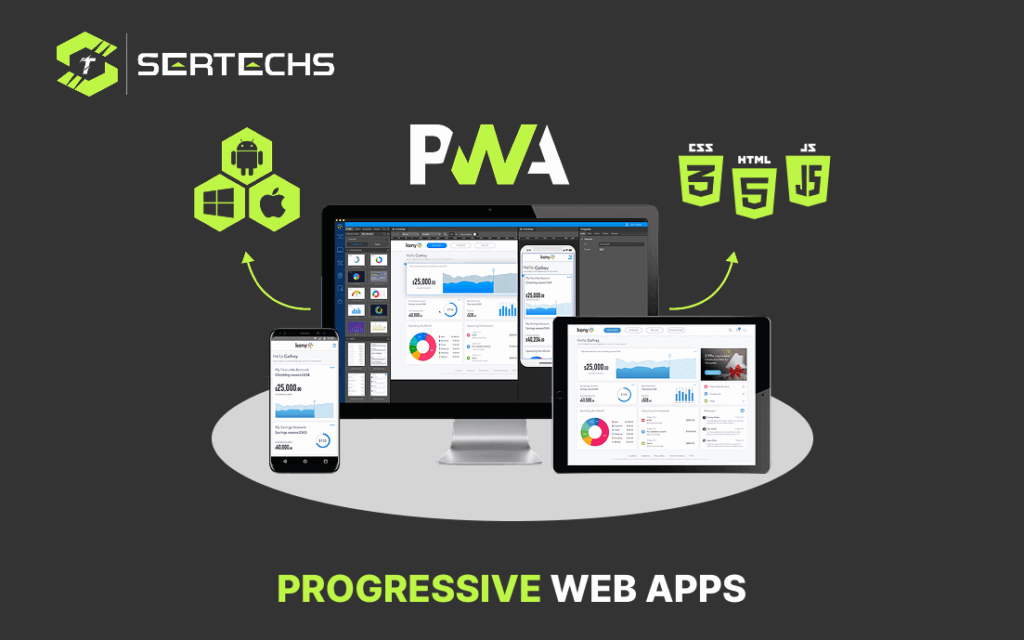
Progressive Web Apps (PWAs) are a type of web application that take advantage of modern web technologies to deliver an app-like experience to users. They combine the best of web and mobile apps to offer features such as offline access, push notifications, and improved performance. Here are some key characteristics and advantages of Progressive Web Apps: Progressive Enhancement: PWAs are designed with progressive enhancement in mind, meaning they should work on any device and in any browser. They are built to be accessible to all users, regardless of their device or browser capabilities. Responsive: PWAs are built using responsive design techniques, ensuring that they adapt to various screen sizes, from mobile phones to desktop computers. Connectivity Independent: One of the significant advantages of PWAs is that they can work offline or with a limited internet connection. They use service workers, which are scripts that run in the background and can cache resources, allowing the app to load and function without an internet connection. App-Like Experience: PWAs aim to provide a user experience that is similar to that of native mobile apps. They often have a home screen icon and can be launched directly from the home screen. The user interface is typically designed to be intuitive and responsive. Push Notifications: PWAs can send push notifications to users even when the app is not open, similar to how native mobile apps can. This is a powerful tool for re-engaging users and delivering timely updates. Secure: PWAs are served over HTTPS, ensuring that the data transferred between the app and the server is encrypted and secure. Discoverable: PWAs can be indexed by search engines, making them discoverable through traditional web search. No Installation Required: Unlike native apps, PWAs do not require installation from an app store. Users can simply access the PWA by visiting a website, and they have the option to add it to their home screen if they want. Automatic Updates: PWAs are automatically updated by the browser, ensuring that users always have access to the latest version of the app. Cross-Platform: PWAs are not limited to a specific platform or device. They can be used on various operating systems, including Android, iOS, and desktop operating systems. Reduced Development and Maintenance Costs: Developing a PWA can be more cost-effective than building separate native apps for different platforms, as it allows developers to work with a single codebase. PWAs have gained popularity as they offer a way to provide a seamless and engaging user experience while avoiding the barriers of app store distribution. They are particularly well-suited for businesses and organizations looking to reach a broad audience on the web and mobile devices.
Language Agnostic

“Language agnostic” is used to describe software or systems that are not tied to a specific programming language. In a language-agnostic context, a system or component is designed and implemented in such a way that it can work with multiple programming languages. This flexibility is often seen as a desirable quality in software design for various reasons: Interoperability: Language-agnostic components can easily interact with different parts of a system, regardless of the languages those other parts are written in. This can be particularly valuable in complex, multi-language applications. Freedom of Choice: Developers have the freedom to choose the programming language that best suits a specific task or their familiarity. They are not locked into a particular language just because the existing components are written in that language. Reuse: Language-agnostic components can be reused in various projects and environments, as they are not bound to the constraints of a specific language or runtime. Flexibility: As technology evolves and new languages emerge, language-agnostic systems are less affected by language-specific changes, making them more adaptable and future-proof. Ease of Maintenance: In some cases, maintaining language-agnostic systems can be easier because developers can leverage their expertise in different languages when making updates or improvements. There are several ways to achieve language-agnostic capabilities in software development: Use of Standard Data Formats: Develop systems that communicate through standard data formats like JSON or XML. These formats are widely supported across many programming languages. APIs and Web Services: Expose functionality through APIs and web services that rely on standard protocols like HTTP, REST, or GraphQL, allowing any language with HTTP capabilities to interact with the system. Message Queues: Implement message queues like RabbitMQ or Apache Kafka to enable communication between different components of a system, regardless of the languages they are implemented in. Containerization: Use containerization technologies like Docker to package applications and their dependencies, making it possible to run them in various environments consistently. Polyglot Programming: In some cases, a “polyglot” approach may be used where different parts of a system are implemented in the language. That best suits their requirements. they communicate through standardized interfaces. Middleware and Integration Layers: Employ middleware and integration layers that can translate and mediate communication between components implemented in different languages. Language-agnostic design is particularly useful in large, distributed systems and microservices architectures. Where different services may be written in different languages. It promotes interoperability, ease of maintenance, and adaptability, all of which are important in modern software development.
Serverless Architecture
Serverless architecture, often referred to as serverless computing, is a cloud computing model that abstracts the underlying infrastructure management from developers, allowing them to focus solely on writing and deploying code. In a serverless architecture, the cloud provider takes care of server provisioning, scaling, and resource allocation, relieving developers of many operational concerns. Key features of serverless architecture include: Event-Driven: Serverless functions, also known as “serverless compute,” are triggered by specific events or requests. These events can be HTTP requests, database changes, file uploads, or custom events generated by other parts of the application. Pay-as-You-Go Billing: With serverless, you only pay for the computing resources used during the execution of your functions. This billing model is often referred to as Function as a Service (FaaS). You are not charged for idle resources, which can be cost-effective for applications with variable workloads. Automatic Scaling: Cloud providers automatically handle the scaling of serverless functions. As more events or requests come in, additional instances of the function are spun up to handle the load. When the demand decreases, instances are deprovisioned. No Server Management: Developers don’t need to manage servers, virtual machines, or containers. This eliminates many operational tasks such as OS updates, patch management, and server provisioning. Stateless and Short-Lived: Serverless functions are designed to be stateless and short-lived. They are meant to perform a single task, typically within a few seconds, and don’t maintain persistent connections or state between invocations. Any required state is typically stored externally, such as in a database or object storage. Language Agnostic: Serverless platforms support multiple programming languages, allowing developers to choose the language they are most comfortable with. Built-in High Availability: Serverless functions are usually automatically distributed across multiple data centers, regions, or Availability Zones to provide high availability. Scalability and Elasticity: Serverless architectures can easily handle sudden spikes in traffic without manual intervention. The cloud provider manages the load balancing and scaling aspects. Resource Isolation: Serverless providers isolate resources for each function to ensure security and prevent interference between functions. Popular serverless platforms include AWS Lambda (Amazon Web Services), Azure Functions (Microsoft Azure), Google Cloud Functions (Google Cloud), and others. These platforms offer a wide range of event sources and integrations, making it easier to build complex, event-driven applications without worrying about infrastructure management. Serverless architecture is well-suited for use cases like real-time data processing, microservices, chatbots, image and video processing, and any application where event-driven, auto-scaling capabilities are beneficial. However, it may not be the best fit for all types of applications, particularly those with long-running processes or specific resource requirements.
Dark Web and Cybercrime

The Dark Web is a part of the internet that is not indexed by traditional search engines like Google. It is intentionally hidden and requires specific software, such as Tor (The Onion Router), to access. While the Dark Web itself is not inherently illegal, it is often associated with various forms of cybercrime due to its anonymity and lack of oversight. Here are some key points about the Dark Web and its relationship with cybercrime: Anonymity: The Dark Web provides a high level of anonymity to its users. This anonymity is achieved by routing internet traffic through a network of volunteer-run servers, making it difficult to trace the identity and location of users. This feature is attractive to cybercriminals, as it makes it harder for law enforcement to identify and apprehend them. Illegal Marketplaces: One of the most well-known aspects of the Dark Web is its illegal marketplaces. These platforms facilitate the sale of a wide range of illegal goods and services, including drugs, firearms, counterfeit documents, stolen data, and hacking tools. Cybercrime Forums: The Dark Web hosts various forums and communities where cybercriminals share knowledge, tools, and techniques. These forums are used to discuss and plan cyberattacks, share vulnerabilities, and collaborate on illegal activities. Hacking Services: Some individuals and groups on the Dark Web offer hacking services for hire. These services can range from launching DDoS (Distributed Denial of Service) attacks to hacking into email accounts, social media profiles, or corporate networks. Stolen Data and Personal Information: Data breaches are a common occurrence on the Dark Web. Cybercriminals often sell stolen data, such as login credentials, credit card information, and personal records, to the highest bidder. Ransomware: Ransomware operators sometimes use the Dark Web to communicate with victims and facilitate ransom payments. They also sell or auction stolen data on these hidden platforms. Cryptocurrency: Cryptocurrencies, such as Bitcoin, are commonly used for transactions on the Dark Web because of their pseudonymous nature. This makes it challenging for authorities to trace and identify those involved in illegal activities. Law Enforcement Efforts: Law enforcement agencies around the world are actively working to combat cybercrime on the Dark Web. They employ various tactics, including undercover operations, blockchain analysis, and the takedown of illegal marketplaces. It’s important to note that not everything on the Dark Web is illegal, and there are legitimate use cases for the Tor network, such as providing a secure and private way for users to access the internet. However, due to the anonymity it offers, it has become a breeding ground for various forms of cybercrime. Engaging in illegal activities on the Dark Web can lead to criminal charges and severe legal consequences.
Software Development Tools
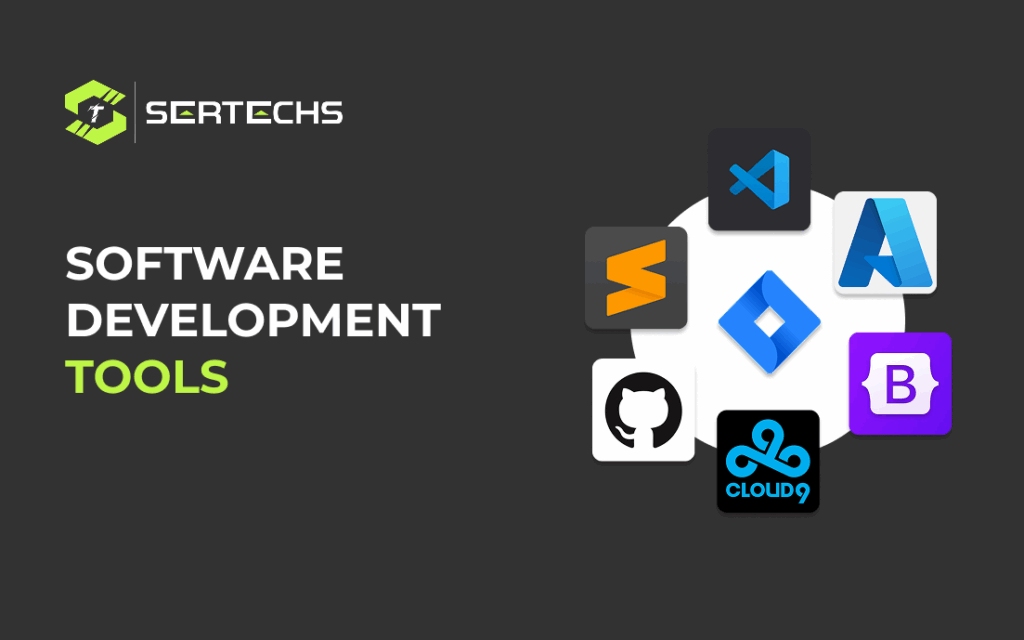
Software development involves a wide range of tools that aid in the creation, testing, and deployment of applications. These tools can vary based on the specific programming language, project requirements, and the development process being followed (e.g., Agile, Scrum, Waterfall). Here’s an overview of some commonly used software development tools: Integrated Development Environments (IDEs): Visual Studio: A popular IDE by Microsoft supporting multiple languages like C#, C++, Java, Python, and more. Eclipse: An open-source IDE primarily used for Java development but supports various other languages with plugins. IntelliJ IDEA: A widely used Java IDE with strong support for other languages and frameworks as well. Text Editors: Sublime Text: A lightweight and highly customizable text editor often used for web development and scripting. Visual Studio Code (VSCode): A free, open-source code editor developed by Microsoft with support for various languages and extensions. Atom: Another popular open-source text editor with a strong developer community and customizable interface. Version Control Systems (VCS): Git: The most widely used distributed version control system for tracking changes in code during software development. SVN (Apache Subversion): A centralized version control system often used for source code management. Project Management and Collaboration Tools: Jira: A popular agile project management tool used for bug tracking, issue tracking, and project management. Trello: A visual project management tool that uses cards and boards to organize tasks and collaborate with teams. Asana: A task and project management tool that helps teams organize, track, and manage work. Build Automation Tools: Jenkins: An open-source automation server used for building, testing, and deploying code automatically. Maven: A build automation tool used primarily for Java projects to manage dependencies and build processes. Continuous Integration/Continuous Deployment (CI/CD) Tools: Travis CI: A CI/CD service that integrates with GitHub repositories for automated testing and deployment. CircleCI: A cloud-based CI/CD platform that automates the software development process. Testing Tools: Selenium: A widely used tool for automating web browsers for testing web applications. JUnit: A popular testing framework for Java applications. Postman: A tool for testing APIs by sending HTTP requests and analyzing responses. These are just a few examples, and the software development tool landscape is continuously evolving with new tools and technologies. Developers often choose tools based on the specific requirements of their projects and their familiarity with the tools.