
What is API?
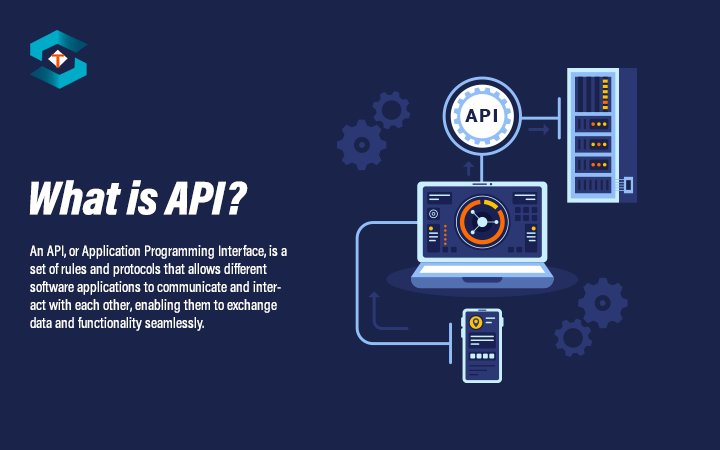
API stands for Application Programming Interface. It is a set of rules and protocols that allows different software applications to communicate with each other. APIs define the methods and data formats that developers can use to request and exchange information between software components, services, or systems. Here are some key points to understand about APIs: Interoperability: APIs enable different software programs, services, or systems to work together, even if they are developed by different organizations or run on different platforms. HTTP-based APIs: Many modern APIs are built using HTTP (Hypertext Transfer Protocol), making them accessible over the internet. These are often referred to as web APIs or RESTful APIs. Authentication and Authorization: APIs may require authentication to ensure that only authorized users or applications can access their functionality. This can be done using API keys, OAuth tokens, or other authentication methods. API Documentation: API providers often offer documentation that explains how to use the API, including the available endpoints, request formats, response formats, and any required authentication. Use Cases: APIs are used in a wide range of applications, including web and mobile app development, IoT (Internet of Things) integrations, cloud computing, data sharing between services, and more. Examples of APIs include: Social Media APIs: APIs provided by platforms like Facebook, Twitter, and Instagram, which allow developers to integrate social media features into their applications. Payment Gateway APIs: APIs provided by payment processing companies like PayPal or Stripe, allowing e-commerce websites to process payments securely. Google Maps API: This API enables developers to embed maps and location-based services into their applications. Database APIs: These allow applications to interact with databases, retrieve or store data, and perform database operations. APIs are a fundamental part of modern software development, enabling the creation of complex, interconnected systems and services that power many aspects of our digital world.
What is APL?

APL (A Programming Language) is a powerful and concise high-level programming language designed for mathematical and array processing. It was originally developed by Kenneth E. Iverson in the 1960s and has evolved over the years. APL is known for its unique symbols and operators that enable compact and expressive code to manipulate arrays and perform complex mathematical operations. Key characteristics and features of APL include: Array-Oriented Programming: It is primarily designed for working with multidimensional arrays and supports a wide range of array operations. Arrays can have any shape and dimensions, and operations can be applied to entire arrays or sub-arrays. Concise Syntax with Special Symbols: It uses a concise syntax with a rich set of special symbols for operators and functions. These symbols represent mathematical and logical operations, making the code compact and expressive. Functional Programming Paradigm: A Programming Language is heavily influenced by functional programming concepts. It supports higher-order functions, anonymous functions, and functional composition, allowing for elegant and concise code. Interactive Development Environment: It often provides an interactive development environment where developers can test and execute code snippets in real-time, enabling quick experimentation and prototyping. Dyadic and Monadic Functions: Functions in APL can be either dyadic (taking two operands) or monadic (taking one operand). Dyadic functions operate on two arrays, while monadic functions operate on a single array. Vectorization: this encourages vectorized operations, where functions are automatically applied to arrays element-wise, eliminating the need for explicit loops. Matrix Operations and Linear Algebra: APL is particularly strong in matrix operations, linear algebra, and numerical computing. It provides built-in functions for common operations such as matrix multiplication, inversion, eigenvalues, and more. Dialects and Implementations: There are several dialects and implementations of APL, each with its own set of features and variations in syntax and functions. Common dialects include APL2, Dyalog APL, and GNU APL. Applications: APL is used in various domains, including finance, scientific computing, data analysis, and algorithm development. Its ability to handle complex mathematical operations efficiently makes it suitable for a wide range of applications. Despite its expressive power and efficiency in mathematical computation, APL’s unique syntax and symbols can be a barrier for newcomers. However, once mastered, APL can lead to highly efficient and elegant solutions for complex problems.
Database Management System
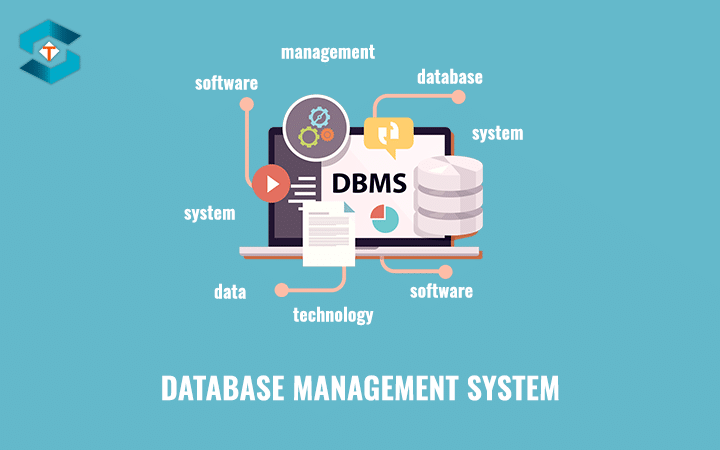
A Database Management System (DBMS) is software that provides an interface and tools for managing, organizing, retrieving, and interacting with databases. It serves as an intermediary between the users and the database, ensuring that data is efficiently stored, accessed, and maintained. DBMS software helps in creating, updating, querying, and administering databases, making it an integral part of modern information systems. Features and functionalities associated with a Database Management System: Features of a DBMS: Data Definition Language (DDL): Allows users to define the structure of the database, such as creating, modifying, and deleting database objects like tables, indexes, and views. Data Manipulation Language (DML): Enables users to interact with the data within the database, including inserting, updating, deleting, and querying records. Data Query Language (DQL): Allows users to retrieve and present specific information from the database using queries. SQL (Structured Query Language) is a common DQL used in relational databases. Data Control Language (DCL): Provides security and access control mechanisms to define who can access the data and what operations they can perform. Transaction Management: Ensures the consistency and integrity of the data by implementing ACID (Atomicity, Consistency, Isolation, Durability) properties for database transactions. Concurrency Control: Handles multiple transactions concurrently to maintain data consistency and integrity, preventing conflicts and ensuring proper handling of simultaneous operations. Backup and Recovery: Supports the creation of backups and recovery mechanisms to restore the database to a consistent state in case of failures, errors, or data corruption. Data Integrity and Validation: Enforces data integrity rules and validation checks to ensure that data stored in the database is accurate, consistent, and compliant with defined rules. Data Indexing and Optimization: Utilizes indexing and optimization techniques to improve the performance of queries and data retrieval operations. Functionalities of a DBMS: Data Storage and Retrieval: Efficiently stores and retrieves data from the database, enabling quick access based on various criteria. Concurrency Control: Manages concurrent transactions to prevent conflicts and maintain data consistency. Data Security and Access Control: Implements security measures to control access to the database and protect sensitive data. Data Backup and Recovery: Provides mechanisms for creating backups and restoring the database in case of failures or data loss. Query Optimization: Optimizes queries to enhance performance and reduce the time taken to retrieve data. Data Replication and Distribution: Supports data replication and distribution across multiple locations or servers for scalability and fault tolerance. Database Monitoring and Tuning: Monitors database performance and allows administrators to fine-tune the system for optimal operation. Schema Management: Manages the structure of the database, including schema modifications and updates. A DBMS is a crucial tool for businesses and organizations that need to store, manage, and retrieve vast amounts of data in a structured and efficient manner. It plays a pivotal role in ensuring data integrity, security, and accessibility, ultimately aiding in informed decision-making and efficient business operations.
Database
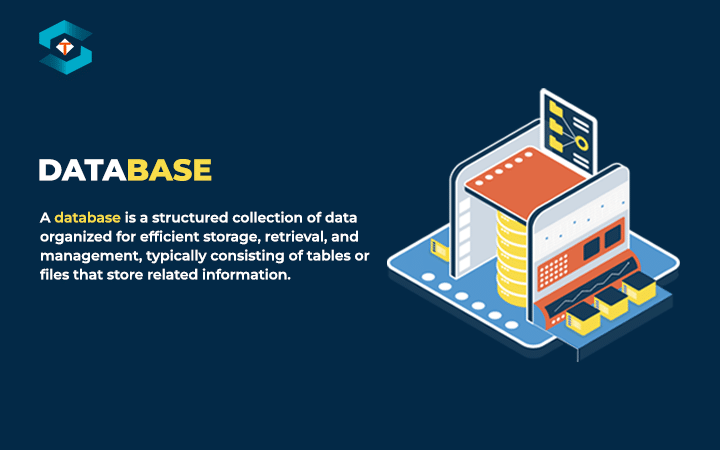
A database is a structured collection of data organized in a way that allows efficient storage, retrieval, and manipulation of information. It serves as a centralized repository for managing, storing, and organizing large amounts of data in a consistent and accessible manner. Databases are used in various applications and systems to support data management needs. Here’s a detailed overview of databases, including their components, types, and key concepts: Components of a Database: Data: Data are the facts, figures, and raw bits of information that are stored in the database. It could be text, numbers, images, audio, or any other type of information. Database Management System (DBMS): The DBMS is software that facilitates creating, managing, and manipulating the data. It provides an interface for users and applications to interact with the database. Database Schema: The database schema defines the structure of the database, including tables, relationships, constraints, and other elements that ensure data consistency and integrity. Queries: Queries are commands or requests made to the database to retrieve or modify data based on specific criteria. Tables: Tables are the basic building blocks of a database. They organize data into rows and columns, allowing for efficient storage and retrieval. Indexes: Indexes are structures that enhance the performance of queries by enabling quick access to specific data within a table. Types of Databases: Relational Databases: Relational databases organize data into tables with predefined relationships between them. They use SQL (Structured Query Language) for querying and managing data. NoSQL Databases: They are non-relational and can handle a wide variety of unstructured, semi-structured, and structured data. They are often used in big data and real-time web applications. NewSQL Databases: NewSQL databases aim to provide the benefits of both relational and NoSQL databases by offering scalability and high performance without sacrificing consistency. In-memory Databases: In-memory databases store data in main memory (RAM) instead of on disk, resulting in extremely fast data retrieval and processing. Graph Databases: Graph databases are designed to represent and store relationships between data points as graphs, making them ideal for applications like social networks and recommendation engines. Primary Key and Foreign Key: A primary key uniquely identifies a record in a table, while a foreign key establishes a link between two tables based on a related field. Transaction: A transaction is a set of operations that are executed as a single unit. It must follow the ACID properties to maintain data consistency. Backup and Recovery: Backup involves creating copies of the database to protect against data loss, while recovery involves restoring the database to a consistent state after a failure. Data Modeling: Data modeling is the process of defining the structure of the data and the relationships between data elements, which helps in designing an efficient database schema.
Software Development Life Cycle
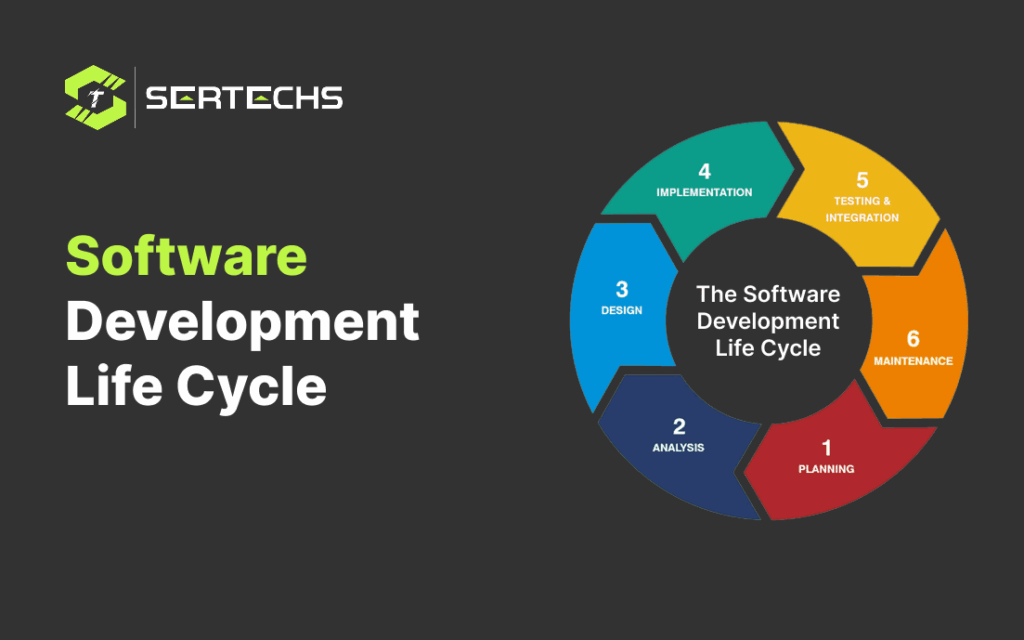
The Software Development Life Cycle (SDLC) is a structured framework used in software engineering to guide the development of high-quality software. It encompasses a series of phases or stages that software goes through from inception to maintenance and eventual retirement. It’s a framework that outlines the stages and activities involved in software development from the initial concept to its maintenance and support. Various models are used within the SDLC, each with its unique approach to development. Key stages of the Software Development Life Cycle: Requirements Gathering and Analysis: Understanding and documenting software requirements based on client or user needs. Analyzing requirements for feasibility, completeness, and clarity. System Design: Creating a high-level design that outlines the architecture and components of the system. Detailing the system’s structure, interfaces, and data flow. Implementation (Coding): Writing and translating the design into executable code using suitable programming languages. Following coding standards and best practices to ensure code maintainability and readability. Testing: Conducting various tests to identify defects and ensure the software meets specified requirements. Types of testing include unit testing, integration testing, system testing, and acceptance testing. Deployment (Integration and System Testing): Integrating individual components to form the complete system. Conducting thorough system testing to validate that the integrated system meets the specified requirements. Operation and Maintenance: Deploying the software for end-users to access and use. Addressing issues, making updates, and continuously improving the software based on user feedback. Monitoring and Evaluation: Monitoring the performance and usage of the software in a real-world environment. Gathering user feedback and evaluating the software’s effectiveness and efficiency. SDLC ensures that software development follows a systematic and well-organized approach, leading to the creation of reliable, high-quality software that meets user expectations and business objectives. Different methodologies, such as Waterfall, Agile, Scrum, and DevOps, align with these stages to provide flexibility and adaptability based on project requirements and constraints.
Web Hosting

Web hosting is a service that allows individuals and organizations to make their websites accessible on the internet. Websites and web applications are hosted on servers, which are special computers designed to store and serve website content to users over the internet. Types of Web Hosting: Shared Hosting: Multiple websites share resources on a single server. VPS (Virtual Private Server) Hosting: Virtualized private servers within a physical server, offering more control and dedicated resources. Dedicated Hosting: Entire server dedicated to a single client, providing maximum control and resources. Cloud Hosting: Resources are distributed across a network of interconnected virtual and physical servers. Managed WordPress Hosting: Hosting optimized for WordPress, including automatic updates, security, and performance enhancements. Here are some key aspects related to web hosting: Domain Name and DNS: Registering a domain name (e.g., example.com) through domain registrars. Setting up Domain Name System (DNS) records to map domain names to IP addresses. Server Management: Configuring server settings and managing server infrastructure. Operating system choice (e.g., Linux, Windows) and server maintenance. Control Panels: Using control panels (e.g., cPanel, Plesk) for managing server settings, domains, databases, and email accounts. Website Deployment and Content Management: Uploading website files to the server using FTP (File Transfer Protocol) or SSH (Secure Shell). Using content management systems (e.g., WordPress, Joomla, Drupal) for easier website management. Databases: Creating and managing databases (e.g., MySQL, PostgreSQL) for dynamic website content. Database management tools and access (e.g., phpMyAdmin). Email Hosting: Setting up email accounts associated with the domain (e.g., info@example.com) and configuring email clients. Email forwarding, aliases, and spam protection. Security and Backup: Implementing security measures to protect websites from threats and malware. Regular backups and disaster recovery plans to ensure data safety. Choosing the right web hosting service depends on factors like website requirements, budget, traffic, and technical expertise. It’s essential to research and compare various hosting providers to find the best fit for your specific needs.
Quantum Computing
Quantum computing is an evolving field of study and technology that leverages the principles of quantum mechanics to process and manipulate information. Unlike classical computers that use bits as the fundamental unit of information (binary digits, representing 0 or 1), quantum computers use quantum bits or qubits. Key principles and concepts in quantum computing include: Qubits: Qubits are the basic units of quantum information. Unlike classical bits that can be either 0 or 1, qubits can exist in a superposition of states, representing 0, 1, or any quantum combination of both simultaneously. Superposition: A qubit can exist in a superposition of both 0 and 1 states, allowing it to represent multiple possibilities at the same time. This is a fundamental property of quantum mechanics. Quantum Gates: Quantum gates are quantum analogs of classical logic gates. They perform operations on qubits to manipulate and transform the quantum states, enabling quantum computations. Quantum Algorithms: Algorithms designed to leverage the unique properties of quantum mechanics to solve specific problems more efficiently than classical algorithms. Examples include Shor’s algorithm for factoring large numbers and Grover’s algorithm for unstructured search. Quantum Speedup: Quantum algorithms can provide significant speedup for certain computational problems compared to the best-known classical algorithms. This is a key motivation for the development of quantum computing. Quantum Circuit: A representation of a quantum algorithm using quantum gates. Quantum circuits are analogous to classical circuits but operate on qubits. Quantum Supremacy: The point at which a quantum computer can perform a calculation or solve a problem that is fundamentally infeasible for a classical computer within a reasonable time frame. Quantum Hardware: Physical systems used to implement and operate quantum bits, such as superconducting qubits, trapped ions, and quantum dots. Quantum computing is an active area of research and development, with the potential to revolutionize various industries by solving complex problems that are beyond the capabilities of classical computers. However, it is important to note that quantum computing is still in its early stages, and practical, large-scale quantum computers are yet to be realized.
Low-code/No-code Development

Low-code/no-code development is a software development approach that allows users to create applications with minimal hand-coding. It falls into the category of “Rapid Application Development” (RAD) methodologies. Low-Code/No-Code Development: In low-code development, developers use a visual interface and pre-built components to design and create applications. They still write some code but significantly less than traditional coding. This approach is often used for more complex applications where some custom logic or integrations are required. No-code development takes it a step further, allowing individuals with little to no programming experience to build functional applications. It relies almost entirely on visual development, and users typically don’t write any code. It’s ideal for simple applications, forms, and workflows. Low-code application platforms: Appian: Appian is a low-code development platform that enables organizations to create and deploy business applications quickly and efficiently. It provides a visual interface for building applications. It also offers features for mobile app development and robust analytics to monitor and optimize processes. Microsoft Power Apps: Microsoft Power Apps is a low-code platform that integrates with Microsoft 365 and Azure services. It allows users to create custom apps, automate workflows, and build business solutions, all with minimal coding. OutSystems: OutSystems is a low-code application development platform known for its speed and scalability. It helps organizations create web and mobile applications, automate processes, and integrate with existing systems. Mendix: Mendix is a low-code platform that emphasizes collaboration between business and IT teams. It offers tools for application development, deployment, and management, with a focus on fast delivery and scalability. Quick Base: Quick Base is a no-code platform for building custom applications and automating processes. It is user-friendly and allows businesses to create tailored solutions for various needs, from project management to CRM. Zoho Creator: Zoho Creator is a no-code platform within the Zoho suite of products. It enables users to create web and mobile applications, automate workflows, and integrate with other Zoho apps and third-party services. Kissflow: Kissflow is a no-code platform for workflow and process automation. It’s user-friendly and enables organizations to build applications, manage projects, and automate repetitive tasks. Both approaches aim to streamline and democratize application development, enabling faster prototyping and deployment of software solutions. They are particularly useful for businesses and organizations that need to develop software quickly and don’t have a large team of developers.
Serverless Computing
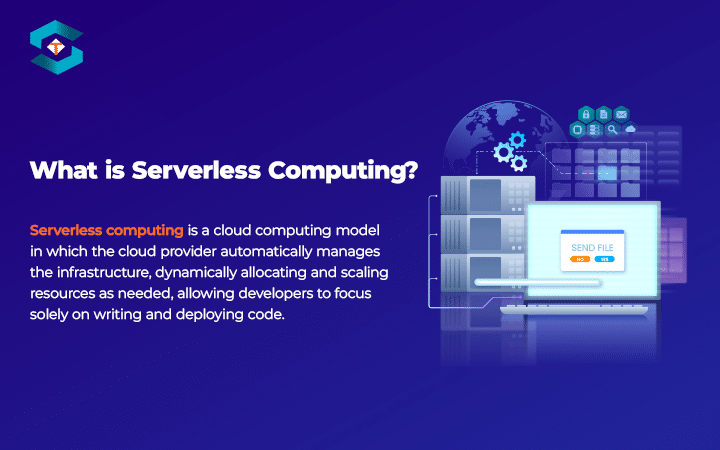
Serverless computing, often referred to as “serverless”, is a cloud computing model that allows developers to build and run applications. In a serverless architecture, the cloud provider automatically handles the allocation of resources and scaling based on the application’s needs. Here are some key characteristics and concepts associated with serverless computing: Event-Driven: Serverless applications are typically event-driven, meaning they respond to specific events or triggers, such as HTTP requests, file uploads, or scheduled tasks. When an event occurs, the serverless platform executes the associated code. Stateless: Serverless functions are stateless, meaning they do not maintain persistent server state between invocations. Each function execution is independent and isolated. Pay-as-You-Go: Serverless platforms charge based on actual usage, typically measured in terms of the number of function executions and the resources consumed during execution. This pay-as-you-go model can be cost-effective because you only pay for what you use. Auto-Scaling: Serverless platforms automatically scale your application by provisioning additional resources as needed to handle incoming requests or events. This elasticity ensures that your application can handle varying workloads without manual intervention. No Server Management: Developers are relieved from the responsibility of provisioning, configuring, and managing servers or containers. They can focus on writing code and defining the logic for their functions. Event Sources: Serverless functions can be triggered by various event sources, including HTTP requests (via API Gateway), message queues, database changes (e.g., AWS Lambda triggers from Amazon DynamoDB). Short-Lived Functions: Serverless functions are designed to execute quickly and are typically short-lived. Long-running tasks may be better suited for other compute models. Scalability: Serverless platforms are designed to scale out automatically, allowing multiple instances of a function to run in parallel to handle increased workloads. Vendor-Specific: Serverless offerings are provided by major cloud providers, such as AWS Lambda (Amazon Web Services), Azure Functions, Google Cloud Functions, and others. Each vendor’s serverless platform may have its own features, pricing, and limitations. Serverless computing is well-suited for a wide range of use cases, including web and mobile backends, data processing, IoT applications. It offers benefits such as reduced operational overhead, improved scalability, and cost efficiency, making it an attractive option for modern application development.
Data Analytics

Data analytics is the process of examining, cleaning, transforming, and interpreting data to discover meaningful insights, patterns, trends, and information that can support decision-making and solve problems. It involves the use of various tools, techniques, and technologies to extract valuable knowledge from data. Here are some key aspects of data analytics: Data Collection: The first step in data analytics is collecting relevant data from various sources. These sources can include databases, spreadsheets, sensors, websites, social media, and more. High-quality, well-organized data is essential for accurate analysis. Data Cleaning and Preprocessing: Raw data often contains errors, missing values, and inconsistencies. Data cleaning involves identifying and correcting these issues to ensure the data is accurate and reliable. Data preprocessing may also involve transforming data into a suitable format for analysis. Exploratory Data Analysis (EDA): EDA is the process of visually exploring and summarizing data to understand its characteristics. It includes techniques like data visualization, summary statistics, and data profiling. EDA helps analysts identify patterns and initial insights. Statistical Analysis: Statistical techniques are used to quantify relationships and patterns in data. Common statistical methods include hypothesis testing, regression analysis, and analysis of variance (ANOVA). These methods help in understanding the significance of observations. Machine Learning and Predictive Analytics: Machine learning algorithms are used for predictive analytics. They learn from historical data to make predictions or classifications on new, unseen data. Applications include demand forecasting, churn prediction, and fraud detection. Data Visualization: Data is often visualized using charts, graphs, and dashboards to make complex information more understandable and accessible. Visualization tools like Tableau, Power BI, and D3.js are commonly used for this purpose. Text Analytics: Text analytics involves the analysis of unstructured text data, such as customer reviews, social media comments, and documents. Natural language processing (NLP) techniques are used to extract insights from text data. Big Data Analytics: Big data analytics deals with very large datasets that traditional databases and tools cannot handle efficiently. Technologies like Hadoop and Spark are used to process and analyze big data. Time Series Analysis: Time series data, which represents data points collected over time, is analyzed to identify trends and patterns. It’s commonly used in financial forecasting, weather predictions, and demand forecasting. Data analytics is applied in various fields, including business, healthcare, finance, marketing, and science. It empowers organizations to make data-driven decisions, optimize operations, enhance customer experiences, and gain a competitive advantage.