
Why Cybersecurity is Important?

Cybersecurity is critically important for a variety of reasons, as it plays a crucial role in safeguarding our digital world and protecting individuals, organizations, and even nations from various threats and risks. Here are some key reasons why cybersecurity is important: Protection of Sensitive Information: Cybersecurity measures safeguard sensitive data, including personal information, financial records, intellectual property, and confidential business data. Breaches can lead to identity theft, financial fraud, and compromise of sensitive information. Prevention of Financial Loss: Cyberattacks can result in significant financial losses for individuals, businesses, and governments. These losses can stem from theft, fraud, ransom payments, and the costs associated with recovering from an attack. Preservation of Reputation: A cybersecurity breach can damage an individual’s or an organization’s reputation. The loss of trust from customers, clients, and partners can be difficult to regain. Reputation damage can have long-lasting financial and operational consequences. Protection Against Disruption: Cyberattacks, such as Distributed Denial of Service (DDoS) attacks, can disrupt business operations, leading to downtime, loss of productivity, and potential revenue losses. National Security: Cyberattacks on critical infrastructure, government systems, or defense networks can pose a threat to national security. Protecting against these attacks is crucial to maintaining a nation’s stability and defense capabilities. Preventing Data Breaches: Data breaches can lead to the exposure of personal and sensitive information, resulting in identity theft, financial fraud, and other malicious activities. Mitigating Cybercrime: Cybersecurity measures help deter cybercriminals and reduce the incidence of cybercrimes such as hacking, phishing, and ransomware attacks. Protecting Personal Privacy: In an increasingly interconnected world, individual privacy is at risk. Cybersecurity measures help protect personal data from unauthorized access or misuse. In summary, cybersecurity is essential for safeguarding individuals, organizations, and nations against a wide range of cyber threats. It helps protect sensitive information, financial assets, and reputations, and it plays a vital role in maintaining the security and stability of the digital world.
What is DevOps?

DevOps is a set of practices, principles, and cultural philosophies that aim to improve and streamline collaboration between software development (Dev) and IT operations (Ops) teams. The primary goal of DevOps is to shorten the software development life cycle, increase the frequency of software releases, and improve the quality and reliability of software products. Here are key aspects of DevOps: 1. Collaboration: DevOps promotes a culture of collaboration and communication between traditionally separate development and operations teams. It encourages breaking down silos and fostering a shared responsibility for the entire software delivery process. 2. Automation: Automation is a fundamental aspect of DevOps. It involves automating repetitive and manual tasks such as code deployment, configuration management, testing, and infrastructure provisioning. Automation helps reduce human error and increases efficiency. 3. Continuous Integration (CI): CI is a development practice where code changes are frequently integrated into a shared repository. Each integration triggers an automated build and testing process to identify issues early in the development cycle. 4. Continuous Delivery (CD): CD extends CI by automating the deployment of code to production or staging environments after successful testing. This allows for frequent and reliable software releases. 5. Infrastructure as Code (IaC): IaC is the practice of managing and provisioning infrastructure using code. Tools like Terraform and Ansible are commonly used to define and automate infrastructure configurations. Benefits of DevOps: Faster time-to-market: DevOps enables rapid development and deployment, allowing organizations to release new features and updates more quickly. Improved collaboration: By breaking down silos and encouraging collaboration, DevOps fosters a culture of shared ownership and accountability. Enhanced quality: Automation and continuous testing help identify and address issues early, leading to higher-quality software. Increased efficiency: Automation and streamlined processes reduce manual work and errors, improving overall efficiency. Better customer satisfaction: Faster delivery of features and quick bug fixes lead to improved customer satisfaction. DevOps practices are widely adopted in the software industry, as they help organizations respond to market demands more effectively and maintain a competitive edge. It’s important to note that successful implementation of DevOps requires both technical and cultural changes within an organization.
What is Machine Learning Frameworks

Machine Learning Frameworks are software libraries that provide a set of pre-built functions and algorithms to simplify the development of machine learning models. These frameworks are designed to help researchers and developers implement, train, evaluate, and deploy machine learning algorithms efficiently. Here are some key aspects and functions: Algorithms: MLF include a variety of machine learning algorithms, such as linear regression, decision trees, support vector machines, neural networks, and more. These algorithms are implemented and optimized for use in the framework. Data Handling: Frameworks provide tools for loading, preprocessing, and transforming data, making it suitable for training and testing machine learning models. This often includes data normalization, feature extraction, and data splitting for training and validation. Model Building: Developers can define and build machine learning models using high-level APIs and functions provided by the framework. This includes specifying the architecture of neural networks or the configuration of other machine learning algorithms. Training: MLF offer training algorithms and optimization techniques to adjust model parameters and improve model accuracy. These frameworks manage the training process, including backpropagation for neural networks. Evaluation: Users can evaluate the performance of their machine learning models through metrics such as accuracy, precision, recall, F1 score, and more. Frameworks often provide tools for model evaluation and validation. Deployment: Some frameworks offer deployment options, allowing users to export trained models for use in production environments. This is particularly important for integrating machine learning into real-world applications. Community and Support: Popular machine learning frameworks usually have large communities of developers, which means access to documentation, tutorials, and user support. This community support can be invaluable when working on complex machine learning projects. Here are some common uses of machine learning frameworks: Model Development: MLFs allow developers to design and build machine learning models using various algorithms, neural network architectures, and optimization techniques. Model Training: Frameworks provide tools and APIs for training machine learning models on large datasets. They handle the backpropagation and optimization processes required to update model parameters. Hyperparameter Tuning: MLFs often offer tools for hyperparameter optimization, helping developers find the best set of hyperparameters to improve model performance. GPU Acceleration: They often support GPU acceleration, which significantly speeds up training times for deep learning models. Research and Experimentation: Researchers often use MLF to experiment with novel algorithms and techniques, enabling the development of cutting-edge AI models. Natural Language Processing (NLP) and Computer Vision: Specialized frameworks like spaCy, NLTK, Hugging Face Transformers, and OpenCV cater to specific domains like NLP and computer vision. In summary, MLF are versatile tools that support various stages of machine learning projects, from data preprocessing to model deployment. They enable developers and data scientists to build and deploy machine learning models efficiently.
What is AWS?
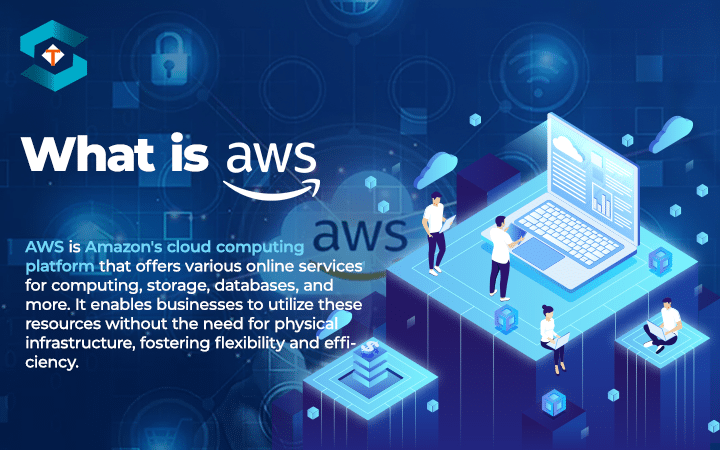
AWS stands for Amazon Web Services, which is a comprehensive and widely used cloud computing platform provided by Amazon. It offers a vast array of cloud services, including computing power, storage, databases, networking, analytics, machine learning, security, and more. It allows businesses, individuals, and organizations to access and use these services on a pay-as-you-go basis, eliminating the need for upfront investments in physical hardware and infrastructure. AWS provides a variety of services and features, some of which include: Compute Services: It offers services like Amazon EC2 (Elastic Compute Cloud) for scalable virtual servers, AWS Lambda for serverless computing, and AWS Elastic Beanstalk for simplified application deployment. Storage Services: It provides various storage options, including Amazon S3 (Simple Storage Service) for scalable object storage, Amazon EBS (Elastic Block Store) for block storage, and Amazon Glacier for long-term archival storage. Database Services: It offers managed database services like Amazon RDS (Relational Database Service) for relational databases, Amazon DynamoDB for NoSQL databases, and Amazon Redshift for data warehousing. Networking Services: AWS provides services like Amazon VPC (Virtual Private Cloud) for isolated networking environments, Amazon CloudFront for content delivery, and Amazon Route 53 for domain name system (DNS) management. Analytics and Big Data: It offers services like Amazon EMR (Elastic MapReduce) for big data processing, Amazon Athena for querying data in S3, and Amazon Redshift for data warehousing and analytics. Machine Learning and AI: It provides tools for machine learning and artificial intelligence, such as Amazon SageMaker for building, training, and deploying machine learning models, and Amazon Rekognition for image and video analysis. Security and Identity Services: It includes services for identity and access management (IAM), encryption, and security monitoring to help secure resources and data. Management and Deployment Tools: AWS provides tools like AWS CloudFormation for infrastructure as code, AWS Elastic Beanstalk for application deployment, and AWS OpsWorks for application management. IoT (Internet of Things): It offers services for building and managing IoT applications, such as Amazon IoT Core for device communication and management. Serverless Computing: AWS Lambda allows you to run code without provisioning or managing servers, enabling you to build applications with smaller, more modular components. Some of the key services provided by AWS include: EC2 (Elastic Compute Cloud) S3 (Simple Storage Service) RDS (Relational Database Service) SNS (Simple Notification Service) and SQS (Simple Queue Service) VPC (Virtual Private Cloud) DynamoDB
Benefits of WordPress
WordPress has been started around since 2003 and was the most popular blogging software on the market. Over the few years, WordPress has become the content management platform for non-blogging websites. WordPress is the most used website-building platform in the world. Joomla and Drupal need a particular level of technical know-how and familiarity with HTML CSS and the programming language PHP. Easy to Use: WordPress can be installed and set up in a few minutes, with a little experience with cPanel. WordPress is easy to use for beginners. There are many benefits of WordPress. WordPress helped our users with respect to the competitors like Drupal or Joomla which is why it become the favorite choice of web developers everywhere, there is no need for a genius in PHP, HTML, CSS. Fully Customizable: WordPress themes are easy to customize because a lot of options in the panel authorize you to change colors, make new backgrounds, upload your logo, create wonderful sliders, and honestly customize it to your demand without writing any miner code. Flexibility: WordPress is used to run complicated sites for big multinational companies, manage large and small businesses, and create personal blogs. WordPress sites can contain full-service eCommerce stores, showcase a portfolio, or host a social network, and podcasts. Plugins Functionality: WordPress involves all the elements needed to create a basic website, but many users want more creative functions related to a website. The WordPress plugin directory includes hundreds of plugins small pieces of code designed to perform specific tasks. That allow users to add features such as shopping carts, contact forms, calendars, Facebook fan boxes, and many more. Mobile Responsive: WordPress sites are easy to make mobile responsive. It’s very impactful for the user as well as for SEO. Mobile responsiveness is also a positive factor for Google rankings. Websites need to look good on any device. WordPress offers different kinds of responsive theme designs. Users can also make a static site responsive with plugins and adjustments to theme files. Built-In Blogs: WordPress is a content management system software. It has multiple features that make publishing content very easy. The most feature is a “built-in” blog that can be accessed from any device well as at any time. Users who want to add a blog to our website don’t have to create one separately. Since WordPress was created as a blogging platform, blogging capabilities are built-in and are easy to integrate, if useful. Security: The WordPress community contains thousands of operators and volunteers providing free advice and support on different forums. The community of WordPress members is responsible for making changes to the source files and keeping WordPress secure and up-to-date. WordPress Support: When contrast to other platforms, this is hopefully the great benefits of WordPress. This is suitable for you. If you need help with your website, you ask a question WordPress support, you will get your possible answer from the community.
Why Websites are Slow?

Many reasons of slow speed websites. We will discuss about the factors of website speed that effects on the speed of web page. Every website needs to be optimized for the good speed. To adopt 100% accurate optimization efforts, developers must understand these core reasons for slow website loading and learn how to resolve them to improve traffic and revenue. The key point Why Websites are Slow? Uncompressed Images: A large volume of unoptimized images are usually the most common reason behind website slowness. Highly resolution images can consume lots of time while loading. Uploading larged size images and then scaling them down can unnecessarily increase the size of your web page causing your website to load slowly. JavaScript Problems: The availability of JS/jQuery plugins has made it really convenient to add dynamic content to the websites. If implemented wrongly, JS can slow your website’s page speed. It takes time for jQuery & JS to be loaded, interpreted and executed. So if you are using multiple API calls to render JS/jQuery data, it can result in significant delay while loading the web pages. Flash Content: Decrease the size of flash content or eliminating it to improve the page speed. If you are willing to make your website faster, you should try HTML5 alternatives to replace your existing flash content. Unused Code (JS/CSS): By removing these unnecessary code, you can compress the code, reduce the file size for improve the overall page speed and if you’re tracking rankings you will probably see a boost in your SEO performance too. Alternatively, you can use a helping hand of some IT services company. Excessive HTTP Requests: Having loads of JS, CSS, and image files can lead to many HTTP requests. When a user visits your website page, the browser performs several requests to load each of these files, which can reduce the page speed. Bad Hosting: If you are using a shared hosting plan, your website could slow down when you have traffic spikes. You are sharing the same web server and resources such as CPU and RAM with other websites.
Top Payment Gateways – The ideal Guide:

When we talk about the digitalization of a specific country the payment gateways being used in that country play a very significant role in the process such as in Pakistan the payment gateways play a very major role in the digitalization of Pakistan. The line of work has goals to sell their merchandise or services through online mediums. Such companies face the challenge of finding the ultimate payment gateways in Pakistan. Here we will have a detailed bird’s eye view of the variety of options available in the market to be a reliable payment gateway in different aspects. Definition of Payment Gateway: Payment gateways are high-tech mediums which provide the services of the most convenient way of making and accepting online payments to both the buyer and seller end. The payment gateways not only include the card reading devices often used in brick & mortar stores but also consist of an online system keeping a record of the customer’s money transferred to the seller’s pocket online. Payment Gateway The working mechanism of Payment Gateway: Payment gateways, especially the online mediums of payment, are the primary high-techs. The working mechanism of these high-tech payment gateways includes the following steps. Payment through an online application. Transfer of customer’s information to the seller’s bank. Notification sent to the customer. Transaction of the funds to the seller’s bank account. Payment Gateway Work Now we have a considerable amount of knowledge about what is a payment gateway and how its mechanism of working provides the buyer and the seller with a financial bridge between them. Now we need to seek knowledge about some of the primary gateways being used in Pakistan right now. Let’s gather it by categorizing the gateways available in Pakistan into different categories. Primary Payment Gateways in Pakistan – FinTech Companies Let’s have a detailed look at the modern-day companies working as payment gateways in Pakistan and successfully providing the services of money transactions online digitally. 1. Payoneer: Payoneer is a very well-received payment platform among Pakistani users, it was by YUVAL TAL founded in 2005 with $2 million, Payoneer is a very user-friendly platform which offers its users a convenient way of online payment digitally for different businesses, SMEs, corporates, and freelancers. it is one of the most trusted payment gateways in Pakistan. Its major function is providing service of online abroad payment They focus on providing ease and convenience while transferring money across borders Pros Cons Low transaction amount for a cross-border app Higher annual fee of $29.95 Cash can easily be transferred to any local bank account very easily International transfers must be a purchasing of a service People working on the platforms like Fiver, Upwork and guru have been actively using Payoneer. Payoneer has also revolutionized many marketplaces like Amazon and Shopee it has a massive effect of its own in the market. Only in Pakistan Payoneer is being used on a very large scale and is considered as one of the top payment gateways in Pakistan. Transfer Opportunities: Online, Telephone Withdrawal Alternatives: Bank Payment Alternatives: Bank Transfer, Credit Card, Debit Card Frequent Payments: No 2. JazzCash: JazzCash is a Pakistani company providing payment services in Pakistan. It was founded in 2012 by Amir Ibrahim. It’s a digital wallet used for various types of online transactions. This app is a product of one of the leading telecommunication companies in Pakistan named Jazz. JazzCash is basically a bank account in your mobile associated with your mobile number. But it provides portability so that we can transfer or receive money anytime anywhere. Pros Cons Money transfer is less time-consuming. After installation, there is no Sign in options. It’s very user-friendly and has a very simple flow of cash. Fingerprint pins sometimes create problems. It can also be associated with your Payoneer account. JazzCash is basically a bank account in your mobile associated with your mobile number. But it provides portability so that we can transfer or receive money anytime anywhere. Any user can make money transactions over the following data; CNIC Mobile account Bank account Some other services provided by JazzCash are as follows. Loan repayments Online payments Insurance Saving plans 3. EasyPaisa: Easypaisa was the first-ever mobile banking app introduced in Pakistan. It was founded in 2009 by Omar Moeen Malik. It was powered by a famous Pakistani telecommunication company named Telenor. Pros Cons The UI/UX design of the app is quite user-friendly. Infrequent difficulties when fixing failed transactions. Comparatively low transaction charges (2-3%) for the users. According to a survey in 2020 Easypaisa has a user family of more than 7.4 million users. The services provided by Easypaisa are as follows. Business and salaries payments Cash management Supply chain payments Online payment gateway Easypaisa has shown a very vigorous over the past few years and have associated with the following companies and provided them with many solutions to their problems some of the companies are as follows. Uber Ruba Digital Seed Out Daraz Bykea HumMart 4. FonePay Fonepay is also a very popular payment gateway in Pakistan. It provides very easy transaction services for various purposes. Pros Cons Very easy-to-use secure and very user-friendly digital services. The mobile application has utility misconceptions. Easily transact using the recipient’s mobile number only. Primary Payment Gateways in Pakistan – Banks When talking about any kind of transaction the first thing that comes to our mind is banks. Without banks, there is no online that can make the transaction possible. We will discuss the banks which are providing online payment gateways in Pakistan. 1. Habib Bank Limited Habib bank limited also known as HBL is the most popular and stable banking system in Pakistan. It has a very impressive customer base with a client count of 27 million customers due to which they are in the top list of payment gateways in Pakistan. Setup Fee Recurring Fee per Year Transaction Fee Merchant Discount Rate Settlement Period Rs. 40,000/- Rs. 40,000/- None 2.5% 14 Working Day While the HBL is working for